
TikTok Shop vs TikTok Ads: Which One Actually Grows Your Sales?
- 2026-07-30
-
 0
0
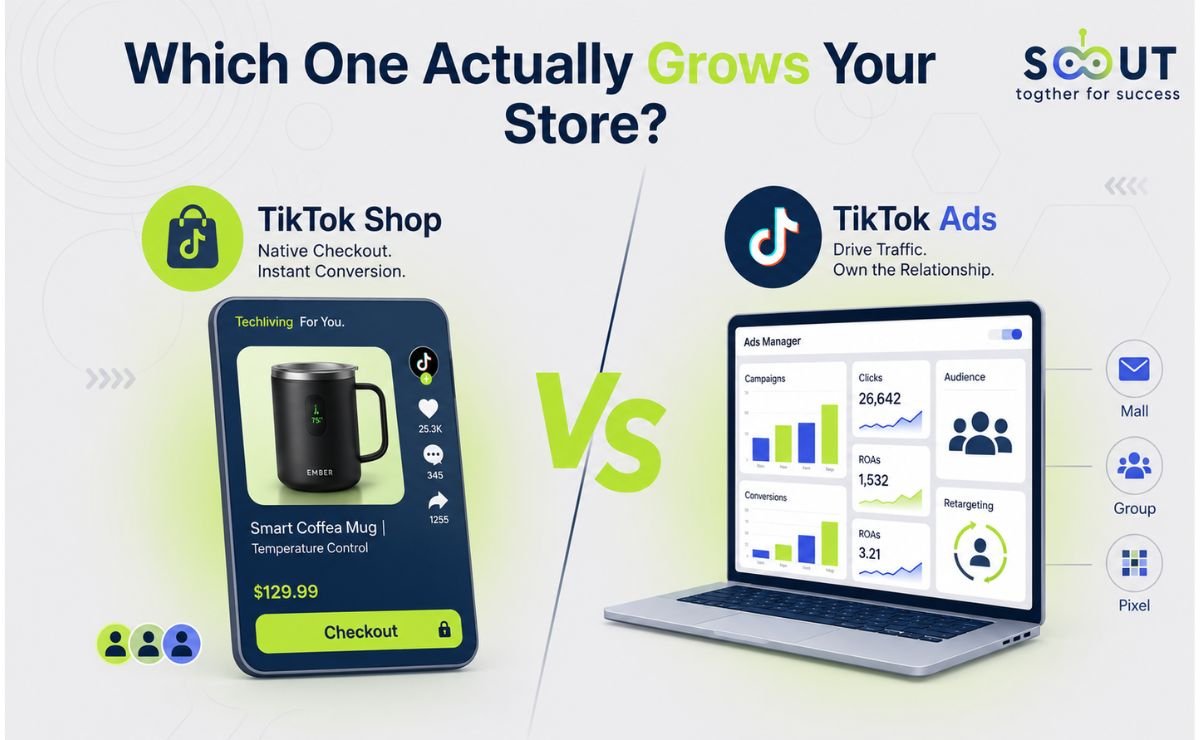
Most sellers assume TikTok Shop and TikTok Ads are two versions of the same thing, just different buttons in the same app. They're not. One is a marketplace with a checkout built directly into the scroll. The other is a traffic engine that hands your customer off to a website you control. Confusing the two costs sellers money in wasted ad spend, mismatched expectations, and, increasingly in 2026, policy violations that can freeze an account overnight.
This guide breaks down TikTok Shop vs TikTok Ads at the mechanical level: what each one actually does, where the conversion data diverges, which compliance rules apply to which channel, and how the platform's fulfillment and advertising policies have shifted through mid-2026. If you sell physical products in the US or UK and you're deciding where to put your next dollar, the answer depends less on trend and more on your price point, your data needs, and how much operational control you're willing to give up. Here's the breakdown.
What Are TikTok Shop and TikTok Ads, and Why Do Sellers Keep Confusing Them?
TikTok Shop is a native shopping layer built into the app itself. Products live in the Shop Tab, in-feed videos, LIVE sessions, and Showcase pages, and the customer buys without ever leaving TikTok. The platform is deeply involved in fulfillment, performance metrics, and even return-cost sharing, this is a marketplace, not just a storefront.
TikTok Ads, on the other hand, is a paid traffic system that typically points to an external destination, a Shopify store, a landing page, anywhere you control. It runs through TikTok Ads Manager independently of whether you even have a TikTok Shop connected.
The confusion happens because both live inside the same app and both can technically use TikTok Shop as a "sales destination." But the moment you send traffic off-platform, you're playing a completely different game, one with different conversion math and different rules.
The one-sentence difference: TikTok Shop is built to capture a sale the instant someone wants to buy. TikTok Ads is built to generate a click and trust your own funnel to close it.
How Do TikTok Shop and TikTok Ads Actually Compare Side by Side?
|
Dimension |
TikTok Shop |
TikTok Ads (External Store) |
|
Checkout location |
In-app, native |
External website |
|
Friction level |
Minimal, ad, product, and checkout are one flow |
Higher, app switch, page load, re-typed payment info |
|
Data ownership |
TikTok holds most customer data |
You own Pixel data, emails, retargeting lists |
|
Fulfillment |
Governed by TikTok Shop's logistics rules and SLAs |
Entirely yours to manage |
|
Campaign control |
Automated (GMV Max only, since July 2025) |
Manual targeting, bidding, and creative still available |
|
Best fit |
Impulse-priced products, catalog-driven sellers |
Higher-ticket, brand-building, first-party data plays |
Neither wins outright. TikTok Shop wins on conversion friction. TikTok Ads wins on ownership and control. The right one depends on what you're actually optimizing for.
What Are the Pros and Cons of Each Channel?
TikTok Shop
Pros:
-
Native, in-app checkout removes the app-switch and page-load steps that cause off-platform funnels to lose buyers
-
TikTok stores payment details for returning shoppers, so repeat purchases require fewer steps
-
Fulfillment, returns, and performance tracking are handled inside one system, useful for sellers who don't want to run separate logistics infrastructure
-
Organic and affiliate content can drive sales without an ad budget, since GMV Max blends paid, organic, and affiliate traffic into one campaign
Cons:
-
You don't own the customer relationship, TikTok holds most of the purchase and shopper data
-
Campaign control is limited. GMV Max has been the only supported format for Shop Sales-objective campaigns since July 2025, so manual bid, audience, and placement control no longer exist for that destination
-
You're operating inside TikTok's fulfillment SLAs and enforcement system, and policy direction here has shifted more than once in 2026
-
Blended attribution makes it harder to isolate what your paid spend specifically earned
TikTok Ads
Pros:
-
Full ownership of Pixel data, email lists, and retargeting audiences
-
Manual targeting, bidding, and creative control remain available for external-destination campaigns
-
Fulfillment and customer experience are entirely in your hands, no platform-side logistics rules to comply with
-
Better suited to higher-ticket or considered purchases where a buyer needs more than one touchpoint
Cons:
-
More friction between click and purchase, every extra step is a chance for the buyer to drop off
-
You're responsible for the entire funnel, landing page speed, checkout flow, payment re-entry, none of that is handled for you
-
Ad account violations (origin disclosure, exaggerated claims, IP issues) can escalate to account-level bans, and a ban can affect a linked Shop too
-
Requires sustained ad budget; there's no organic-traffic equivalent to what GMV Max offers on the Shop side
The short version: TikTok Shop trades ownership and control for lower friction and less operational overhead. TikTok Ads trades friction and workload for ownership and control. Most sellers running both are treating them as separate business units for exactly this reason.
Why Does TikTok Shop Convert Better Than External Checkout?
The gap isn't a myth, it's a function of how many steps stand between "I want this" and "I bought this." Industry benchmarking sources report meaningfully higher conversion rates for in-app, product-tagged TikTok Shop placements compared to standard in-feed ads sending traffic off-platform, though exact figures vary across trackers and should be treated as directional rather than fixed. What's consistent across sources is the mechanism: every additional click on an external funnel is a chance for the buyer to abandon.
Three friction points explain most of the drop-off on external funnels:
-
App switching: the buyer leaves TikTok, and attention doesn't always survive the jump.
-
Page load delay: even a two-second lag measurably increases bounce on mobile.
-
Re-entered payment details: TikTok Shop stores payment info; external checkout usually doesn't.
None of this means TikTok Ads is a weak channel. It means TikTok Shop is optimized for a different kind of buyer decision, the impulse one, and TikTok Ads is optimized for a considered one.
What Are the Real Compliance Risks on TikTok Shop in 2026?
TikTok Shop's enforcement has tightened meaningfully this year, and the rules that matter most are operational, not cosmetic.
-
Dispatch and delivery SLAs. Per TikTok Shop's own Seller Center documentation, US domestic Seller Shipping requires valid tracking and a 95% on-time delivery rate. Express orders carry a 3-business-day delivery window (effective March 14, 2025), while Standard and Free Economy orders require a first delivery attempt within 6 business days.
-
Fulfillment shortcuts are the actual violation, not the business model. Running a lean, low-inventory operation isn't against the rules. What TikTok's enforcement engine actually flags is using TikTok Shop's fulfillment tools for orders that originated somewhere else entirely, duplicating external sales onto the platform, faking order data, or misrepresenting shipping origin and timelines. That distinction matters: the business model isn't the risk, the misuse of TikTok's logistics network for unrelated sales is.
-
Consequences escalate fast. Violations accumulate on a points system, and repeated infractions move from feature restrictions to suspension to permanent bans, with no appeal path once you hit certain thresholds.
-
A note on fulfillment policy volatility: In January 2026, TikTok announced it would eliminate independent Seller Shipping entirely for US local sellers, forcing everyone onto TikTok-controlled logistics by February 25. As of TikTok Shop's own current Seller Center documentation, however, Seller Shipping remains listed as a fully active fulfillment option with its own published SLAs, meaning the mandate never took effect as originally announced. Treat this as a paused mandate, not a cancelled one, the platform's long-term direction toward controlled logistics hasn't changed, only the timeline has. Sellers should check Seller Center directly for their current fulfillment options rather than relying on the original announcement.
What Compliance Risks Come With TikTok Ads Instead?
TikTok Ads is the less volatile channel, but it isn't risk-free.
-
Origin and shipping disclosure: ads must reflect the real warehouse location, not just where the brand is legally registered, and shipping timelines shown in creative must be realistic.
-
Exaggerated income or results claims: anything resembling "make thousands in days" gets flagged during review.
-
Intellectual property: counterfeit products and unlicensed copyrighted content trigger automatic rejection.
-
Repeated violations escalate to account-level bans: and because ad accounts are often linked to a connected TikTok Shop, a ban on one side can take down the other.
The takeaway: TikTok Ads gives you more creative and targeting freedom, but the penalty for repeated missteps is the same nuclear option, losing the whole funnel, not just one campaign.
Which Channel Fits Your Business: TikTok Shop, TikTok Ads, or Both?
Lean toward TikTok Shop if:
-
Your product sits under roughly $60 and has impulse-buy appeal
-
You want lower CPA without sustained ad budget
-
You're comfortable letting TikTok manage logistics and metrics
-
You can invest time in organic and affiliate content instead of cash in ads
Lean toward TikTok Ads if:
-
You sell higher-ticket or brand-driven products
-
You want to own Pixel data, emails, and retargeting audiences
-
You need full control over fulfillment and customer experience
-
You're building equity outside TikTok's ecosystem
Run both if you can support it. Ads drive discovery and awareness; Shop captures the purchase moment. The two aren't competing for the same dollar, they're serving different stages of the same buyer journey, which is exactly why brands running a combined strategy tend to outperform either channel in isolation.
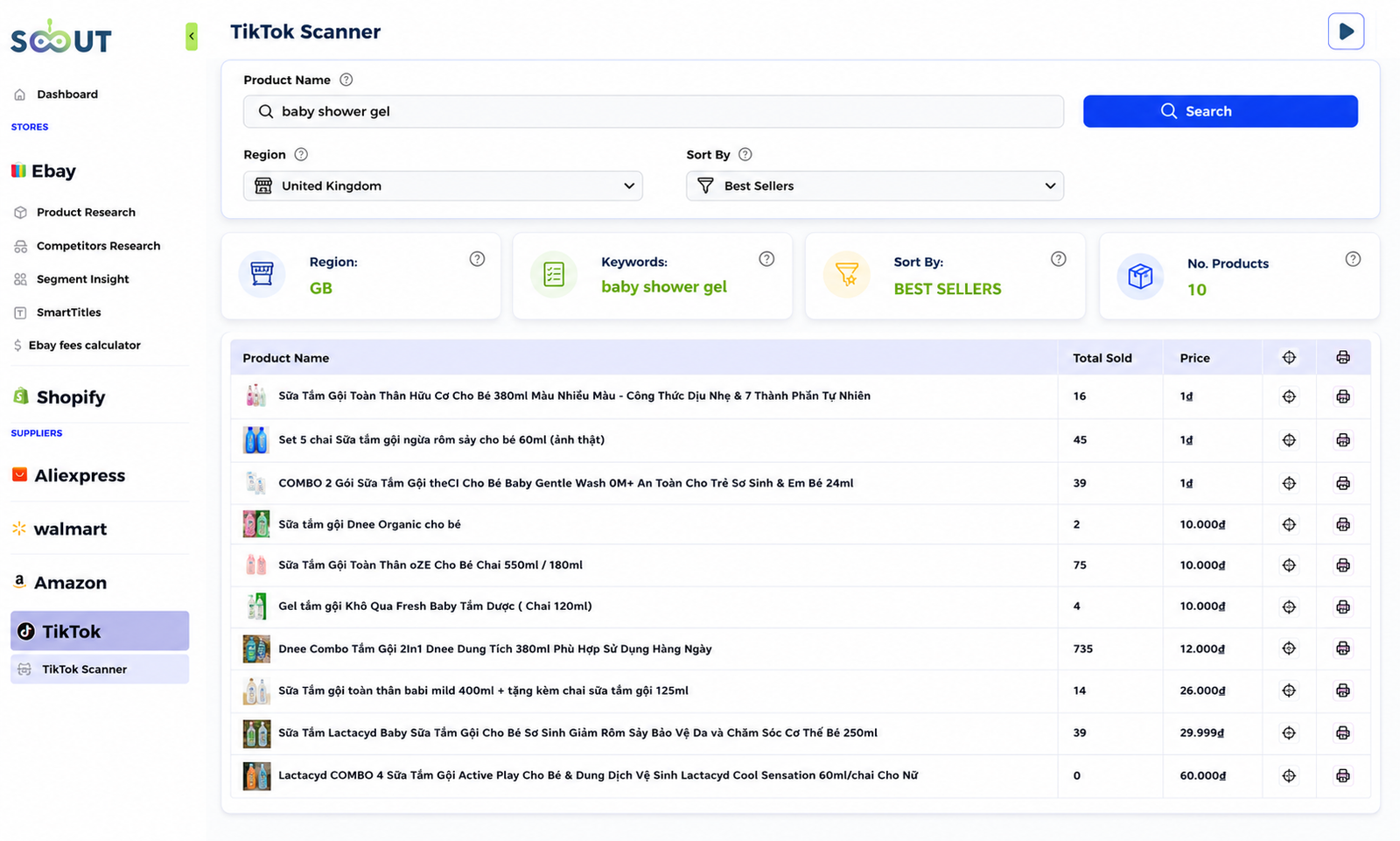
One layer that quietly determines success on either path: knowing which products are actually gaining traction before they saturate. Sellers scanning TikTok manually for winning products are almost always a few days behind the algorithm. Tools like TikTok Shop Scanner solve this specific gap, surfacing trending, fast-moving products on TikTok Shop before the opportunity window closes, which matters whether you're feeding organic content, Spark Ads, or a GMV Max campaign with fresh product ideas.
How Can You Run TikTok Shop and TikTok Ads Together Without Getting Flagged?
Keep the strategies structurally separate.
-
Run TikTok Shop ads through GMV Max, and external conversion ads through standard Ads Manager. These are different objectives with different attribution logic, mixing them in reporting distorts your real customer acquisition cost.
-
Understand that GMV Max is not new, it's mandatory. Per TikTok's own Ads Manager help center, starting in July 2025, GMV Max became the default and only supported campaign type for TikTok Shop Ads using the Sales objective, and sellers can no longer create, edit, or duplicate LIVE Shopping Ads, Product Shopping Ads, or Video Shopping Ads with TikTok Shop as the sales destination.
-
Don't compare GMV Max ROI to your external Pixel ROAS. GMV Max blends organic, affiliate, and paid attribution into one number, which structurally inflates the reported return compared to a paid-only funnel. Measure net contribution margin separately for each channel.
-
Never route orders generated by external ads through TikTok Shop fulfillment. This is the single fastest way to trigger a platform-abuse flag, regardless of how the sale was legitimately made.
-
One Business Center, one primary ad account, per Shop, for GMV Max. TikTok enforces this strictly, losing track of which account holds primary access is a common, avoidable cause of paused campaigns.
Treat the two channels like separate business units that happen to share a storefront. That mental model prevents almost every flag-worthy mistake sellers make when scaling both at once.
What Changed in TikTok's Rules Through Mid-2026 That Sellers Must Know?
-
Fulfillment: announced, then reversed, but not resolved. The Seller Shipping elimination that was set to take effect February 25, 2026 was walked back on February 17, before it ever took effect. Independent Seller Shipping remains available today, but the direction of travel toward TikTok-controlled logistics hasn't changed, and sellers who ignored the announcement entirely may be caught off guard if enforcement resumes.
-
GMV Max isn't a 2026 rollout, it's already a year old. By the time most 2026 "what's new" content gets published, GMV Max has already been the only Sales-objective campaign format for a full year. The real 2026 story isn't its arrival; it's how sellers are adapting to zero manual bid control and blended attribution reporting.
-
The platform's scale keeps climbing. Per eMarketer's tracking, TikTok Shop's US sales grew 108% year-over-year in 2025 to reach $15.82 billion, and eMarketer projects that over half of US social buyers will make a purchase on TikTok in 2026. That growth is exactly why the compliance stakes keep rising, a bigger platform means faster, more automated enforcement on both the Shop and Ads sides.
So, Are You Actually Ready to Compete on the Channel You Just Picked?
TikTok Shop and TikTok Ads reward completely different kinds of preparation. One asks you to master fulfillment SLAs and catalog-driven content; the other asks you to master creative and off-platform funnels. Neither rewards guessing which trending products or ad angles are worth your next dollar, that decision needs current data, not a hunch.
If you're leaning toward TikTok Shop, the fastest way to stop guessing which products to list is seeing what's actually gaining traction right now, with TS Scout's $1, 14-day full-access trial gives you the room to test that against your own catalog before committing a full subscription.
FAQ
-
Is dropshipping-style fulfillment banned on TikTok Shop?
No. What's prohibited is using TikTok Shop's fulfillment tools for orders that originated outside the platform, not the underlying inventory model itself.
-
Which converts better: TikTok Shop or TikTok Ads to an external store?
TikTok Shop's native, in-app checkout tends to convert higher than off-platform funnels because it removes app-switching and page-load friction. Product-tagged Shop placements are widely reported to outperform standard in-feed ads sending traffic externally, though the exact margin varies by source and category.
-
Do I need a TikTok Shop to run TikTok Ads?
No. TikTok Ads can run independently to any external destination, though connecting a Shop unlocks catalog-driven formats like GMV Max.
-
Is TikTok still forcing US sellers onto its own shipping network?
The mandate was announced for February–March 2026, then reversed before taking effect. Independent Seller Shipping is currently available, but the policy direction remains unsettled, sellers should monitor for renewed enforcement rather than assume it's cancelled for good.
-
Can a violation on TikTok Ads affect my TikTok Shop?
Yes, if the ad account and Shop are linked. A suspended ad account can disrupt or disable Shop-side advertising entirely, even if the Shop itself wasn't in violation.
-
Can I still manually control bidding on TikTok Shop ad campaigns?
No, GMV Max has been the only supported campaign type for Shop Sales-objective ads since 2025. Manual bid, audience, and placement control no longer exist for that destination.
7. Is TikTok Shop the same as TikTok Ads?
No. TikTok Shop is a marketplace with checkout built into the app, orders, fulfillment, and payment all happen inside TikTok. TikTok Ads is a paid traffic system that runs through TikTok Ads Manager and can point either to your TikTok Shop or to an external website, they're different layers that happen to share the same app.
8. Is TikTok Shop advertising worth it?
For lower-priced, impulse-appeal products, it often is, the native checkout removes friction that tends to hurt off-platform conversion. Since GMV Max is now the only supported format for Shop Sales-objective campaigns, sellers no longer choose whether to automate, only whether Shop advertising fits their price point and margin at all. It's less worth it for higher-ticket items where a buyer needs more consideration before purchasing.
9. Does TikTok Promote work for TikTok Shop?
Partially.Promote is TikTok's lightweight, in-app tool for boosting a video, carousel, or LIVE you've already posted, and it can drive traffic toward your TikTok Shop or website.
10. Are TikTok and TikTok Shop the same?
No. TikTok is a content and video app. TikTok Shop is the commerce layer built inside it, the marketplace where products get listed, tagged, and sold without leaving the app. You can use TikTok fully without ever touching Shop.
11. TikTok ads - sending to Shop or website?
It depends on what you're optimizing for. Sending to your TikTok Shop through GMV Max reduces checkout friction and can lower CPA, but you give up manual campaign control and most customer data. Sending to your own website keeps you in standard Ads Manager, with full targeting and bidding control and ownership of Pixel data and retargeting lists, at the cost of a longer, more drop-off-prone funnel. Higher-ticket or brand-building sellers usually lean websites; lower-priced, impulse-appeal products usually lean Shop.
like?


Table of Contents
- What Are TikTok Shop and TikTok Ads, and Why Do Sellers Keep Confusing Them?
- How Do TikTok Shop and TikTok Ads Actually Compare Side by Side?
- Why Does TikTok Shop Convert Better Than External Checkout?
- What Are the Real Compliance Risks on TikTok Shop in 2026?
- What Compliance Risks Come With TikTok Ads Instead?
- Which Channel Fits Your Business: TikTok Shop, TikTok Ads, or Both?
- How Can You Run TikTok Shop and TikTok Ads Together Without Getting Flagged?
- What Changed in TikTok's Rules Through Mid-2026 That Sellers Must Know?
- So, Are You Actually Ready to Compete on the Channel You Just Picked?
- FAQ