
AliExpress vs Temu: Which Platform Actually Fits a No-Inventory Business?
- 2026-05-11
-
 0
0
Two Platforms, Two Radically Different Business Engines
What if the cheaper product is actually the more expensive choice in the long run?
That's the quiet trap behind every AliExpress vs Temu comparison. You spot a trending item: a clever kitchen gadget, sleek earbuds find it on both platforms, and Temu waves a coupon, undercutting AliExpress by a couple of pounds. Feels like a win.
Fast-forward six weeks. The Temu buyer still pastes addresses by hand. The AliExpress buyer has fulfilled three hundred orders, synced tracking automatically, and is planning the next product launch.
That gap isn't about price. It's about architecture.
AliExpress (Alibaba Group, since 2010) is an open marketplace where independent suppliers set prices and build relationships. Temu (PDD Holdings, launched 2022) is a closed ecosystem that controls pricing, stock, packaging, shipping, and discourages commercial resale in its terms.
For a UK or US reseller running a no-inventory store on Shopify, eBay, or WooCommerce, that distinction isn't a technicality. It's the difference between a workflow that integrates smoothly and one you'll wrestle with daily.
Over the next few minutes, we'll walk through logistics, pricing, supplier access, integrations, and product research side by side. The goal isn't to compare two shopping apps. It's to help you pick the right back-end engine for a real, scalable business.
We'll start with a side-by-side snapshot that lays the structural differences bare, no fluff, just what you need to see.
AliExpress vs Temu: The Two-Minute Cheat Sheet
When two platforms look similar on a five-second scroll, a quick side-by-side view stops you from building your business on the wrong foundation. The table below isn’t the whole story. We'll unpack the “why” behind every row shortly but it’s the reference you’ll come back to.
Think of it as the architectural blueprint underneath the pricing stickers.
AliExpress vs Temu, The Core Differences
|
Dimension |
AliExpress |
Temu |
|---|---|---|
|
Operating model |
Open marketplace of independent sellers who set their own prices and policies |
Closed platform that controls pricing, goods, packaging, and logistics end-to-end |
|
Fulfilment integration |
Official integrations with DSers, Shopify, WooCommerce, Syncee, and eBay listing tools |
No public API; no connection to any online store platform |
|
Pricing model |
Seller-set prices; bulk negotiation possible; repeat buyers often unlock lower rates |
Platform-enforced pricing,sellers must stay ≤95 % of comparable offers, no negotiation path |
|
Shipping & logistics |
Multiple carriers per seller (AliExpress Standard, ePacket, Cainiao, DHL, UPS); some logistics solutions can combine parcels for the same recipient |
Consolidated air freight from Temu’s domestic hubs; zero carrier choice and no packaging customisation |
|
Buyer protection / returns |
15-day post-delivery Buyer Protection; refunds typically processed within 1–10 working days |
Consumer-friendly for personal orders, but not built to support resellers handling customer returns at scale |
|
Reseller readiness |
Designed for blind fulfilment, custom packaging, direct supplier chat; seller ratings and dispute data publicly visible |
Terms explicitly restrict commercial resale; accounts placing frequent or high-volume orders risk restriction |
A few numbers to file away:
-
AliExpress charges its sellers a marketplace commission of 5 % to 8 % depending on category a cost already baked into the prices you browse.
-
Temu, by late 2025, had surpassed 12 billion cumulative downloads globally and held the title of most-downloaded shopping app for three years running.
-
AliExpress Standard Shipping to the UK and US usually lands within 10 to 20 working days; express lines like DHL or UPS can crunch that to 3 to 7 days.
-
From July 2026, the EU introduces a €3 per-item customs levy on low-value parcels a regulatory shift that redraws the true landed cost of every shipment for UK-based resellers serving Europe.
If you’re running a no-inventory online store, five of the six rows in that table already tilt the floor heavily in one direction. The pricing row, where Temu flirts with lower numbers, is the one that tricks people because a low unit price means very little when the workflow behind it doesn’t grow with you.
Next, we’ll zoom into the exact friction points that surface the moment you try to run more than a couple of orders through Temu.
The Real Difference for a No-Inventory Business
The Temu vs AliExpress debate often starts with price tags, but for anyone running a no-inventory store, it ends with workflow. Here’s how the two platforms actually behave once you move past the first click.
Where Temu hits a wall
Temu is a consumer app, not a business partner. It offers no API, no store integration, no connection to Shopify, eBay, or WooCommerce. Every order must be copied and pasted manually. That alone caps your daily volume long before you grow.
Add the fact that Temu’s UK Terms of Use explicitly restrict commercial resale. Packaging arrives with Temu branding, so your customer instantly sees the source. The supplier is invisible; you can’t message them, negotiate, or request blind fulfilment. And if your order pattern looks like reselling, the account can be restricted without warning. None of this is hidden; it’s built into Temu’s closed, platform-controlled model.
Why AliExpress flips the script
AliExpress, by contrast, was designed for people who sell without stock. Blind fulfilment plain packaging, no competing logos are a simple request away via direct in-app chat. You talk to the supplier yourself: negotiate bulk pricing, request real photos, and build a relationship that improves your margins over time.
AliExpress also sits at the centre of a mature e‑commerce ecosystem. Sellers can connect it directly to Shopify, WooCommerce, and other platforms through established integrations that automate product importing, order placement, and tracking updates all within a single workflow. The platform is treated as a direct sourcing engine across the selling landscape, meaning you can move from a product idea on one side to a live, supplier‑vetted listing on the other without juggling half a dozen tabs. Temu simply does not offer this kind of connective infrastructure.
For UK sellers aiming higher, the Brand+ channel provides access to over 1,500 established brands with a best-price guarantee against Amazon, Temu, SHEIN, and eBay. This keeps you on one platform as your store evolves from unbranded goods to recognisable products.
A quiet problem neither platform fixes, until data enters the room
There’s one friction point that survives all the advantages, and it’s the one that separates a profitable week from a wasted one: knowing what to sell before you sink time and trust into a product.
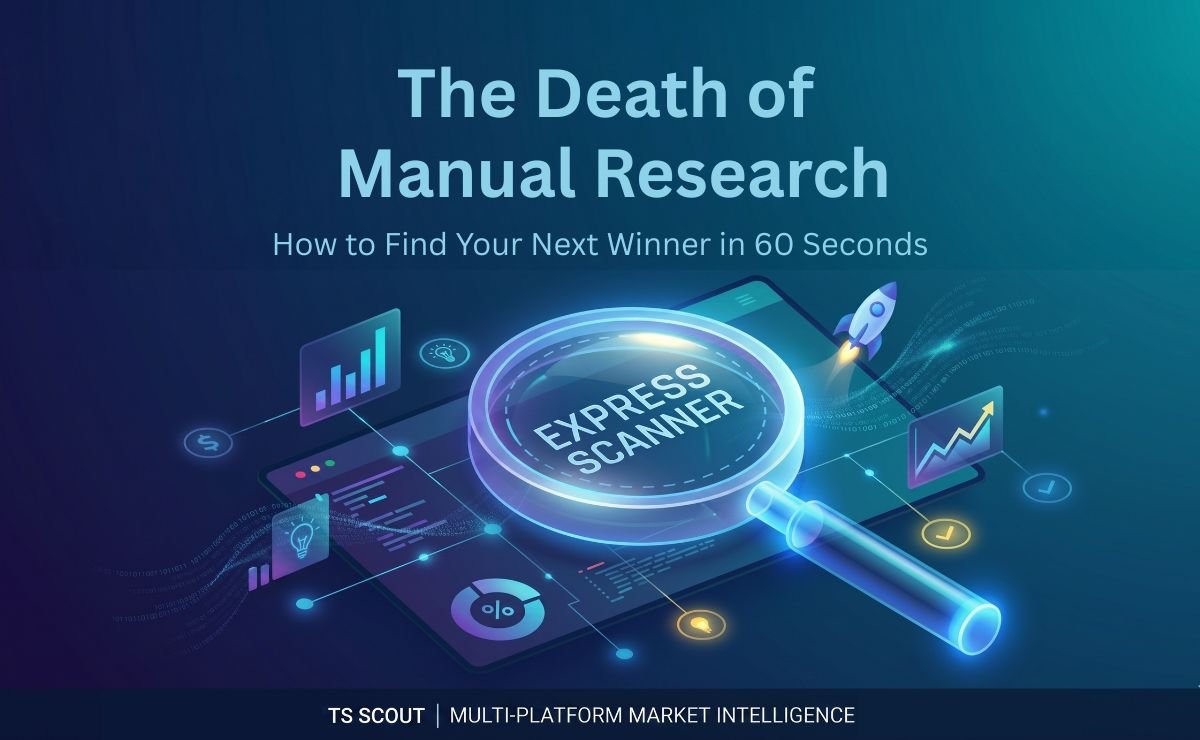
Scroll-and-hope is the default. But the moment you let sales data lead instead of instinct, the process shifts from guesswork to something you can repeat. That’s the gap where TS Scout’s Express Scanner sits.
Here’s what changes when research is built on evidence, not impulse:
-
You stop chasing products that “look good” and start shortlisting ones with consistent, real-market sales momentum
-
Trending items surface in minutes, not after hours of flicking through category pages
-
Your supplier conversations start with a proven opportunity, not a blind test
The rest of the AliExpress engine direct messaging, blind fulfilment, bulk pricing handles fulfilment once the product is locked in. But the first step is no longer a gamble.
The bottom line
In the AliExpress vs Temu comparison, Temu gives you cheap access; AliExpress gives you a repeatable workflow. The difference is whether your business runs on luck or on a system that scales.
Pricing, Logistics & Hidden Costs That Eat Your Margins
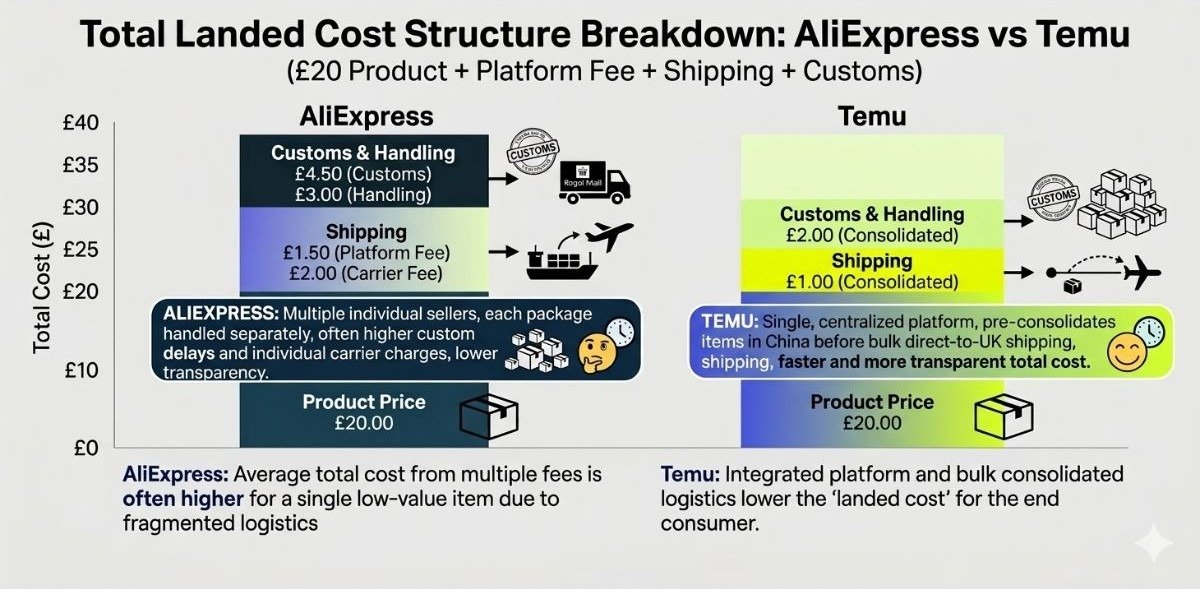
Sticker price gets you curious. Total landed cost keeps you in business. In any AliExpress vs Temu discussion, the gap between those two numbers is where margins quietly shrink or grow.
Real Product Cost vs Perceived Price
On the surface, Temu often wins. A first-time coupon knocks a product down to a price that feels unbeatable. But surface prices don't hold when you need to order the same item ten times this month.
AliExpress:
-
Sellers set their own prices; the platform takes a 5%–8% commission (already baked in).
-
Bulk purchases unlock tiered pricing messages the seller and numbers shift.
-
Pricing is stable. When a product works, you can forecast margin.
Temu:
-
Temu controls the price tag; sellers stay at or below 95% of comparable listings.
-
No bulk negotiation. No repeat-buyer discount. No human to talk to about volume.
The takeaway: For a one-off personal buy, Temu can be cheaper. For reselling at scale, AliExpress offers pricing that improves with time.
Shipping & Delivery: The Silent Margin Killer
Shipping doesn't feel urgent until a late delivery triggers a refund. Then it's everything.
|
Aliexpress |
Temu |
|
|
Standard delivery |
10–20 working days (UK/US) |
7–15 days (consolidated air freight) |
|
Express options |
3–7 days (DHL, UPS, FedEx) |
Not available |
|
Carrier choice |
Seller-dependent; you can filter and confirm |
None fully locked |
|
Blind fulfilment |
Standard when requested |
Not possible Temu-branded packaging |
The EU customs shift (July 2026): The €150 duty de minimis ends. A €3 per-item levy plus VAT and handling fees now applies to low-value parcels entering the EU. For UK resellers serving Europe, trackable, combinable logistics just became non-negotiable.
Fees, Refunds & Buyer Protection
AliExpress: 15-day post-delivery Buyer Protection; refunds processed within 1–10 working days. Seller ratings and dispute histories are public so you can avoid weak links before listing.
Temu: Consumer-friendly returns, but built for personal purchases. No direct line to the supplier when a customer wants their money back.
5 Point Supplier Checklist
-
Tracked shipping to my target country? Untracked = disputes you can't win.
-
Dispute rate and response time? Public on AliExpress; hidden on Temu.
-
Can the supplier blind-fulfil? Confirm by message, don't assume.
-
Bulk pricing tiers? Ask before the first purchase.
-
Product consistently in stock? Great margin means nothing if it vanishes after ten sales.
Product Sourcing, Quality & Supplier Vetting
Price gets you curious. Shipping keeps you reliable. But quality and your ability to verify it before you list is what stops a refund avalanche. The two platforms handle this in completely different ways.
On AliExpress, a supplier's track record is public:
-
Ratings, years active, and dispute rates are visible before you commit
-
You can message sellers directly, request unedited photos, and order samples
Temu hides the supplier entirely, a risk no reseller can afford to take blind.
That's why serious sellers lean on data early in the AliExpress vs Temu sourcing process. Instead of endless scrolling, you filter by performance signals and instantly separate promising candidates from noise:
-
Consistent sales volume shows real demand, not just wish-list clicks
-
Steady ratings and stable pricing point to reliability
-
A clean dispute history signals a supplier who delivers what they promise
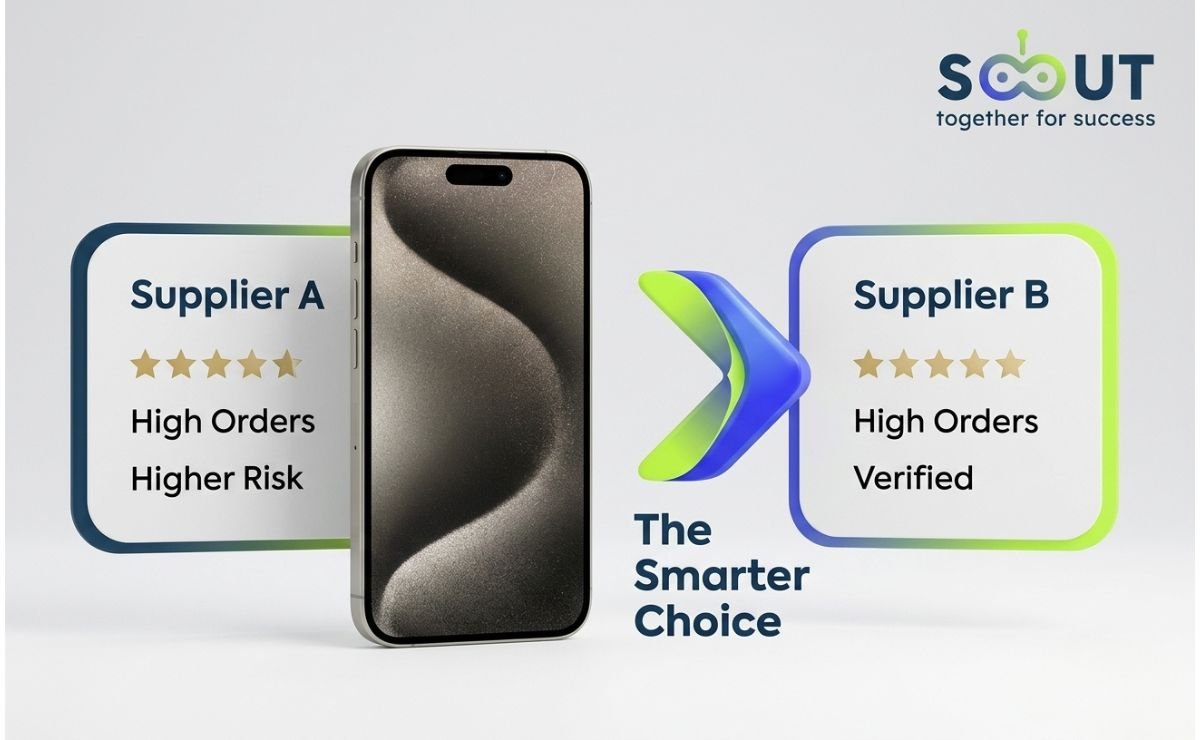
TS Scout's Express Finder is built for exactly this: it surfaces listings with proven demand, so your shortlist is built on evidence rather than guesswork.
Then, before messaging, you need the deeper story a listing page never tells. A quick shop URL lookup reveals:
-
Full product range and catalogue depth
-
Pricing history over time
-
Total units moved versus review count
-
Trust indicators that don't appear in standard search results
Source Finder pulls all of that into one report. It's diligence, compressed into a single look the kind you'd want before putting customer relationships in someone else's hands.
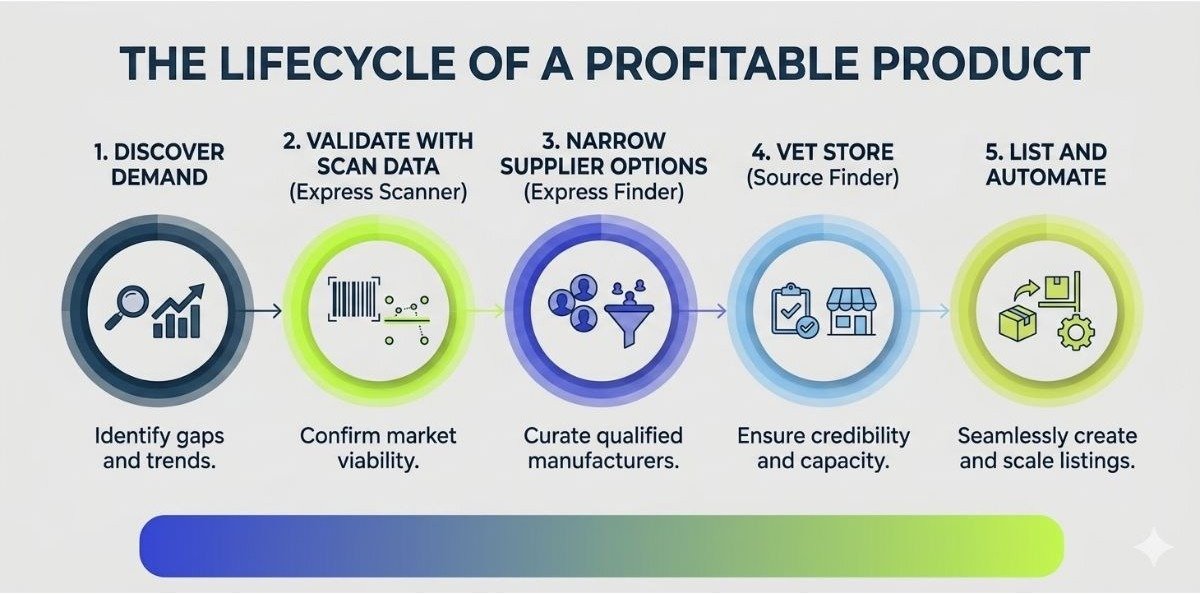
A quick message confirms blind fulfilment and bulk pricing, and you're live. The smarter sequence runs in four steps:
-
Spot demand: let trends surface from wherever they appear
-
Filter candidates: narrow listings by performance, not just price
-
Vet the store: check seller history and trust signals before reaching out
-
Confirm and list: a final message locks in quality, then you go live
Control is the quiet dividing line in any comparison of these two platforms. One strips it away. The other gives you the data and says, "Use it." Tools like Express Finder and Source Finder simply make sure you can act on that data in minutes rather than hours.
When to Use Each Platform?
Not every situation calls for the same tool. The smarter move isn't picking one platform for everything, it's knowing which one fits the task in front of you. Here's a quick breakdown:
|
Use Temu when… |
Use AliExpress when… |
|---|---|
|
You want to test a product idea with a cheap sample for personal evaluation. |
You need to connect your store to Shopify, eBay, or WooCommerce and automate fulfillment. |
|
You're scanning for viral trends and consumer sentiment in real time. |
You want to build long-term supplier relationships and negotiate better pricing. |
|
You're a consumer buying a one-off item for yourself. |
You're running a business and need data-driven product selection and reliable vetting. |
The AliExpress or Temu question doesn't demand a permanent answer. Temu is a brilliant trend-spotting radar. AliExpress is the fulfillment engine. Use the first to see what's hot; use the second to build a repeatable business around it.
8 Practical Tips for Smarter Sourcing
Shifting from AliExpress vs Temu theory to daily decisions is where margins are quietly won or lost. These eight habits keep your product sourcing sharp, in the order that mirrors a data-driven workflow:
-
Let Temu act as your early-warning radar
Temu surfaces viral products fast. Use it to see what's gaining traction before it floods every feed. Then take that signal over to AliExpress for a reliable, buildable source. -
Start your week by scanning for proven demand, not by guessing
Before you chase what “looks good,” let data show you what's already working. A quick session with Express Scanner surfaces trending AliExpress products backed by strong, consistent sales activity not just wish-list clicks. Ten minutes on a Monday morning spot rising winners with runway, giving you a first-mover advantage before the market gets crowded. -
Compare multiple listings before you commit to one
Price and appearance alone can deceive. Once a product is identified, filter the candidates by sales consistency, rating stability, and dispute history. A search with Express Finder turns this cross-check into seconds, so you land on the most reliable supplier, not just the cheapest. -
Vet every new store like a background check
Before you send a single message, paste the seller's shop URL into Source Finder. Review their total units moved, pricing history, and trust signals at a glance. If the review count doesn't match the reported sales volume, move on without hesitation. -
Stick to tracked AliExpress Standard Shipping for UK and US orders
Untracked parcels lead to disputes you can't win. Keep delivery predictable and proof of shipment automatic. -
Message the supplier before committing a single penny
Ask for real, unedited product photos. Confirm blind fulfilment and plain packaging. Silence or hesitation is a red flag. -
Price in the 2026 EU customs shift now
From July 2026, a €3 per-item levy hits low-value parcels entering the EU. If you serve European customers, build that into your margin calculations today not after it eats your profit. - Watch return rates, not just order volume
A product that's trending on Temu but has poor quality feedback will undo your reputation faster than any discount can repair. Skip items that sell fast but return faster.
Real-World Snapshot: Lessons from the Field
This whole comparison stops being abstract the moment you look at actual sellers and the results they've built or the walls they've hit.
ILIFE: a brand built on AliExpress, not hidden from it
LIFE, a cleaning‑appliance brand, grew its AliExpress sales by nearly 3× in a single year with Poland alone contributing more than $10 million in revenue, as reported by KrASIA. That didn't happen because they were the cheapest listings. It happened because AliExpress gave them a storefront they controlled and direct access to buyers who kept coming back. When a platform allows you to build a brand not just push units the long-term math changes completely.
The Reddit take that stuck
Across forums and comment sections, one user captured the difference better than most: “AliExpress hands down they are a Chinese Amazon, while Temu is like the direct seller.” It's a rough summary, but it points to something real. AliExpress behaves like a marketplace. Temu behaves like a single, sprawling shop where you're never quite the owner.
When policy rewrites your margin overnight
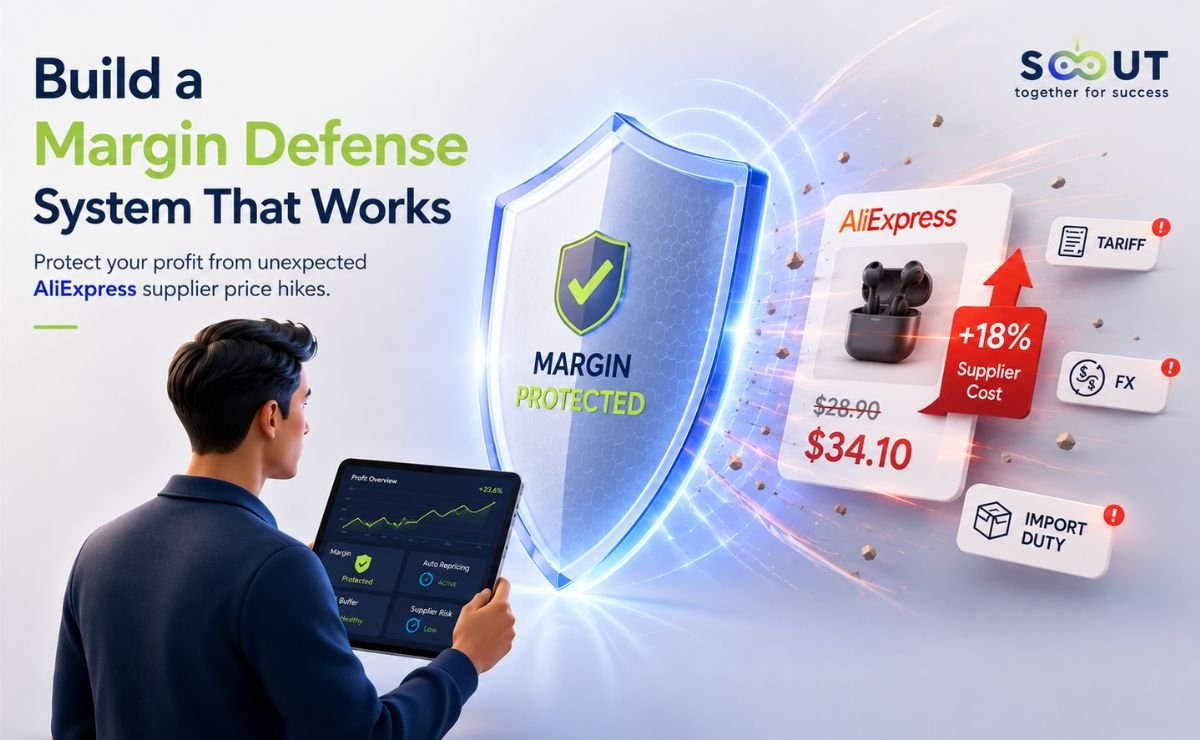
In 2025, the US scrapped the $800 de minimis exemption. Suddenly, cross-border parcels that used to clear customs without a second glance attracted duties that sellers hadn't budgeted for. For anyone relying on a platform that offers zero control over shipping or customs declarations, that change stung
hard. For AliExpress sellers who could choose carriers, combine shipments, and declare values properly, the impact was manageable. The question isn't just about today's price, it's about who gives you the levers when the rules change.
The Future: Automation, AI & Why Your Tool-Stack Matters
In a year from now, the AliExpress vs Temu conversation will look different again. Automation, AI-powered research, and faster logistics don't wait for anyone. They reward the sellers who pick an engine that evolves with them.
-
The UK online retail market hit an estimated £120 billion in 2025. Roughly 28% of all retail sales now happen online.
-
The US e-commerce market reached approximately $1.2 trillion in the same year. Amazon and Shopify together capture nearly half of that.
-
An estimated 80% of new e-commerce ventures now operate on some form of no-inventory fulfilment model.
In a market that large and that competitive, the winners aren't the ones chasing the lowest unit price on a consumer app. They're the ones using data to pick the right products, automation to handle fulfilment, and supplier relationships to protect quality.
Temu may win the download charts. But when it comes to building a machine that runs while you sleep,
the AliExpress or Temu question answers itself. AliExpress, paired with a research suite like TS Scout's, turns the marketplace from a chaotic catalogue into a profit-focused sourcing engine.
Frequently Asked Questions
The AliExpress vs Temu question generates a lot of the same concerns across reseller communities. Here's the straightforward version.
Is Temu a safe site to order from?
For personal consumer purchases, standard buyer protections apply. For commercial resale, Temu's terms do not support that use case, and accounts placing high-frequency orders face restrictions.
Is Temu a subsidiary of AliExpress?
No. Temu is operated by PDD Holdings, while AliExpress belongs to Alibaba Group. They are direct competitors.
Is AliExpress the best platform for non-stock online selling?
Yes. It's purpose-built for it: integrations with Shopify, eBay, and WooCommerce, blind fulfilment support, and a vast supplier network make it the strongest option over Temu, which offers none of these.
Is Temu more expensive than AliExpress?
With coupons and first-time deals, Temu often looks cheaper. For consistent, repeat sourcing at volume, AliExpress offers more stable pricing and the ability to negotiate bulk discounts, something Temu's fixed-price model cannot match.
Why is Temu so cheap?
Temu sources directly from factories, consolidates shipping to lower per-item costs, and tightly controls seller pricing. The platform absorbs part of the cost to prioritise user growth over immediate profitability.
Is Temu beating AliExpress?
In consumer app downloads, yes Temu has been the most-downloaded shopping app globally for three consecutive years. But for resellers who need automation and supplier control, the Temu vs AliExpress comparison tilts firmly toward AliExpress.
Are AliExpress products better than Temu?
Quality overlaps heavily, but AliExpress lets you vet suppliers through ratings, dispute history, and direct communication.
Temu hides the supplier, so you can't verify consistency and in reselling, consistency is everything.
Can I trust AliExpress?
Yes, when you vet stores properly. Use Buyer Protection and leverage tools to check seller ratings, response rates, and sales history before committing. Blind trust on any platform is a mistake; verified trust is a strategy.
Which is faster or more reliable?
Temu's consolidated air freight often delivers in 7–15 days. AliExpress gives you more control: choose DHL, UPS, or FedEx for 3–7 day delivery on critical orders, or stick with Standard Shipping for predictable, budget-friendly timelines.
Conclusion: Pick the Engine, Not Just the Price Tag
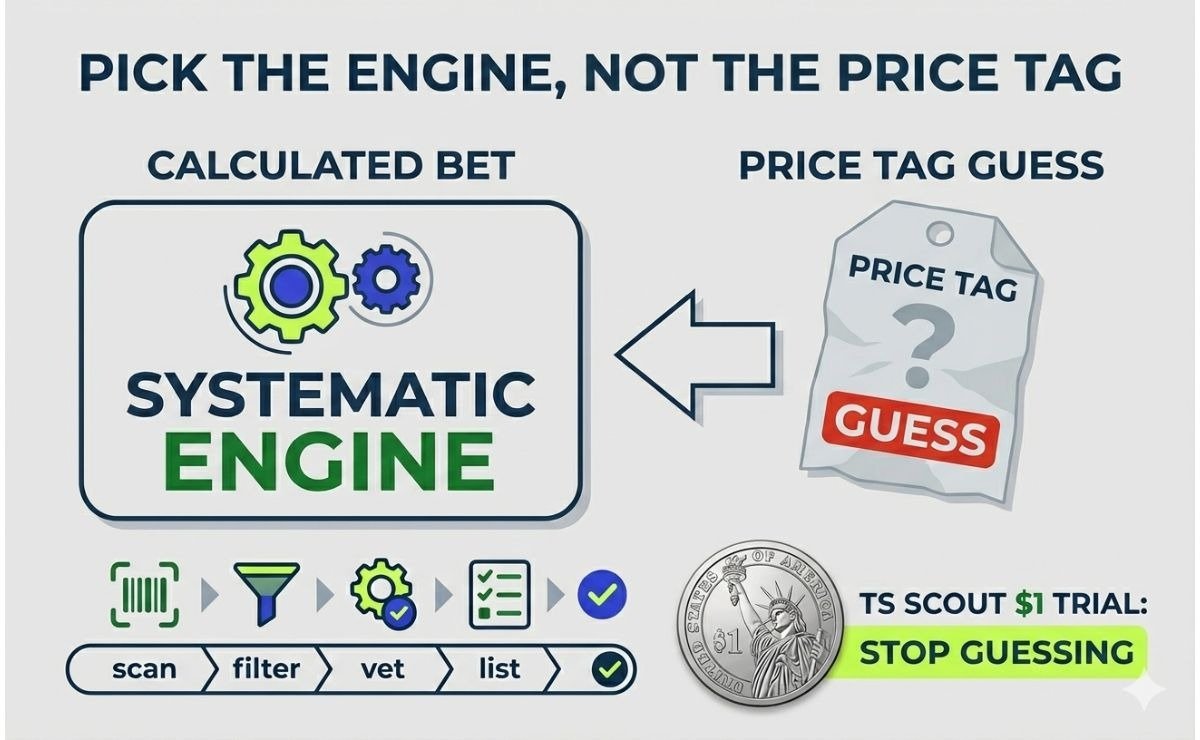
Most resellers lose money in the gap between AliExpress and Temu not on price, but on bad product decisions and broken workflows. After seeing both models side by side, the real question isn't which platform to use. It's whether your next sourcing move will be a guess or a calculated bet.
TS Scout's $1 trial gives you 14 full days to turn the scan‑filter‑vet‑list routine, the exact process you just read into a repeatable, data‑led system. For a single dollar, you unlock Express Scanner, Express Finder, and Source Finder. Two weeks. No heavy commitment. No risk. Just a clear answer: will your next product succeed because data said so, or because you hoped it would?
One dollar. Fourteen days. One way to finally stop guessing.
like?


Table of Contents
- Two Platforms, Two Radically Different Business Engines
- AliExpress vs Temu: The Two-Minute Cheat Sheet
- The Real Difference for a No-Inventory Business
- Pricing, Logistics & Hidden Costs That Eat Your Margins
- Product Sourcing, Quality & Supplier Vetting
- When to Use Each Platform?
- 8 Practical Tips for Smarter Sourcing
- Real-World Snapshot: Lessons from the Field
- The Future: Automation, AI & Why Your Tool-Stack Matters
- Frequently Asked Questions
- Conclusion: Pick the Engine, Not Just the Price Tag