
Why Are You Still Guessing at the Real Price? What AliExpress Reverse Image Search Actually Tells You
- 2026-08-04
-
 0
0
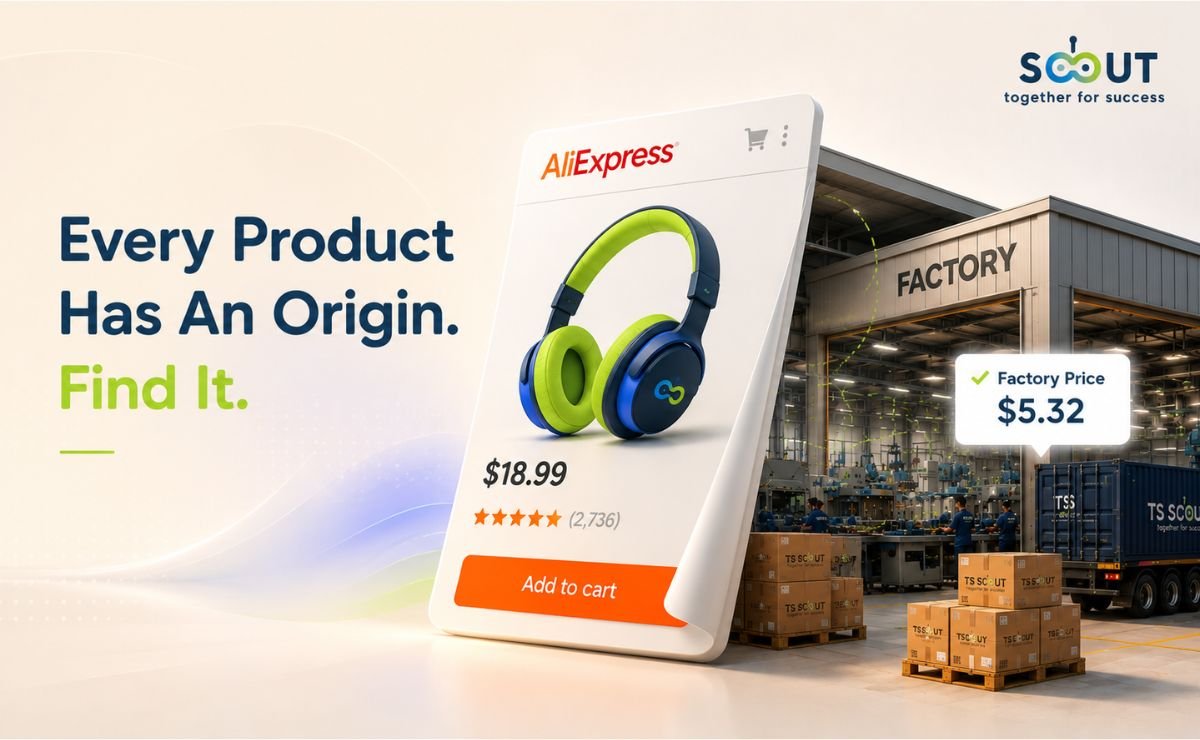
If you sell on AliExpress without holding your own inventory, you're pricing off a number you didn't set and can't fully verify: whatever markup your supplier decided to build in. What most sellers don't check is that the exact same product, same photos, same specs, is often listed by several different AliExpress sellers at noticeably different prices. Reverse image search finds those matches in seconds, no keyword guessing required, and lets you compare unit price against real sold counts before you decide who to buy from or what to charge. This guide covers how to run that search properly, what actually explains the price differences you'll find (including why 1688.com sits behind a lot of them), and how to tell a genuinely cheaper, reliable seller apart from a risky one.
How Do You Compare AliExpress Sellers Selling the Same Product?
TS Scout's Match Image tool does this in one step: right-click any product image on any site, paste the image URL into the search box, and run the search.
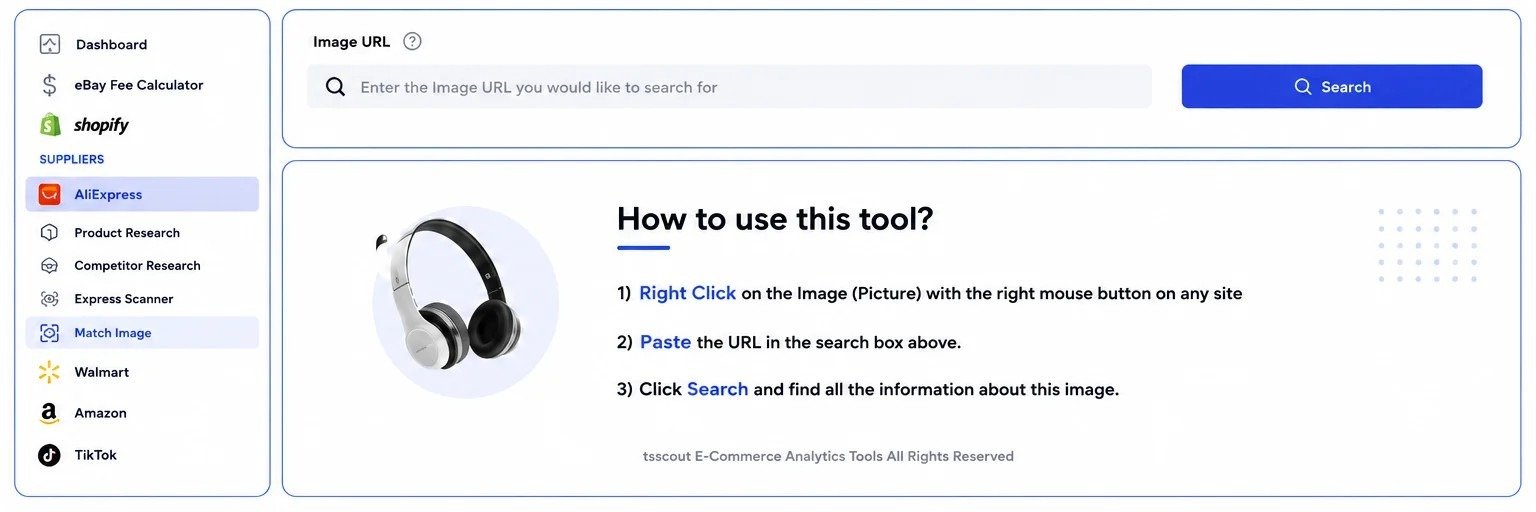
It returns matching listings across AliExpress along with each one's unit price and number of units sold, so instead of just spotting a cheaper price, you can see whether that price is actually backed by real sales volume or whether it's an outlier worth being cautious about.
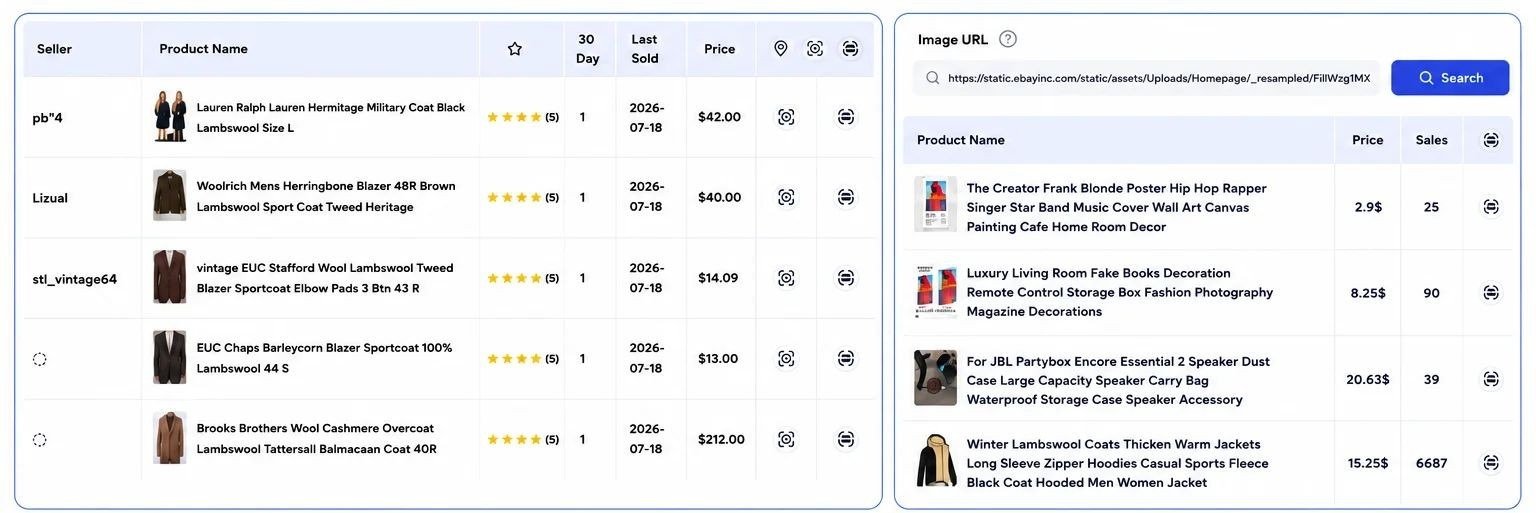
A couple of habits improve match quality: crop tightly to the product itself, use a front-facing shot rather than an angle, and run more than one photo of the same item through the search, since different angles sometimes surface different matches. For a deeper dive into building this into a repeatable research habit rather than a one-off search, see A Smarter Approach to Product Research.
Why Is the Same Product Sometimes Even Cheaper on 1688?
Part of what explains AliExpress price differences between sellers is where each one is sourcing from, and 1688.com is very often the answer. 1688 and AliExpress are both owned by Alibaba Group, but they were built for different buyers. 1688 targets Chinese domestic wholesalers and factories selling to other Chinese businesses. AliExpress targets individual international shoppers, and its prices absorb what that requires: export packaging, cross-border logistics, platform advertising, currency conversion, and a retail-sized margin for the seller. That's the whole explanation for the gap, in most cases it isn't a different or lower-quality product line, it's the same item with an export-facing markup layered on top.
You don't need to buy from 1688 yourself to benefit from knowing this. It's useful context: it tells you AliExpress sellers generally have more room in their pricing than the listing suggests, which is worth keeping in mind when you're comparing quotes or deciding what a fair price actually looks like. If you want to trace a listing all the way back to its domestic source yourself, tools like Google Lens or browser extensions such as AliPrice can search an image across 1688 and other Alibaba-owned platforms directly, that's a manual, separate step from comparing AliExpress sellers against each other.
Should You Ever Buy Directly From 1688 Yourself?
For most non-stockholding sellers, no, and that's not a limitation, it's the point. 1688 was built for the Chinese domestic market: Mandarin-only listings, payment in RMB, and shipping that's domestic-only by default. That's shifted somewhat, WorldFirst is the official cross-border payment partner of 1688, letting international buyers pay suppliers directly through a multi-currency account without a Chinese bank account. But payment is only one piece. Shipping still requires a freight forwarder or sourcing agent, suppliers price for bulk minimum order quantities, and UK buyers specifically need a GOV.UK EORI number plus import VAT and duty handling before goods can even clear customs.
None of that is relevant to how you actually operate. The value isn't importing it yourself, it's knowing roughly how much markup exists in the chain, so you can judge whether an AliExpress seller's price has real room to negotiate.
How Much Room Is Actually in the Price Gap?
It's worth knowing that even after a real bulk buyer pays freight, customs duty, import VAT, and an agent fee, 1688 pricing often still lands below AliExpress retail. That's the rough ceiling on how much markup theory supports. An illustrative example only: a £3.00 factory unit price at 500-unit volume, once freight, a sample 6% duty rate, 20% import VAT, and an agent fee are added, lands around £4.93 landed per unit for the person actually importing it. Duty rates vary by product classification, so anyone doing this math for real should check the applicable rate on GOV.UK's Trade Tariff tool first. The number that matters to you isn't the £4.93, it's that there's usually still distance below AliExpress retail even at that cost, which tells you the sellers you're comparing likely have flexibility too.
How Do You Tell If a Cheaper AliExpress Match Is Actually Worth Switching To?
A lower price alone isn't enough to switch suppliers on. A few checks before you commit:
Confirming the sold count on the cheaper match is meaningful, not just a handful of units, a low price with almost no sales history is a bigger risk than a slightly higher price from an established seller.
Check the seller's store rating and how long they've been active, a new store with no track record undercutting an established one is worth a closer look before you commit an order to them.
Double-check it's the exact same variant, color, size, material, before assuming the price difference is apples to apples. Listings with identical hero photos sometimes differ in the fine print.
If you've reached out to a promising match and hit silence, our guide on what to do when an AliExpress supplier goes unresponsive covers how to handle it without losing the order.
What Mistakes Should You Avoid With This Data?
Assuming your current AliExpress price already reflects the lowest available cost. Most sellers never check, and the price gap between sellers is often larger than expected.
Switching suppliers for a small price difference without confirming the seller's reliability, a saving that gets wiped out by a slow, unresponsive, or inconsistent supplier isn't a real saving.
Treating identical product photos as a guarantee of identical quality, always confirm the specifics with the seller directly rather than assuming.
Checking the price gap once and forgetting it moves. Supplier pricing shifts, and a gap worth acting on this quarter may close or widen by the next. If pricing volatility is a bigger concern for you, our guide on protecting your margins against AliExpress price increases walks through a repeatable way to stay ahead of it.
Ready to See What Your Supplier Isn't Telling You?
The price gap between AliExpress sellers selling the exact same product is one of the most reliable pieces of leverage available to a seller who doesn't hold inventory, but only if you can actually see it. Build reverse image search into your regular supplier-vetting routine, and you'll stop pricing off guesswork. Try TS Scout's full toolkit for $1, with 14 days of full access, and start checking your next listing with real data instead of a gut feeling.
FAQ
1. Do I need to buy from 1688 to use this information?
No. The value for a non-stockholding seller is in comparing AliExpress sellers against each other and understanding why price gaps exist, not in importing stock yourself.
2. Is it legal for a UK or US seller to buy from 1688 anyway?
Yes, there are no legal restrictions, the barriers are practical (language, payment, shipping, minimum order quantities), not legal.
3. Does a cheaper AliExpress match always mean I should switch suppliers?
Not automatically. Check the seller's sold count and store rating first, and confirm it's the exact same variant before treating a lower number as proof of a better deal.
4. Why do prices for the identical product vary so much between AliExpress sellers?
Different sellers source through different chains and set their own margins, and some are closer to the original manufacturer than others, which is exactly what reverse image search helps you spot.
like?


Table of Contents
- How Do You Compare AliExpress Sellers Selling the Same Product?
- Why Is the Same Product Sometimes Even Cheaper on 1688?
- Should You Ever Buy Directly From 1688 Yourself?
- How Much Room Is Actually in the Price Gap?
- How Do You Tell If a Cheaper AliExpress Match Is Actually Worth Switching To?
- What Mistakes Should You Avoid With This Data?
- Ready to See What Your Supplier Isn't Telling You?
- FAQ