

Evergreen Digital Product Ideas for 2026: A Second Revenue Line for Your Existing Store
- 2026-08-23
-
 0
0
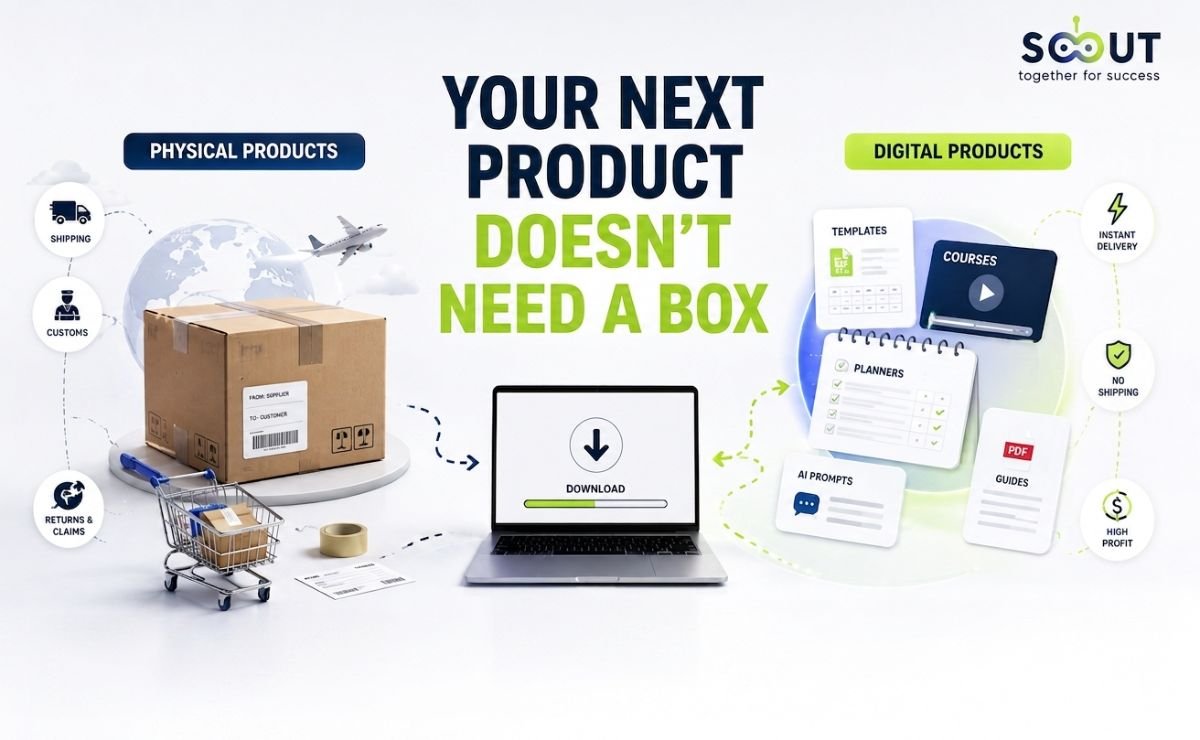
You've already mastered sourcing, pricing, and listing physical products without holding stock. There's a whole category of evergreen digital product ideas that adds to that catalog rather than replaces it, courses, templates, and printables that skip inventory, shipping, and customs entirely. Digital products aren't a side hustle anymore; they're a real, scalable extension that pairs naturally with a physical catalog already built on non-stockholding principles.
This guide breaks down what actually makes a digital product evergreen in 2026, walks through the strongest evergreen digital product ideas for 2026 by category, and covers the practical challenges a seller used to physical goods needs to plan for before diving in. If digital products are entirely new territory for you, it helps to first revisit What Is an Evergreen Product?, the core definition still applies, just without a warehouse attached. One thing worth setting straight before we go further: this is a genuine expansion beyond the platforms and tools you've been using for physical sourcing, and it's worth understanding exactly where that expansion starts and where it doesn't. Let's start with what changes when the product you're selling has no shipping label at all.
What Makes a Digital Product Genuinely Evergreen in 2026?
The evergreen test for a digital product isn't identical to the one for a physical one, there's an extra variable that physical goods don't have to deal with.
Does a Digital Product Need Updating to Stay Evergreen?
Usually, yes, and this is the one thing that trips up sellers coming from physical products. A template built around a specific software interface or a course teaching a platform's current features can quietly go stale the moment that tool changes its layout. A genuinely evergreen digital product is built around a need that doesn't shift (like "new parents need a way to track a baby's feeding schedule") rather than a tool that will eventually update or disappear. Light, periodic maintenance, not a full rebuild, is usually enough to keep a well-chosen digital product relevant for years, which is exactly what separates a lasting evergreen digital product idea from a short-lived one.
Why Should a Non-Stockholding Seller Add Digital Products to Their Store?
The appeal here isn't abstract, it directly solves problems that are already familiar from selling physical goods without holding stock.
Does Removing Shipping and Customs Eliminate Your Biggest Physical-Product Headaches?
Largely, yes. There's no supplier payment timing to manage, no customs duty to calculate, no damaged-in-transit claim to handle, and no chargeback risk tied to a package that got lost. A digital product is delivered instantly and identically every time, which removes an entire category of operational risk that physical, high-ticket items in particular tend to carry, one of the clearest reasons evergreen digital products are worth adding alongside a physical catalog rather than instead of it.
How Big Is the Real Market Behind Digital Learning Products?
Substantial, and still growing. Grand View Research estimated the global e-learning services market at $352.98 billion in 2025, projecting it to reach $417.05 billion in 2026. That's not a niche side market, it's a category with real, sustained buyer demand behind it, and courses are just one slice of the broader evergreen digital product landscape covered below.
What Are the Strongest Evergreen Digital Product Ideas for 2026?
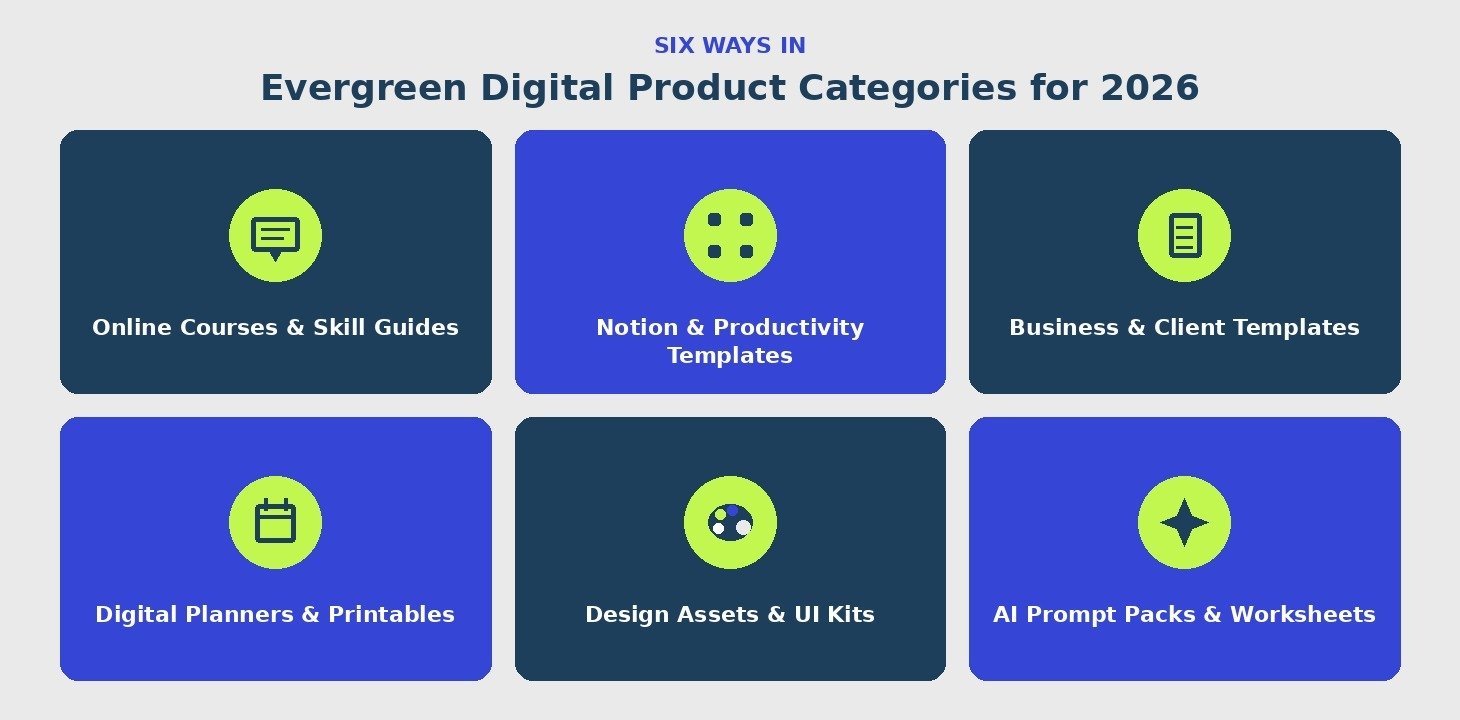
Here's where the opportunity actually lives, six categories of evergreen digital product ideas with genuine, non-seasonal demand heading into 2026.
Which Online Courses and Skill-Based Guides Hold Up Long-Term?
Courses that teach a durable skill, not a tool-specific workflow, age the best. A course on negotiation, public speaking, or the fundamentals of a craft stays relevant for years; a course built entirely around one software's current interface has a shorter shelf life by definition.
Why Are Notion and Productivity Templates Still in Demand?
The habit of organizing tasks, projects, and personal systems digitally isn't going away, and pre-built templates save buyers hours of setup work they'd rather not do themselves. Habit trackers, project management systems, and CRM-style templates fall squarely into this category of evergreen digital products.
What Business and Client-Facing Templates Sell Consistently?
Freelancers and small business owners need the same documents on repeat: proposals, invoices, pitch decks, and onboarding forms. These aren't exciting products, but the need for them never really pauses a textbook example of a low-drama, high-repeat evergreen digital product idea.
Are Digital Planners and Printables Still Worth Building in 2026?
Yes, this remains one of the most accessible entry points into digital products, and demand holds steady because the underlying need (staying organized, tracking goals, planning events) doesn't fade with a season the way a physical trend product might.
What Design Assets Are Worth Creating for Ongoing Sales?
Canva templates, UI kits, and presets solve a recurring problem: people need professional-looking visuals but don't have design skills or time. A well-made set of social media templates or a UI kit gets reused by buyers long after the purchase.
Why Are AI Prompt Packs and AI-Enhanced Worksheets Becoming Their Own Category?
This is the newest addition to the evergreen digital product ideas list for 2026, and it's not a passing add-on, it's a genuine new product type. Prompt packs for specific professional use cases (marketing copy, coding, lesson planning) and AI-enhanced worksheets that guide a buyer through using AI tools effectively are seeing real, sustained demand rather than a brief spike.
What New Trends Are Shaping Evergreen Digital Products in 2026?
Two shifts are separating the evergreen digital product ideas that actually sell in 2026 from the ones that quietly sit unsold.
Why Are Niche-Specific Products Winning Over Generic Ones?
A generic "productivity planner" competes against thousands of nearly identical listings. A planner built specifically for freelance photographers managing client shoots competes against almost none. The more specific the problem a product solves, the less crowded, and often more loyal, the audience buying it.
One practical way to spot that kind of specificity: the same trending physical niches you're already tracking often point straight to an underserved digital angle. If the TikTok Scanner tool flags a physical niche gaining real traction, that's frequently a signal a companion digital product, a buying guide, a setup checklist, a mini-course for that same audience, has room to sell too.
Are AI-Enhanced Products a Trend or a Permanent Shift?
This looks like a permanent shift rather than a passing trend. Buyers aren't just curious about AI tools anymore, they're actively looking for structured, ready-made ways to use them without a steep learning curve, which is exactly the gap that AI prompt packs and AI-guided templates fill.
What Practical Challenges Should a Physical-Product Seller Expect?
This is the part most digital product guides skip entirely, and it's the part that matters most to someone used to running a physical-goods store.
How Do You Protect a Digital File From Being Shared or Resold Illegally?
File protection tools, download limits, watermarking, and PDF stamping, are standard practice, and most digital product delivery apps build this automatically. It won't stop every determined bad actor, but it removes casual, easy resharing, which covers the overwhelming majority of real-world risk.
Do Refunds Work Differently When There's No Physical Item to Return?
Yes, meaningfully so. There's no item to physically get back, which means refund policy has to be written with intent rather than assumption, many sellers offer no-refund policies on instantly delivered digital goods, or limit refunds to cases where the file is defective or undelivered, and state that clearly before checkout to avoid disputes later.
Which Platform Actually Fits Your Type of Digital Product?
This is the section worth reading most carefully, because it's also where the tools you already use for physical sourcing stop being relevant. TS Scout's research tools are built around physical product and supplier data across eBay, Amazon, Shopify, TikTok Shop, and Walmart; they won't surface a digital product idea directly, and none of the tools in this article's earlier sourcing sections apply once you're building a course or a template. What they're genuinely useful for is spotting which physical niches have real demand, so the digital product you build actually complements something that's already selling, rather than guessing at a market from scratch.
Where Can You Actually Sell a Digital Product?
Shopify is the one platform already in your toolkit that supports this directly. Shopify's official Help Center confirms native support for digital downloads and linked content through its free built-in app, meaning digital and physical products can sit in the same storefront without a separate platform or a new sales channel. For sellers who want to keep everything under one roof, this is the most direct path from physical to digital.
Beyond Shopify, two platforms are built specifically for digital products but sit outside your core TS Scout toolkit: Etsy for printables and design assets, and Udemy or Skillshare for structured courses. Worth going into these with clear eyes, they operate on different listing conventions, fee structures, and audience expectations than the marketplaces you're used to, so treat them as a genuinely separate channel rather than an extension of your existing storefront strategy.
Which Platforms Rule Digital Products Out Entirely?
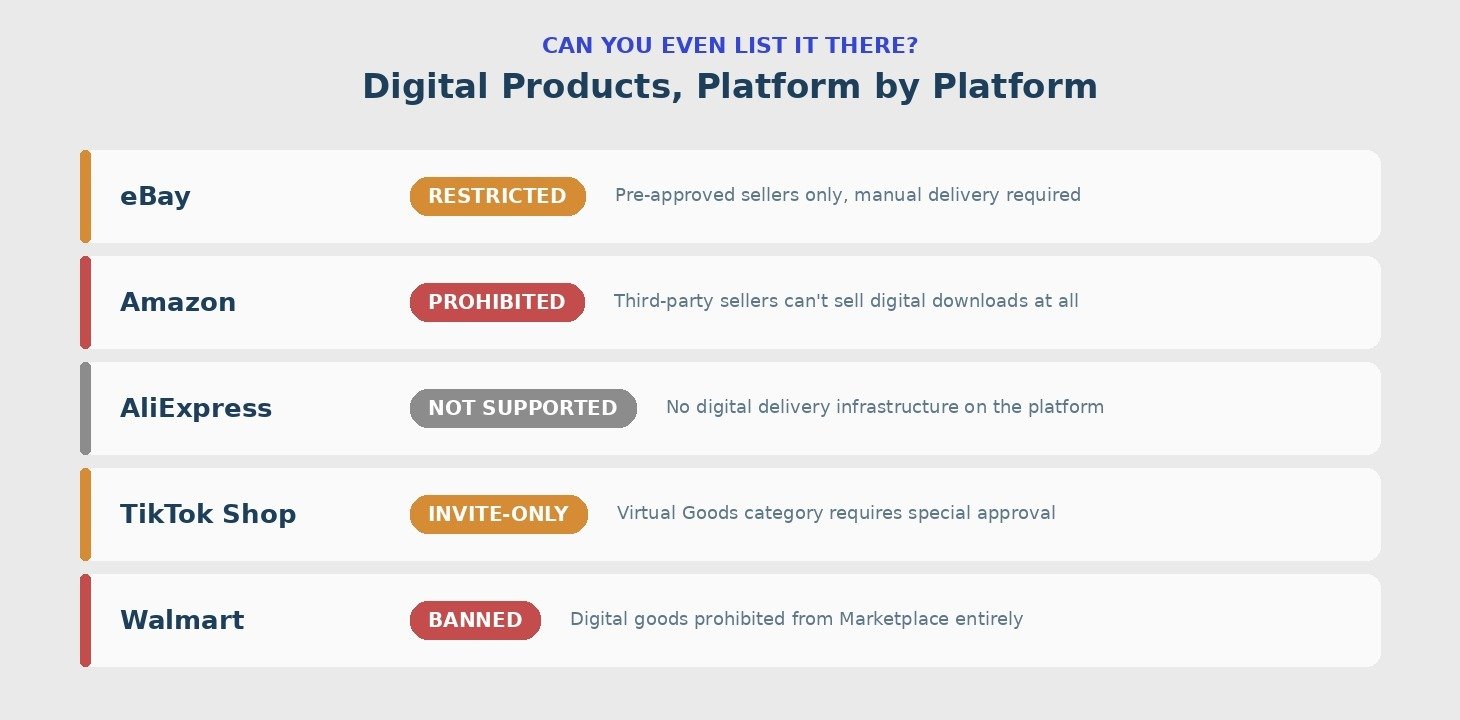
Three of the platforms you already sell on effectively rule digital products out. eBay's official Electronically Delivered Items policy restricts digital goods to pre-approved sellers only, requires listings to sit under Everything Else > Information Products, and explicitly prohibits instant, automated downloads, a manual delivery process is required even for approved sellers. Amazon's Seller Central policy goes further, stating that third-party sellers may not sell digitally downloadable software by any means, including activation codes, license keys, or registration links. And TikTok Shop's official Prohibited Products Policy confirms that virtual or digital products are prohibited unless a seller is specifically approved for its invite-only Virtual Goods category. AliExpress sits in a similar spot in practice; the platform's entire listing and fulfillment infrastructure is built around physical shipping, with no digital delivery mechanism for sellers to use at all.
One platform makes the restriction impossible to miss: Walmart's official Prohibited Products Policy confirms that digital goods and digitally delivered products, including eBooks, digital downloads, and access codes, are banned from Walmart Marketplace entirely, so it's not an option for this side of your business no matter how well it performs for your physical listings.
How Do You Validate a Digital Product Idea Before Building It?
The instinct to build first and validate later is exactly how sellers end up with a course or template nobody wants. Checking for existing demand, search interest, competitor pricing, and whether a similar product already sells consistently, before investing the time to build it applies just as much to a digital product idea as it does to a physical one. The step-by-step version of that process is covered in How to Test an Evergreen Product Before Committing, and it's worth running through before you commit real hours to production.
Ready to Find the Physical Niche Your Next Digital Product Should Be Built Around?
Evergreen digital product ideas aren't a replacement for the physical side of your business, they're an extension of it, built on the exact same evergreen thinking you've already been applying to Evergreen Product Categories and Evergreen High-Ticket Product Ideas.
The research skills that helped you find a physical product worth selling are the same instincts that'll help you spot which physical niches deserve a digital companion product. Use TS Scout to validate the physical niche behind your next digital product idea, get $1 for 14 days of full access and put those research tools to work on the side of your business that's still shipping boxes.
FAQ
-
What are the best evergreen digital product ideas for 2026?
Online courses on durable skills, Notion and productivity templates, business templates, digital planners and printables, design assets, and AI prompt packs are the strongest-performing evergreen digital product ideas heading into 2026.
-
Can a physical-product seller realistically add digital products to their store?
Yes, most digital products require no new inventory system, and platforms like Shopify support digital and physical products side by side in the same store.
-
Do digital products need to be updated to stay evergreen?
Often, yes, especially if they're tied to a specific software or platform interface, but products built around a lasting need rather than a specific tool require only light, occasional maintenance.
-
Which platforms are best for selling evergreen digital products?
Etsy suits printables and design assets, Udemy and Skillshare are built for course delivery, and Shopify supports digital downloads directly through its free built-in app alongside a physical product catalog.
-
Why can't digital products be sold on Walmart Marketplace?
Walmart's official Prohibited Products Policy bans all digital goods and digitally delivered products outright, regardless of format or category.
like?


Table of Contents
- What Makes a Digital Product Genuinely Evergreen in 2026?
- Why Should a Non-Stockholding Seller Add Digital Products to Their Store?
- What Are the Strongest Evergreen Digital Product Ideas for 2026?
- What New Trends Are Shaping Evergreen Digital Products in 2026?
- What Practical Challenges Should a Physical-Product Seller Expect?
- How Do You Validate a Digital Product Idea Before Building It?
- Ready to Find the Physical Niche Your Next Digital Product Should Be Built Around?
- FAQ


