

How to Test an Evergreen Product Before Committing (Without Wasting Your Budget)
- 2026-08-25
-
 0
0
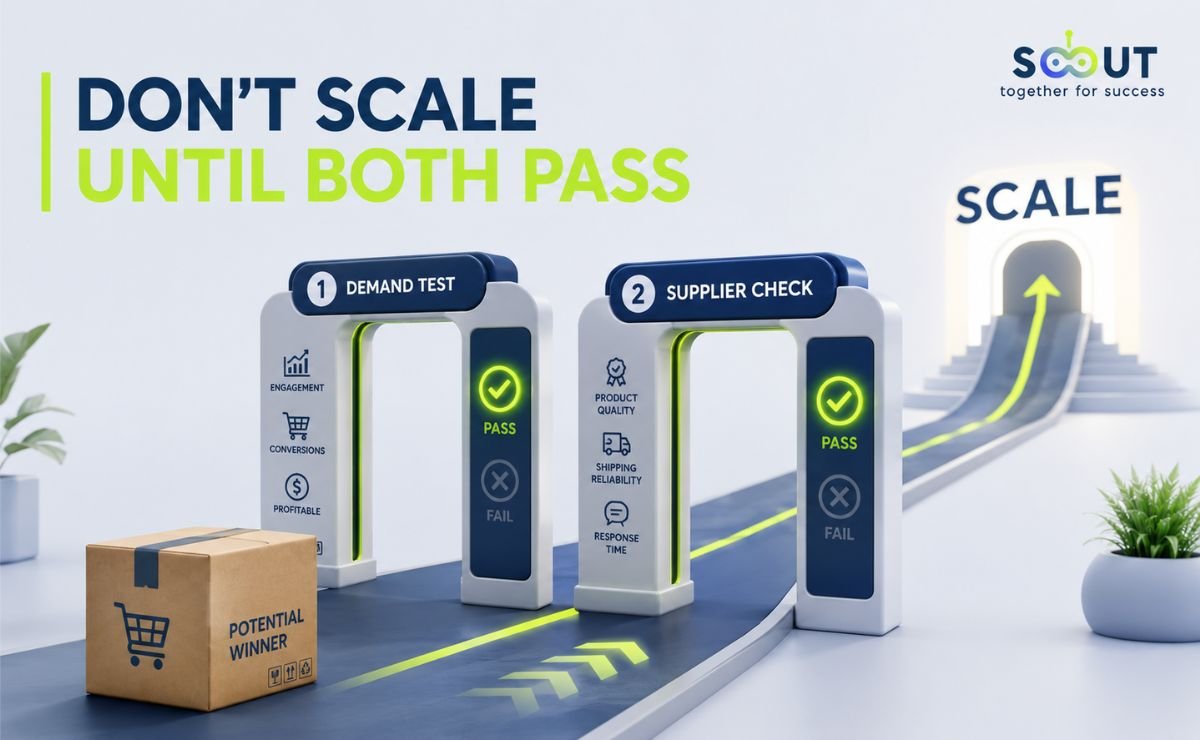
You've found a product that checks every evergreen box on paper, steady demand, a workable margin, a category that doesn't chase trends. That's the easy part. The real risk sits in the gap between "this looks promising" and "I'm ready to commit real budget to it," and most sellers either skip that gap entirely or fill it with guesswork instead of a real evergreen product testing process.
This guide gives you a structured, two-part framework for closing that gap: validating actual demand with a small, controlled ad budget, and verifying your supplier can actually deliver at scale before you find out the hard way. Skip either half, and you're not testing, you're gambling with better spreadsheets. This is the step that comes right after you've shortlisted a product, wherever that shortlist came from, let's start with why it's worth the extra week before you scale anything.
Why Should You Test an Evergreen Product Before Scaling It?
Skipping this step doesn't save time, it just moves the cost of finding out somewhere more expensive.
What's the Real Cost of Skipping the Testing Phase?
A failed test costs you a small, controlled ad budget and a few days. A failed full-scale launch costs you unsold inventory commitments, wasted ad spend at full volume, and, if the supplier turns out to be the real problem, a wave of refunds and negative reviews on top of it.
Every dollar you spend confirming demand and supplier reliability upfront is a dollar you're not spending to discover the same problem later at ten times the scale, which is exactly the logic behind the Profit Anatomy of a listing: the sourcing cost is only one line item, and a bad early decision echoes through every line beneath it. If you're still deciding what to test in the first place, it's worth starting with What Is an Evergreen Product? to make sure the category itself holds up before you spend a single dollar validating a specific item within it.
How Do You Validate Real Demand With a Small Ad Budget?
This is the fastest, most direct way to get a real answer instead of a guess, real buyers, real money, real signal.
How Much Should You Actually Spend on a Test Campaign?
Keep it deliberately small and controlled rather than open-ended. Meta's Business Help Center advises that if a test isn't gathering enough data, the fix is to broaden the audience or increase the budget slightly, not to abandon structure altogether, since ad sets split for testing are especially vulnerable to under-delivery on small audiences.
As a practical starting point based on that guidance, a modest, capped budget spent deliberately on a focused audience will usually surface a clean signal faster than a larger budget spread too thin.
How Long Should a Demand Test Run Before You Decide?
Give it enough time to smooth out early noise before you judge it. A test that's too short mostly measures randomness in early ad delivery; one that runs too long starts absorbing unrelated shifts like seasonality or competitor activity. A one-to-two-week window is a reasonable middle ground for most evergreen products, long enough for delivery to stabilize, short enough that you're not burning budget on a decision you could have made a week earlier.
What Numbers Actually Tell You to Scale, Pause, or Kill a Product?
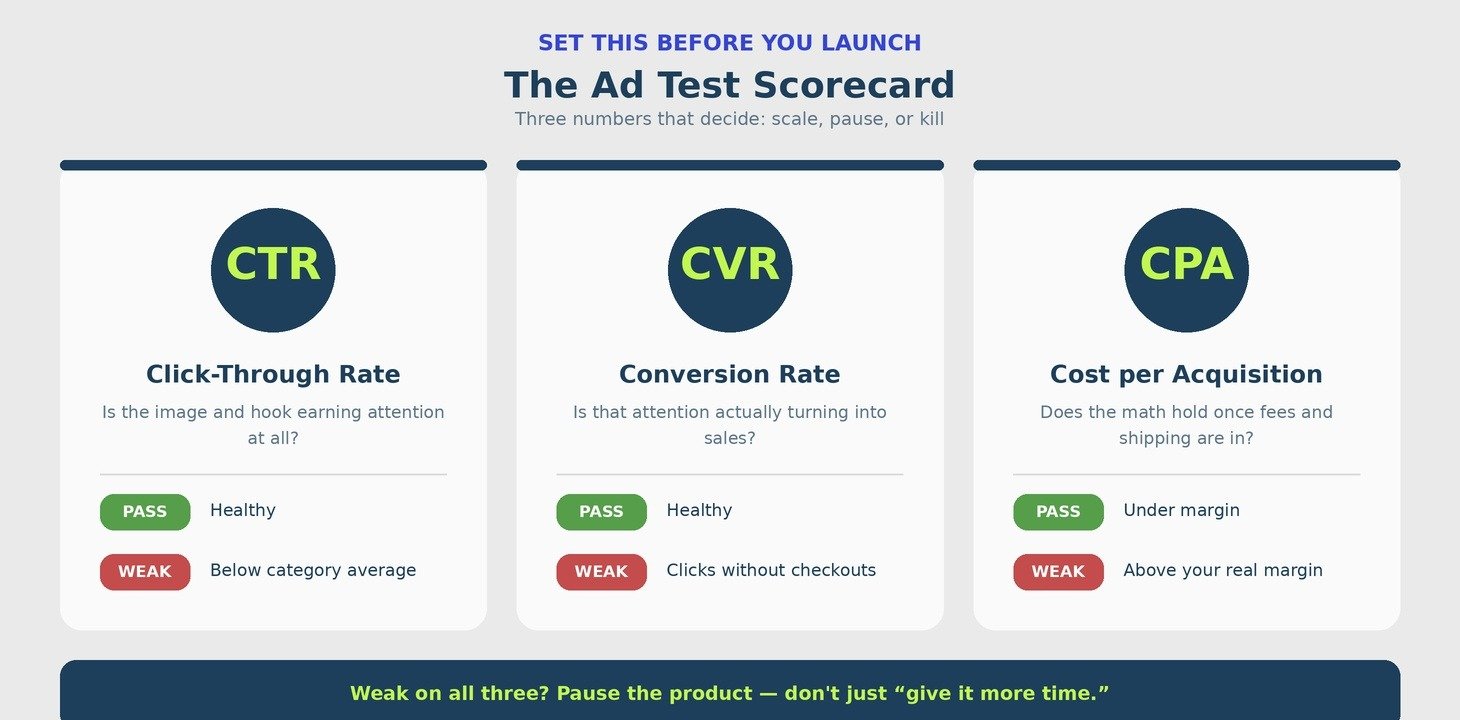
Set your thresholds before the test starts, not after you've seen the results. Deciding what "good" looks like in advance keeps you from rationalizing a weak outcome. At a minimum, track three numbers: click-through rate (is the product image and hook earning attention at all), conversion rate (is that attention turning into sales), and cost per acquisition against your actual margin (is the math sustainable once fees and shipping are factored in).
This math shifts noticeably depending on what you're testing, the margin thresholds worth protecting on a High-Ticket Evergreen Product look very different from a $15 accessory, so pull your real numbers before judging the test, not generic ones. A product that's weak on all three isn't a product to "give more time", it's a product to pause and reconsider.
How Do You Check Demand Without Spending on Ads at All?
Paid testing isn't the only signal available, and it shouldn't be the first one you reach for if a free check can rule a product in or out faster.
Can Free Platform Tools Confirm Demand Before You Spend a Dollar?
Yes, and this is worth doing before your test campaign even goes live. The free, official research tools available on eBay, Amazon, AliExpress, TikTok Shop, and Shopify are covered in detail, platform by platform, in Evergreen Product Categories, Niches, and 50+ Product Ideas, running a quick check there first can save you from spending test-ad budget on a product that free data already flags as weak.
If the product you're validating is a template, course, or printable rather than a physical item, this step looks different, Evergreen Digital Product Ideas for 2026 covers how demand validation shifts when there's no shipping or supplier step involved at all.
How Do You Verify a Supplier Is Reliable Before You Commit?
Demand validation answers "will people buy this." This section answers the question sellers skip far too often: "can I actually deliver it once they do."
Is One Good Sample Ever Enough to Trust a Supplier?
No, and treating it as enough is one of the most common, avoidable mistakes in this entire process. A single sample only proves a supplier can produce one good unit under ideal conditions; it says nothing about whether that quality holds up across a second batch, a busier week, or a slightly different order size.
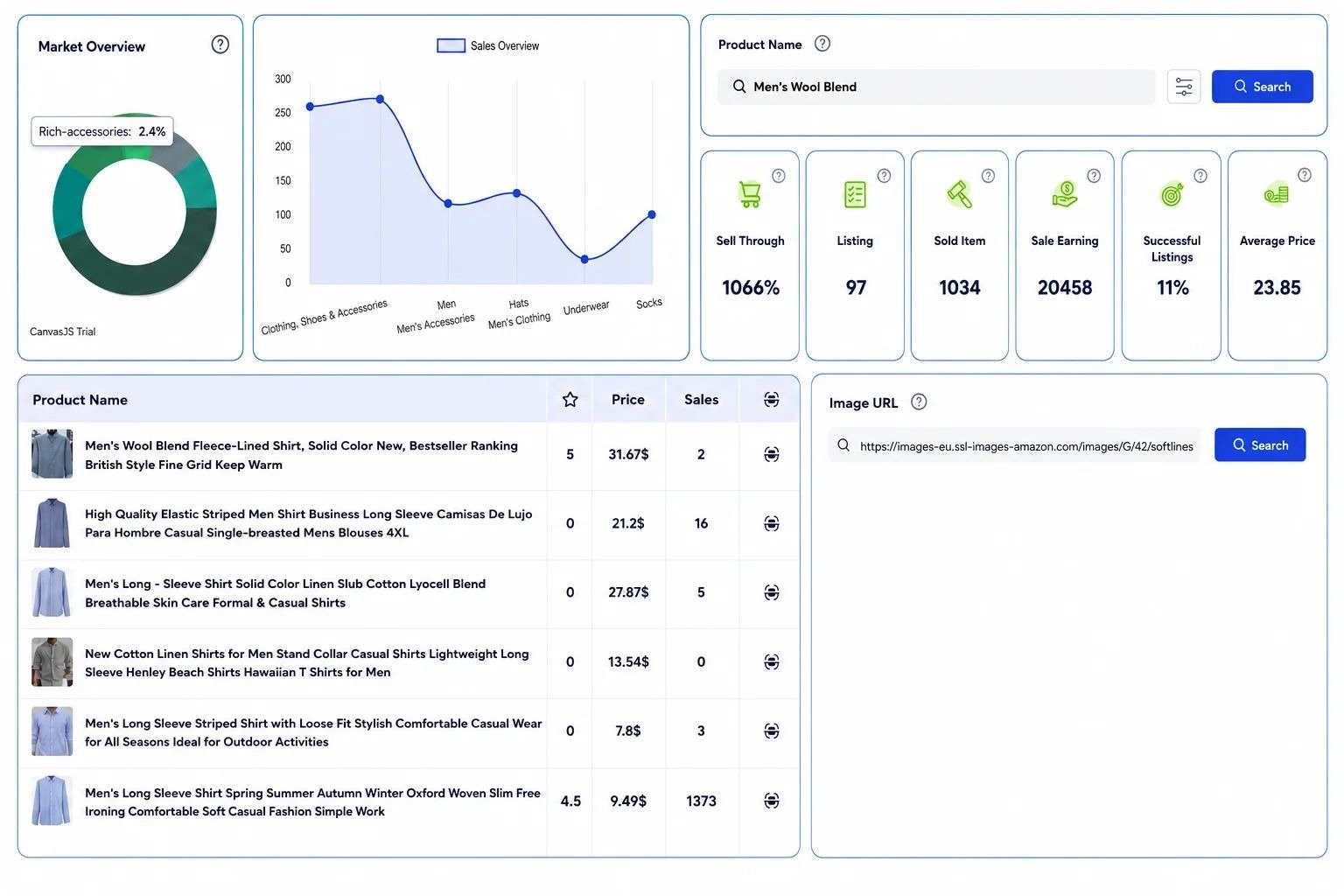
A second test order, placed separately, is what actually reveals whether the first result was genuine consistency or a lucky first impression. Before placing that second order, it's worth reviewing the supplier's actual sales history rather than relying on their own claims, the Express Source Finder tool narrows AliExpress listings down to suppliers with a provable, consistent track record, which gives you a data-backed reason to trust a second order instead of just hoping the first one wasn't a fluke.
What Does a Supplier's Response Speed Actually Predict?
More than sellers expect. How quickly and clearly a supplier communicates during the testing phase, before they have your real, ongoing business, is close to the best version of their communication you'll ever see. If replies are already slow or vague during a small test order, that pattern typically gets worse, not better, once order volume increases and their attention is split across more customers.
What's a Safe Way to Test Fulfillment Before a Real Customer Sees It?
Place a small, real test order and track it exactly the way a customer would, packaging condition, shipping time versus what was promised, and whether tracking information updates accurately.
This isn't about the product quality anymore; it's about whether the entire fulfillment chain behind that product actually works the way it needs to before a paying customer is the one finding out it doesn't. For a fuller framework on vetting suppliers beyond a single test order, Find Reliable eCommerce Suppliers in 2026 covers the complete picture.
How Do You Combine Both Signals Into One Go/No-Go Decision?
Every round of evergreen product testing comes down to two signals, and neither one is enough on its own, strong demand with an unreliable supplier just means a fast path to bad reviews, and a great supplier with no real demand means a beautifully fulfilled product nobody buys.
|
Demand Signal |
Supplier Signal |
Decision |
|
Pass |
Pass |
Scale with confidence |
|
Pass |
Fail |
Delay, find or vet an alternate supplier first |
|
Fail |
Pass |
Kill or pivot the product, not the supplier relationship |
|
Fail |
Fail |
Kill, no part of this is ready to move forward |
A product only earns a "scale" decision when both halves of the test come back clean. Everything else is a signal to pause, not a reason to push forward on hope.
What Are the Most Common Testing Mistakes Sellers Make?
A few patterns show up again and again, and each one quietly undermines the entire testing process.
-
Judging a product by one ad, not the product itself. A weak result can mean the creative or hook failed, not that demand doesn't exist, before killing a product entirely, it's worth ruling out the offer and messaging first.
-
Treating a single sample as full supplier verification. As covered above, one sample proves far less than sellers assume.
-
Testing without a predefined threshold. Deciding what "success" looks like after seeing the results almost always leads to rationalizing a mediocre outcome instead of making a clean call.
-
Letting a failed test become a dead end instead of a redirect. A product that fails the demand test isn't necessarily a wasted effort, sometimes it's a signal to look at High-Demand Products for a trend-driven alternative instead of an evergreen one, or to revisit pricing and positioning through Profit Pivot before writing the product off completely. If the category itself was the real issue rather than the specific item, it may be worth reconsidering your niche before starting the search over from scratch.
Applying the Science of Product Research consistently across every product you test, not just the ones that feel promising, is what turns this from a one-time checklist into a repeatable system.
Ready to Stop Guessing and Start Testing With Real Data?
The sellers who build lasting, profitable catalogs aren't the ones who guess best, they're the ones who make evergreen product testing a non-negotiable step, with clear thresholds and real supplier verification, before a single dollar goes toward scaling. Get $1 for 14 days of full TS Scout access and start verifying real demand and supplier data before your next product goes live.
FAQ
-
What is evergreen product testing, and why does it matter?
Evergreen product testing is the process of validating real demand and supplier reliability with a small, controlled budget before committing to a full-scale launch, it exists to catch a bad decision while it's still cheap to fix.
-
How much should you spend to test a new product?
Keep it small and controlled rather than open-ended; the goal is a clean signal on performance, not volume, so a modest, capped budget over a short window is usually enough to see whether a product is worth scaling.
-
Is one supplier sample enough to confirm reliability?
No, a single sample only proves a supplier can produce one good unit under ideal conditions. A second, separate test order is what actually reveals whether quality and service hold up consistently.
-
What should you do if a product fails the demand test?
Rule out the ad creative and offer before ruling out the product itself, and consider whether it might perform better as a trend-driven listing instead of an evergreen one.
-
What's the biggest mistake sellers make when testing new products?
Treating demand testing and supplier verification as optional extras instead of a required pair, strong demand with an unreliable supplier, or a reliable supplier with no real demand, both lead to the same wasted investment.
like?


Table of Contents
- Why Should You Test an Evergreen Product Before Scaling It?
- How Do You Validate Real Demand With a Small Ad Budget?
- How Do You Check Demand Without Spending on Ads at All?
- How Do You Verify a Supplier Is Reliable Before You Commit?
- How Do You Combine Both Signals Into One Go/No-Go Decision?
- What Are the Most Common Testing Mistakes Sellers Make?
- Ready to Stop Guessing and Start Testing With Real Data?
- FAQ


