

How to Find Reliable eCommerce Suppliers in 2026 (Before a Bad One Costs You More Than Money)
- 2026-06-08
-
 1
1
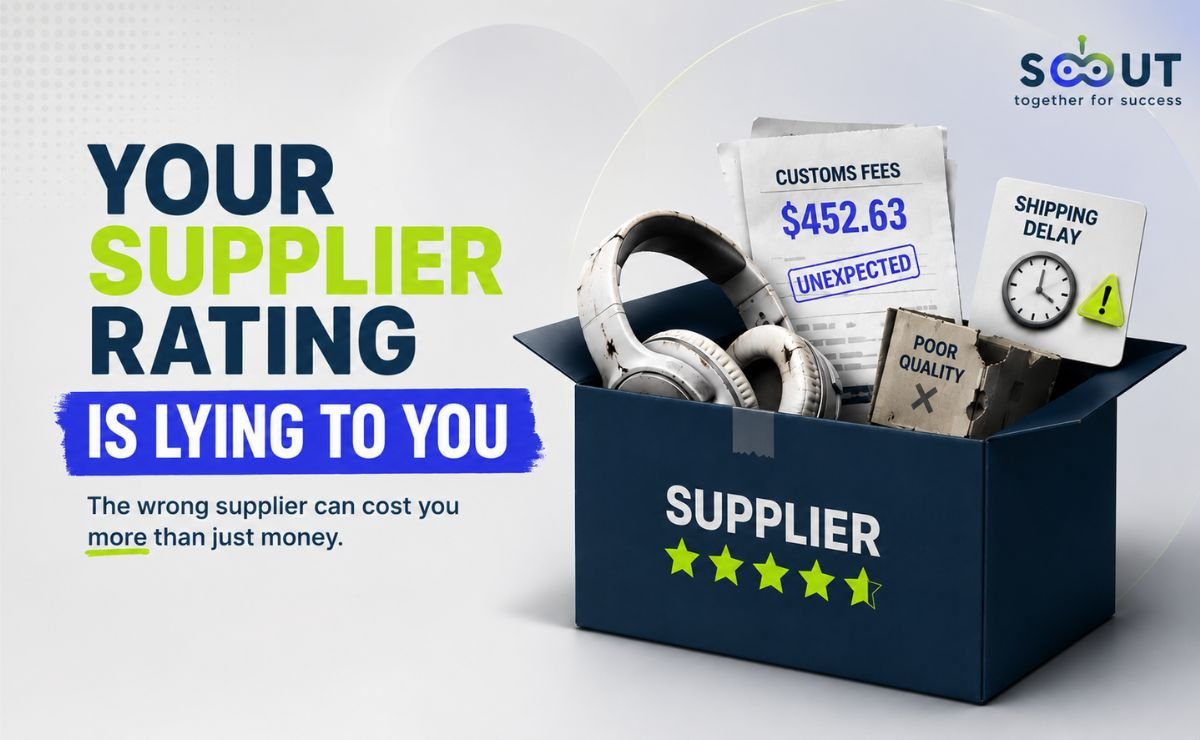
Most sellers don't lose money on a bad supplier through one dramatic failure, it's usually death by a thousand small ones: a slightly slower ship time here, an inconsistent batch there, a customs surprise nobody planned for. In 2026, that last one just got a lot more expensive. Import rules in the U.S., UK, and EU have shifted in ways that directly affect landed cost, regardless of which platform you source through.
This guide covers where to actually find reliable suppliers, how the major sourcing platforms compare, and how to vet sellers properly before you commit, plus the 2026 tariff changes most sourcing guides haven't caught up to yet, using government sources published in the last few months. By the end, you'll have a repeatable evaluation process, not just a list of platforms. Let's start with why supplier selection carries more weight this year than it used to.
Why Does Supplier Selection Matter More in 2026 Than It Used To?
A weak supplier used to mostly cost you refunds and bad reviews. Now it can cost you at customs. Declared value, packaging accuracy, and shipping documentation all directly affect whether your order clears cleanly or gets flagged for duty and delay, and the rules governing that just changed across every major Western market. A supplier who under-declares value "to help you save" isn't doing you a favor anymore; it's a compliance risk that lands on you, not them. Choosing a supplier well in 2026 isn't just about product quality, it's a landed-cost decision.
What Should You Define Before You Start Sourcing?
Before you touch any platform, narrow down three things:
-
Product category and price band, low-ticket items generally absorb the new duty structures more easily than mid-ticket goods, where a flat tariff can erase your margin outright.
-
Target market(s), US, UK, and EU buyers now sit under three different, newly tightened customs regimes, so your sourcing plan needs to match where your customers actually are.
-
Order volume and testing budget, decide whether you're sampling single units or planning consolidated orders, since consolidation is becoming the more cost-effective route under the new rules.
If you're still narrowing down what to sell before you get to supplier vetting, our aliexpress product sourcing guide breaks down category selection in more depth.
Which Platform Should You Actually Source From?
Each major sourcing channel suits a different stage of business. Here's how they actually compare:
|
Platform |
Best For |
Strengths |
Watch For |
|
AliExpress |
Testing new products with low commitment |
Massive catalog, no supplier subscription required, low entry cost |
Shipping times vary by seller; quality control depends entirely on who you vet |
|
eBay |
Sellers wanting established, trust-scored suppliers |
Built-in buyer trust systems, domestic and international options |
Fulfillment policy is strict, see Section 7 |
|
Amazon (via FBA-linked suppliers) |
Sellers scaling toward fast, Prime-eligible fulfillment |
Speed and fulfillment infrastructure once integrated |
Amazon requires you to be seller of record, no third-party packing slips |
|
Spocket |
Sellers prioritizing faster shipping to US/EU buyers |
Curated US and EU-based suppliers, shorter delivery windows than overseas-only sourcing |
Smaller catalog than AliExpress; supplier pricing tends to run higher |
|
Modalyst |
Fashion and lifestyle niches |
Vetted suppliers, native integration with major store builders |
Category range is narrower, less suited to general/multi-niche stores |
|
Direct manufacturers (via platforms like Alibaba or trade directories) |
Higher-volume, private-label sellers |
Lower per-unit cost at scale, more control over branding |
Higher minimum order quantities, more vetting responsibility on you |
|
Trade shows and industry communities |
Relationship-building and higher-investment categories |
Face-to-face quality checks, candid peer feedback |
Slower, higher cost of participation |
For most non-stockholding sellers starting out, AliExpress remains the lowest-friction entry point, which is why the next few sections focus on vetting it properly before you commit to any seller there. Sellers prioritizing faster US/EU delivery windows over catalog size may find Spocket or Modalyst a better fit at the sourcing stage, though the same vetting principles apply regardless of which platform you choose.
How Do You Vet an AliExpress Seller Before You Commit?
A star rating alone doesn't tell you enough. A seller can hit 4.8 almost entirely off one bestseller while the rest of their catalog is inconsistent or sourced from a third party they don't directly control. What actually matters is store-level history: how long they've operated, how consistent their ratings are across their full catalog, and how unit-sold counts trend over time.
This is where Source Finder earns its place, instead of manually clicking through a storefront, you enter the seller's shop URL and get a consolidated report covering their full product listings, pricing, ratings, and total units sold. That shows you whether a seller has real, sustained performance across multiple products, or whether their reputation is riding on one lucky listing.
How Do You Spot Products With Real, Lasting Demand?
The products at the top of AliExpress's "trending" filters change constantly, and by the time a product shows up in generic best-seller lists, it's often already saturated. What you want instead is a way to see demand and sales consistency over time, not just a snapshot.
Express Scanner does this by scanning AliExpress specifically for products with strong, consistent sales activity rather than short-lived spikes, which matters because a product that trends for two weeks and dies isn't worth building a listing, ad spend, and supplier relationship around. Cross-reference whatever you find here against your niche and price-band decisions from step 2 before moving forward.
How Do You Confirm a Specific Product Is Worth Sourcing?
Once you've got a shortlist, you need product-level detail beyond what a listing page shows, filtered comparisons on price, category, and actual sales performance across similar listings, not just the one you happened to click on.
Express Finder is built for this stage: search by product name and filter results by price, category, and sales performance to pull detailed, comparable data across multiple listings at once. This is how you catch the difference between a product that looks good in one listing and a product that's actually performing well across the market, before you've committed to a supplier.
What Marketplace Rules Could Get Your Listings Removed?
Sourcing well doesn't automatically mean you're compliant with the marketplace you sell on. Per Shopify's current guidance, eBay allows fulfilling orders through a wholesale supplier, but it does not allow listing an item and only then buying it from another retailer or marketplace to fulfill that specific order after the sale. Amazon is stricter still, sellers must be the seller of record, and packing slips or invoices identifying another supplier are prohibited. Treat these as two separate rulebooks, not interchangeable ones, and check policy before assuming a method that works on one platform works identically on another.
What Will 2026 Tariff Changes Cost You, No Matter Where You Source From?
This applies regardless of which platform from Section 3 you use, if your supplier ships from overseas, this affects you.
The $800 U.S. de minimis exemption, which let low-value parcels enter duty-free, is gone. It was suspended for China and Hong Kong in May 2025, extended to every other country by August 2025, and on June 24, 2026, U.S. Customs and Border Protection (CBP) issued interim final rules making that suspension indefinite, with formal or informal customs entry now required for essentially every parcel regardless of value. The White House confirmed in February 2026 that the suspension continues under executive order, with permanent statutory elimination locked in from July 2027.
|
Shipment type |
What changed |
|
Postal parcels from China/Hong Kong |
Flat duty (roughly $80–$200 per item) instead of duty-free entry |
|
Commercial couriers (FedEx, UPS, DHL) |
Percentage-based duty instead of postal flat rates |
|
All countries of origin |
Requires a 10-digit HTS code and formal or informal entry, no automatic clearance |
If your cost calculations don't already include duty per shipment, your margin projections are currently wrong.
Are UK and EU Sellers Facing the Same Shift?
Yes, on different timelines. In the EU, the European Commission confirmed the €150 duty-free threshold ends July 1, 2026, replaced by a temporary flat €3 duty per item category until the EU's Customs Data Hub launches around 2028.
In the UK, per GOV.UK, the Autumn Budget 2025 confirmed the current £135 relief will be removed by March 2029 at the latest, with a consultation shaping the replacement system now underway. The relief holds through at least the end of 2026, but sellers building a longer UK strategy shouldn't assume it's permanent.
The pattern across all three markets: duty-free, low-value cross-border selling is closing everywhere at once, whether you're comparing aliexpress vs temu or any other overseas channel, it's worth reviewing pricing now rather than after the next phase lands.
What Should You Check Before Placing a First Order With Any Supplier?
Regardless of which platform from Section 3 you choose, run the same checklist:
-
Sample order first, confirm build quality and packaging before committing to volume.
-
Response time test, message the supplier with a real question and time how long they take to answer.
-
Sales history, not just rating, check performance across their full catalog, not one hero listing.
-
Declared value accuracy, confirm they'll declare accurate shipment values given current customs enforcement.
-
Return and defect policy in writing, get this confirmed before, not after, a dispute.
What Mistakes Quietly Kill Margins When Choosing a Supplier?
-
Ignoring landed cost. Pricing off product cost alone, without the 2026 duty changes above, overstates margin on nearly every order.
-
Judging a seller by one listing. A strong bestseller can mask an inconsistent store — check catalog-wide performance.
-
Skipping the sample order. Descriptions and photos don't confirm quality; a small test order does.
-
Treating marketplace rules as universal. What's fine on eBay may violate Amazon policy, and vice versa.
-
Leaning on unverifiable stats. If a "trending" or "bestseller" claim can't be backed by real sales data, treat it as a guess.
So, Which Supplier Should You Actually Trust?
The one whose numbers hold up once you actually check them, consistent performance across their full catalog, a response time that doesn't leave you guessing, and pricing that still works once 2026's duty changes are factored in. Star ratings and "trending" badges are a starting point, not a decision. For the AliExpress side of your sourcing specifically, TS Scout's toolset, Source Finder, Express Scanner, and Express Finder, is available with a $1, 14-day full-access trial, so you can run this entire vetting process on your own shortlist before committing.
FAQ
-
Is AliExpress still worth sourcing from in 2026 given the new tariffs?
Yes for many categories, but only if you've rebuilt your landed-cost calculations to include current duty rates, low-ticket items generally absorb the change better than mid-ticket goods.
-
Do I need a customs broker to sell AliExpress-sourced products in the U.S.?
Not necessarily for informal entries, but every shipment now requires a correct 10-digit HTS code, so many sellers are using consolidators or brokers to avoid classification errors.
-
Are UK sellers affected by the same changes as the US right now?
Not yet as directly, the UK's £135 relief stays in place through at least the end of 2026, with full removal planned by March 2029, so the urgency is lower but the direction is the same.
-
How can I tell if an AliExpress seller's rating is reliable?
Check their performance across their full catalog and sales history over time, not just their star rating or single bestselling listing.
-
What's the safest way to test a new supplier?
Place a small sample order first, and evaluate shipping time, packaging accuracy, and product quality before committing to a larger order.
like?


Table of Contents
- Why Does Supplier Selection Matter More in 2026 Than It Used To?
- What Should You Define Before You Start Sourcing?
- Which Platform Should You Actually Source From?
- How Do You Vet an AliExpress Seller Before You Commit?
- How Do You Spot Products With Real, Lasting Demand?
- How Do You Confirm a Specific Product Is Worth Sourcing?
- What Marketplace Rules Could Get Your Listings Removed?
- What Will 2026 Tariff Changes Cost You, No Matter Where You Source From?
- Are UK and EU Sellers Facing the Same Shift?
- What Should You Check Before Placing a First Order With Any Supplier?
- What Mistakes Quietly Kill Margins When Choosing a Supplier?
- So, Which Supplier Should You Actually Trust?
- FAQ


