

Top eBay Suppliers in 2026: How to Source Without Risking Your Store
- 2025-02-24
-
 0
0
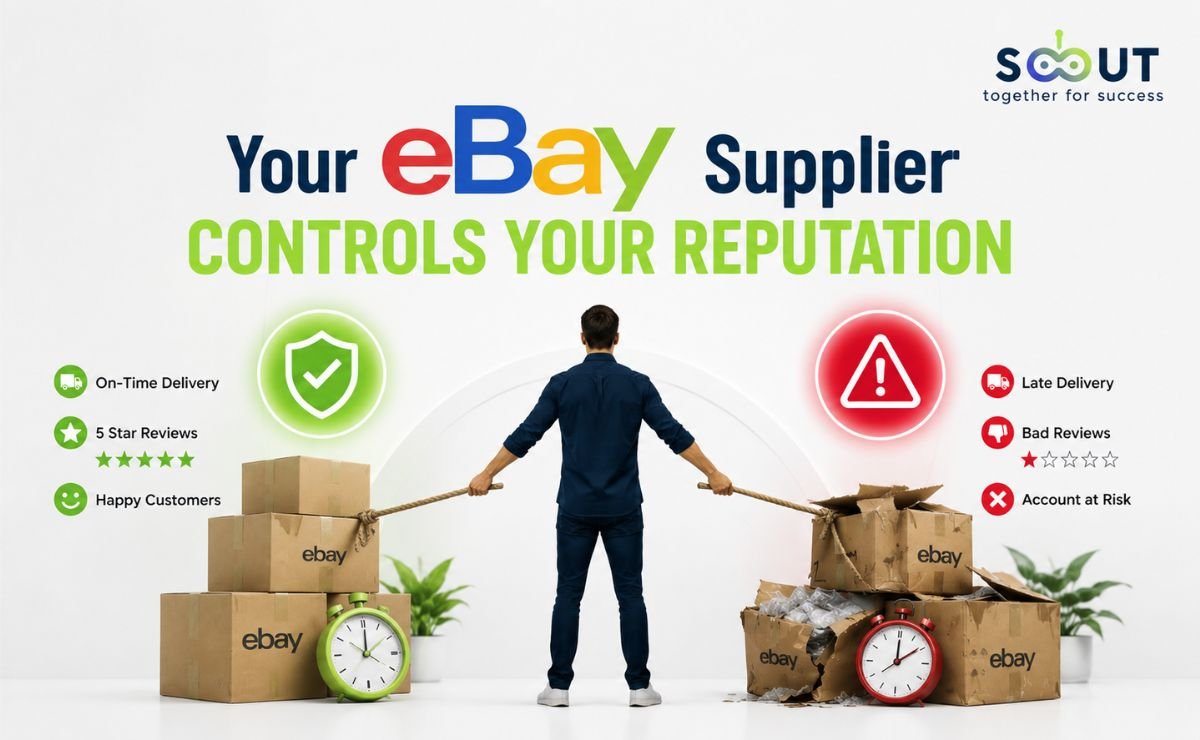
Picking a supplier feels like the easy part of starting a stock-free eBay store, until a late shipment tanks your seller rating three weeks in. The truth is, your supplier choice is the single decision that determines whether your store survives its first ninety days or gets flagged for something you didn't even realize was against the rules. eBay has spent 2025 and 2026 tightening how it detects unreliable fulfillment, which means the sourcing platform you pick today shapes your account health for months afterward.
This guide compares the top eBay suppliers sellers actually use in 2026, what each one gets right, where it falls short, and how to combine them so your store never depends on luck. This is really an extension of The Science of Product Research: the sellers who win aren't the ones with the best product, they're the ones who verified it first. You'll walk away knowing exactly which platform fits a beginner's budget, how to spot a supplier that will get you suspended, and how to test any source before your first real listing goes live. Let's start with the question every new seller asks first.
Is Selling Without Holding Stock Still Allowed on eBay in 2026?
Yes, with one condition that trips up more sellers than any other rule. According to eBay's own policy, fulfilling orders directly from a wholesale supplier is allowed on the platform, and this hasn't changed. What isn't allowed: listing an item and then buying it from another retailer or marketplace that ships straight to your customer. That's the line between a compliant stock-free store and one that's one buyer complaint away from a suspension.
The part sellers underestimate is what comes after "allowed." eBay is explicit that you remain fully responsible for the item's safe delivery within your stated time frame and for the buyer's overall satisfaction, even though you never touch the product. Your supplier's mistake becomes your account's problem. That single fact is why "top eBay suppliers" isn't just a shopping question. It's a risk-management one.
Why Does Your Supplier Choice Decide Your eBay Account's Fate?
Every metric eBay uses to judge your store, late shipment rate, item-not-received cases, order defects traces back to whether your supplier ships what they promise, when they promise it. A supplier with vague transit estimates doesn't just cost you a few frustrated buyers; it compounds. One late shipment is a bad review. A pattern of them is a seller-performance flag that limits your visibility in search, regardless of how good your listings are.
This is also where eBay requires tracking to be uploaded within the handling time you've stated in your listing, a detail that's entirely dependent on your supplier communicating dispatch promptly. A supplier who batches shipments or delays confirmation puts that requirement on you to fix, not them.
How Does AliExpress Really Compare to Other Top eBay Suppliers?
This is the comparison most guides get wrong, they either oversell one platform or list ten options with no real differentiation. Here's how the platforms sellers actually use stack up, based on what each one currently states about itself.
|
Platform |
Sourcing Model |
Shipping Reality |
Cost to Access |
Best Fit |
|
AliExpress |
Open marketplace, 100+ million products from 300,000+ suppliers |
No MOQ; transit varies heavily by seller and destination |
Free to browse and buy |
Broadest catalog, lowest starting cost |
|
Spocket |
Curated catalog, roughly 80% US/EU-based suppliers |
Typically 2–5 days within US/EU |
Paid tiers starting around $39.99/month |
Faster shipping, smaller product range |
|
SaleHoo |
Static directory of 8,000+ manually verified wholesalers |
Varies by individual supplier, you negotiate directly |
Paid subscription |
Manual sourcing, no built-in ordering |
|
CJdropshipping |
Sourcing + fulfillment network with warehouses in China, the US, Germany, Thailand, and Indonesia |
Faster from local warehouses, slower for China-only stock |
Free to join, pay per order |
Sellers who want warehousing without owning it |
|
Banggood |
Direct retailer with its own inventory across 37 overseas warehouses |
As fast as 2 days near a warehouse, up to several weeks otherwise |
Free reseller program |
Electronics, gadgets, and bulk-category sellers |
Two things stand out. First, AliExpress wins on sheer optionality, no other platform on this list gets close to its catalog size or entry cost. Second, every alternative is solving a narrower version of the same problem AliExpress has: inconsistent quality and shipping variance. If you're also weighing AliExpress against other low-cost marketplaces for sourcing, rather than supplier-vetting platforms like these, our AliExpress vs Temu comparison breaks down that specific decision.
Which Combination Actually Wins for a Stock-Free eBay Seller?
Here's the honest trade-off: AliExpress gives you the widest selection and the lowest cost of entry, but it puts the vetting work entirely on you. A curated platform like Spocket removes that work, for a monthly fee and a fraction of the catalog.
The stronger move is keeping AliExpress as your sourcing base and closing its one real gap, supplier vetting, with a tool built for it, rather than paying a subscription for a smaller catalog. For the full walkthrough of sourcing well on AliExpress itself, see our AliExpress Product Sourcing Guide.
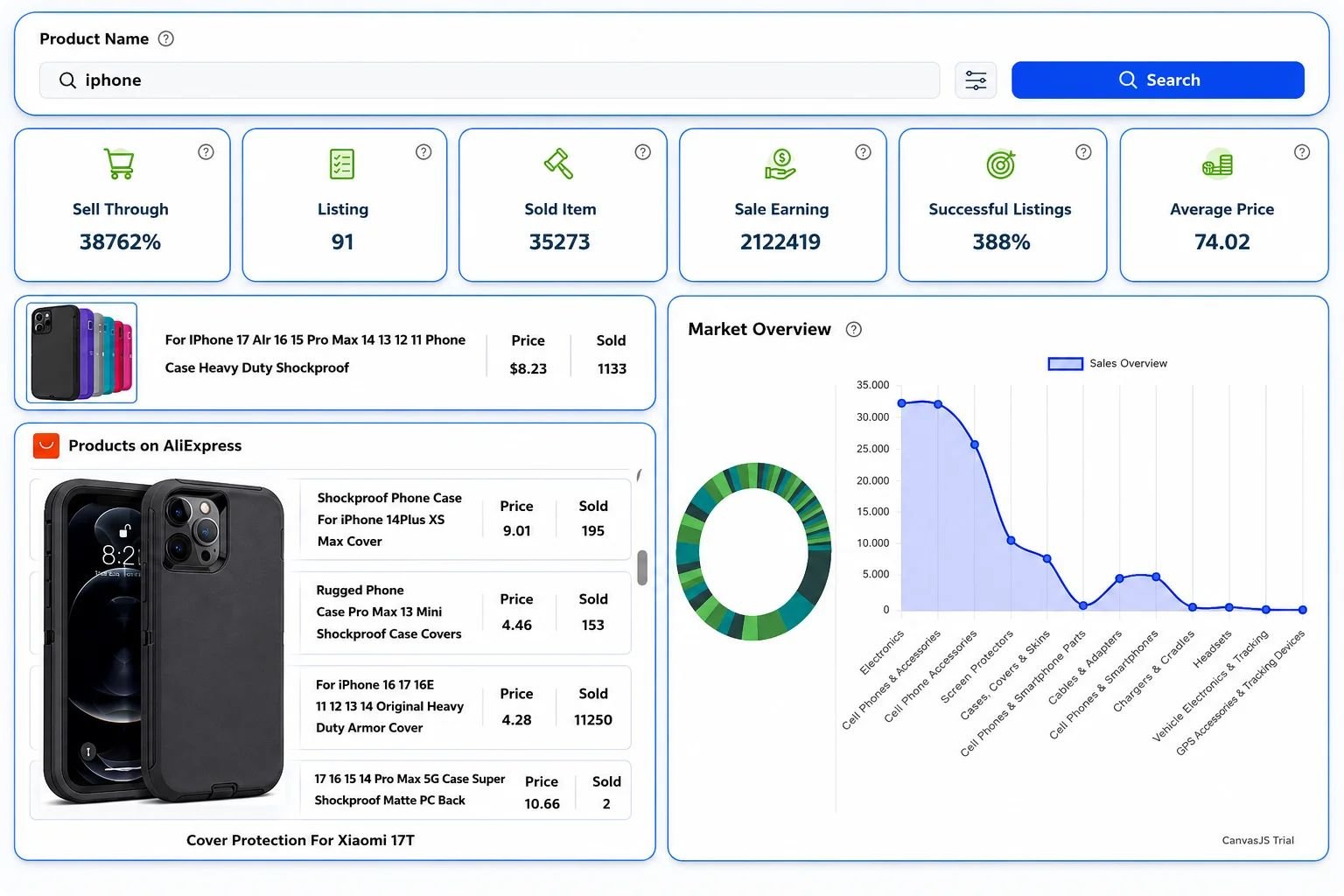
Start broad with TS Scout's Express Scanner, which surfaces trending, best-performing products across AliExpress filtered by price, rating, and sales volume, so you're scanning the whole marketplace instead of guessing where to start. Once something looks promising, go deeper with Express Source Finder: point it at that seller's store and see every product they carry, current pricing, and sales patterns, so you can spot items with real momentum before they saturate, rather than relying on a single listing's numbers. That two-step process is the vetting layer Spocket charges $39.99+/month to bake in, except you keep AliExpress's full catalog and pricing instead of trading it away for a curated shortlist.
Where Can You Find Reliable Suppliers for a Specific Niche?
General marketplaces are the right starting point, but sellers who specialize outperform sellers who don't have a focused pet-supplies or home-organization store builds repeat buyers faster than a store selling everything to everyone. The challenge is knowing which niche actually has demand before you commit inventory decisions to it.
This is where eBay Niche Finder – Segment Insight earns its place: it breaks down specific product categories by demand, competition, and growth potential before you pick suppliers at all, so your niche decision is based on data instead of a hunch. Once the niche is validated, narrowing supplier search on AliExpress, CJdropshipping, or Banggood to that category becomes a much faster process. For a deeper walkthrough of this step, see our guide on Finding High-Demand Products.
What Are the Warning Signs of an Unreliable or Scam Supplier?
Not every bad supplier is a scam, but every scam looks like a bad supplier at first. Watch for these three patterns specifically:
-
Payment demanded entirely upfront, with no sample option: Legitimate wholesale and dropship suppliers almost always allow a sample order before bulk commitment.
-
No verifiable business presence: No consistent reviews across platforms, no traceable address, or a storefront that's only weeks old with inflated order counts.
-
Pressure toward a minimum order quantity before you've tested quality: A supplier confident in their product doesn't need to lock you into volume first.
None of these guarantee fraud on their own, but two or more together are reason enough to walk away before you list anything. If you want the fuller picture of what a bad sourcing decision actually costs a store beyond the obvious, Before a Bad One Costs You More Than Money covers it in depth.
How Do You Test a Supplier Before You List Their Products?
Sometimes you already know exactly what you want to sell, you spotted it in a competitor's listing or a product photo, and the only question is where to source it. That's what TS Scout's Express Finder is built for: paste the image, and it matches the exact or closest listing on AliExpress and connects you with verified suppliers carrying it, so you're not scrolling through search results hoping to spot the right one.
Picture a seller who found a home-decor supplier this way, with striking product photos and prices well under competitors. Instead of listing immediately, she placed one sample order to her own address first. It arrived two weeks later than quoted, in a box with another company's branding inside, a detail no amount of research from the listing page alone would have caught. She never listed that supplier's products, and that one test order saved her from a wave of late-shipment complaints.
That's the process worth repeating with every new supplier, however you found them:
-
Order a sample to yourself first, never straight to a customer.
-
Check the packaging, for foreign branding, invoices, or pricing that would expose the fulfillment source to your buyer.
-
Time the actual delivery against what was quoted, not what was promised.
-
Judge the product honestly, would you pay full retail for it yourself?
Before committing further, it's worth cross-checking that the product has proven demand on eBay itself. eBay Product Research lets you filter by price, marketplace, and seller feedback to see real listing volume and units sold, confirming there's an actual market before you build a supplier relationship around it.
What Mistakes Quietly Damage Your Seller Metrics?
The mistakes that hurt most aren't dramatic, they're small, repeated gaps between what your listing promises and what your supplier delivers:
-
Late tracking uploads. eBay measures whether tracking is uploaded within your stated handling time, and a supplier who confirms shipment late puts you in violation of your own listing.
-
Handling times that don't match reality. Promising 1-day handling when your supplier needs 3 creates a late-shipment penalty every single time.
-
Listing stock your supplier no longer carries. Every cancellation from an out-of-stock item counts against your cancel rate.
-
Skipping the packaging check. A single buyer photo of foreign branding inside your box can trigger a policy review.
None of these require a bad supplier, they happen with a decent one you haven't fully tested yet, which is exactly why step 7 isn't optional.
So, Which Supplier Will You Trust With Your Next 100 Orders?
Every platform in this guide can work. The difference between the sellers who scale and the ones who stall out is whether they test before they trust, and whether they're vetting suppliers with real data instead of good product photos. Start your next sourcing decision with a $1, 14-day full-access trial of TS Scout and see your supplier and product data before you commit a single listing.
FAQ
-
Can I use multiple suppliers for my eBay store?
Yes, and most experienced sellers do. Spreading products across two or three verified suppliers protects you if one runs into stock shortages or shipping delays, and it lets you compare real performance side by side.
-
How do I handle returns when working with an external supplier?
Confirm the supplier's return policy in writing before you list anything from them, then mirror that policy clearly in your own eBay listings so buyers know what to expect. You're the seller of record, so any gap between your supplier's return terms and what you've promised buyers falls on you.
-
Are there hidden costs with supplier platforms like Spocket or SaleHoo?
Sometimes. Beyond the subscription fee, watch for charges tied to custom packaging, expedited shipping, or branding add-ons that aren't part of the base price. Ask for a full cost breakdown before committing to any paid platform.
like?


Table of Contents
- Is Selling Without Holding Stock Still Allowed on eBay in 2026?
- Why Does Your Supplier Choice Decide Your eBay Account's Fate?
- How Does AliExpress Really Compare to Other Top eBay Suppliers?
- Which Combination Actually Wins for a Stock-Free eBay Seller?
- Where Can You Find Reliable Suppliers for a Specific Niche?
- What Are the Warning Signs of an Unreliable or Scam Supplier?
- How Do You Test a Supplier Before You List Their Products?
- What Mistakes Quietly Damage Your Seller Metrics?
- So, Which Supplier Will You Trust With Your Next 100 Orders?
- FAQ