
WooCommerce vs Shopify: Which One Actually Wins for Sellers?
- 2025-07-16
-
 0
0

Setting up an online store is one of the most exciting yet critical steps for any ecommerce business. Choosing the right e-commerce platform plays a significant role in your success, especially if you're not holding your own inventory and depend entirely on suppliers to fulfil every order. There's no shortage of options, but two names consistently dominate the conversation for ecommerce sellers globally: WooCommerce vs Shopify. If you're targeting the UK market, you'll also see a surge in resources and opportunities focused on Shopify eCommerce in the UK, making it an incredibly popular choice among ambitious entrepreneurs!
This guide breaks down both platforms across cost, market share, SEO, transaction fees, and ease of use, with a specific focus on what matters to a non-stockholding seller: low overhead, reliable supplier integrations, and a setup that doesn't eat into thin margins. Whether you're just starting or looking to scale, this comparison will help you make an informed decision.
What Are WooCommerce and Shopify?
Before we dig deeper, here's a brief overview of both platforms.
WooCommerce is a free, open-source plugin designed for WordPress, allowing you to convert a standard site into a fully-functioning online store. It's renowned for its flexibility and customisation capabilities, making it a powerful choice for those wanting complete control over their store.
Shopify, on the other hand, operates as an all-in-one hosted platform offering everything you need to design, launch, and manage your online store. Its simplicity and user-friendliness are the core appeals, perfect for entrepreneurs who want a straightforward setup, no server management required.
Now that we know what they are, let's evaluate how WooCommerce vs Shopify compare across the areas that matter most to a seller running without stock on hand.
How Do WooCommerce and Shopify Compare on Cost?
For a non-stockholding seller, every dollar spent on infrastructure is a dollar not spent on ads or testing new products, so cost isn't just a line item, it directly shapes how fast you can experiment. According to Shopify's official pricing page, here's how the two platforms stack up:
|
WooCommerce |
Shopify |
|
|
Core platform |
Free (open-source plugin) |
Paid subscription |
|
Entry-level cost |
Hosting-dependent, varies by provider and store size |
$29/month (billed annually) or $39/month (billed monthly) |
|
Mid-tier cost |
Managed WordPress hosting, varies by provider |
$79/month (billed annually) or $105/month (billed monthly) |
|
Enterprise tier |
Dedicated/enterprise hosting, varies by provider |
From $2,300/month (Shopify Plus) |
|
Extras |
Domain, theme, extensions billed separately |
Custom themes and apps billed separately |
So Which Platform Wins on Cost?
Shopify offers an attractive all-in-one package but can quickly become expensive as you move up toward the Grow or Plus tiers. WooCommerce offers greater cost control by letting you scale infrastructure spend to match your actual order volume, useful when you're still testing which products are worth committing to.
Which Platform Has More Market Share?
When looking at adoption among ecommerce sellers, market share is often used as a shortcut for judging reliability and scalability, but it's worth being cautious here: third-party tracking tools measure this differently (some count all detectable websites, others count only active stores), so the exact percentage shifts significantly depending on which report you're reading. What's consistent across sources is that WooCommerce and Shopify remain the two dominant platforms by a wide margin over any competitor, with WooCommerce generally leading on raw site count and Shopify leading among the most-visited, highest-revenue stores.
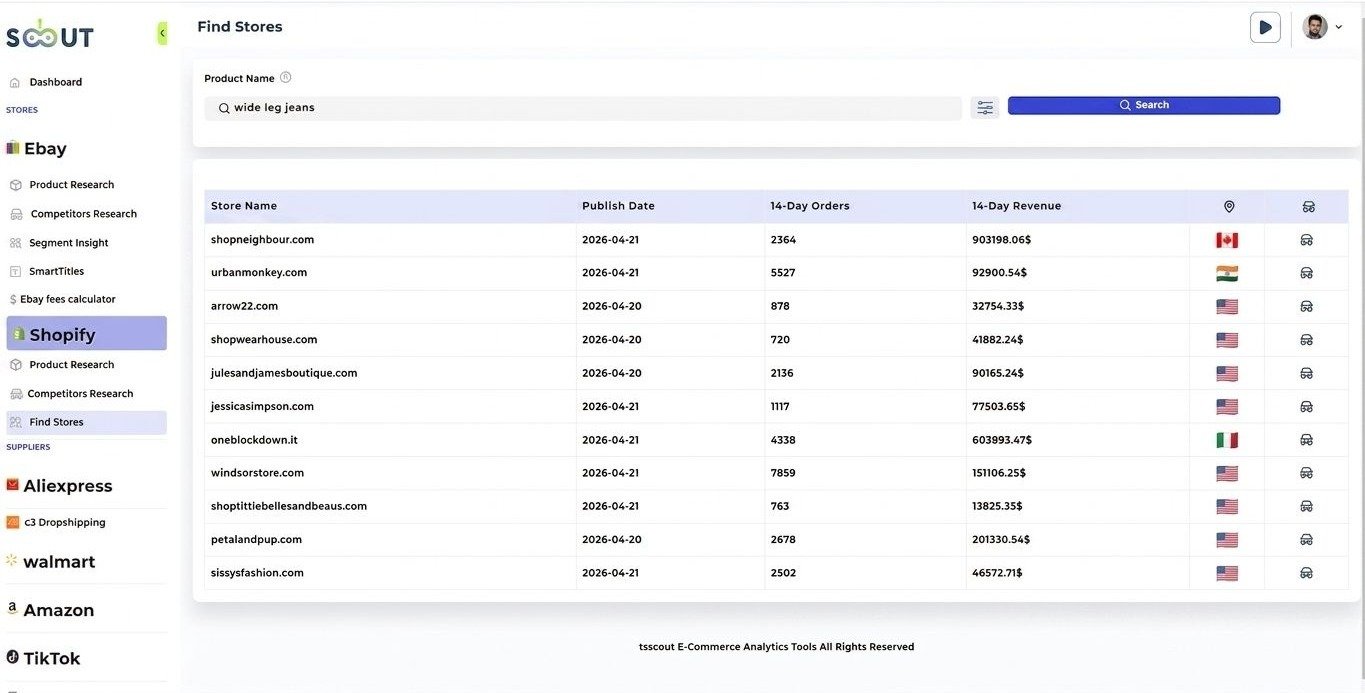
For sellers focusing on Shopify eCommerce in the UK, the local support and resources can provide a competitive edge regardless of which platform has the bigger global footprint. If you want real numbers instead of relying on shifting third-party estimates, Shopify Store Finder lets you pull up actual live Shopify stores in your niche directly.
How Do WooCommerce and Shopify Compare on SEO?
For non-stockholding sellers, organic traffic is often the cheapest customer acquisition channel available, since every paid click eats directly into a margin that's already thinner without owned inventory to control pricing on.
WooCommerce:
-
Full control over SEO configurations using WordPress plugins like Yoast SEO or Rank Math.
-
Ability to create highly customised, content-driven pages and blogs for added SEO value.
-
Complete control over site speed, provided you're using strong hosting.
Shopify:
-
Built-in SEO tools such as automatic sitemap.xml updates and customisable title tags/meta descriptions.
-
Faster page speeds out of the box compared to some poorly optimised WordPress-hosted WooCommerce stores.
So Which Platform Wins on SEO?
WooCommerce excels for users who prioritise flexibility and advanced SEO setups, while Shopify stands strong for users keen on simplicity with reliable baseline tools.
How Do WooCommerce and Shopify Compare on Transaction Fees?
Transaction fees based on Shopify's official pricing page, are easy to overlook until they've quietly eaten a chunk of your margin, and for a seller reselling supplier stock rather than owned inventory, that margin is often the whole game.
|
Plan tier |
Shopify online card rate |
Shopify third-party gateway surcharge |
|
Basic |
2.9% + $0.30 |
2% |
|
Grow |
2.7% + $0.30 |
1% |
|
Advanced |
2.5% + $0.30 |
0.6% |
WooCommerce itself charges no transaction fee, but payment gateways like Stripe or PayPal take a percentage, typically 1.4%-2.9%, and you're free to integrate almost any gateway, which allows for affordable, location-specific solutions.
So Which Platform Wins on Transaction Fees?
WooCommerce shines here for its flexibility and lack of compulsory platform-imposed fees. Shopify is more restrictive, penalising sellers who choose alternative payment methods instead of Shopify Payments.
Which Platform Is Easier to Use for Beginners?
-
WooCommerce: offers steep customisation options but requires technical knowledge for setup; beginners may find managing hosting, SSL certificates, and plugins overwhelming.
-
Shopify: intuitive, drag-and-drop functionality makes it highly user-friendly, with hosting and security bundled together and dedicated customer support if you get stuck.
Once your store is live, the next hurdle is usually the listings themselves. Our guide on how to Write Shopify Product Descriptions covers how to turn that beginner-friendly setup into listings that actually convert.
So Which Platform Wins on Ease of Use?
Shopify is the ideal choice for beginners looking to get their stores online without much hassle, while WooCommerce appeals to experienced users comfortable with a more hands-on approach.
How Do WooCommerce and Shopify Support Non-Stockholding Sellers?
This is where the comparison matters most if you don't hold your own stock, since your entire business depends on how well the platform connects to suppliers.
WooCommerce offers dedicated product sourcing and fulfillment plugins like AliDropship and WooDropship, allowing integration with suppliers like AliExpress.
Shopify's own app ecosystem covers the same ground through apps like DSers, Zendrop, and CJ Dropshipping, which handle supplier connections directly inside the Shopify App Store. It simplifies supplier connections but typically adds cost through app subscriptions. For sellers sourcing into the UK specifically, our roundup of Top UK Suppliers for Shopify Store is a useful next step once your app is connected, and Shopify Insight can show you which products are actually performing before you commit to sourcing them.
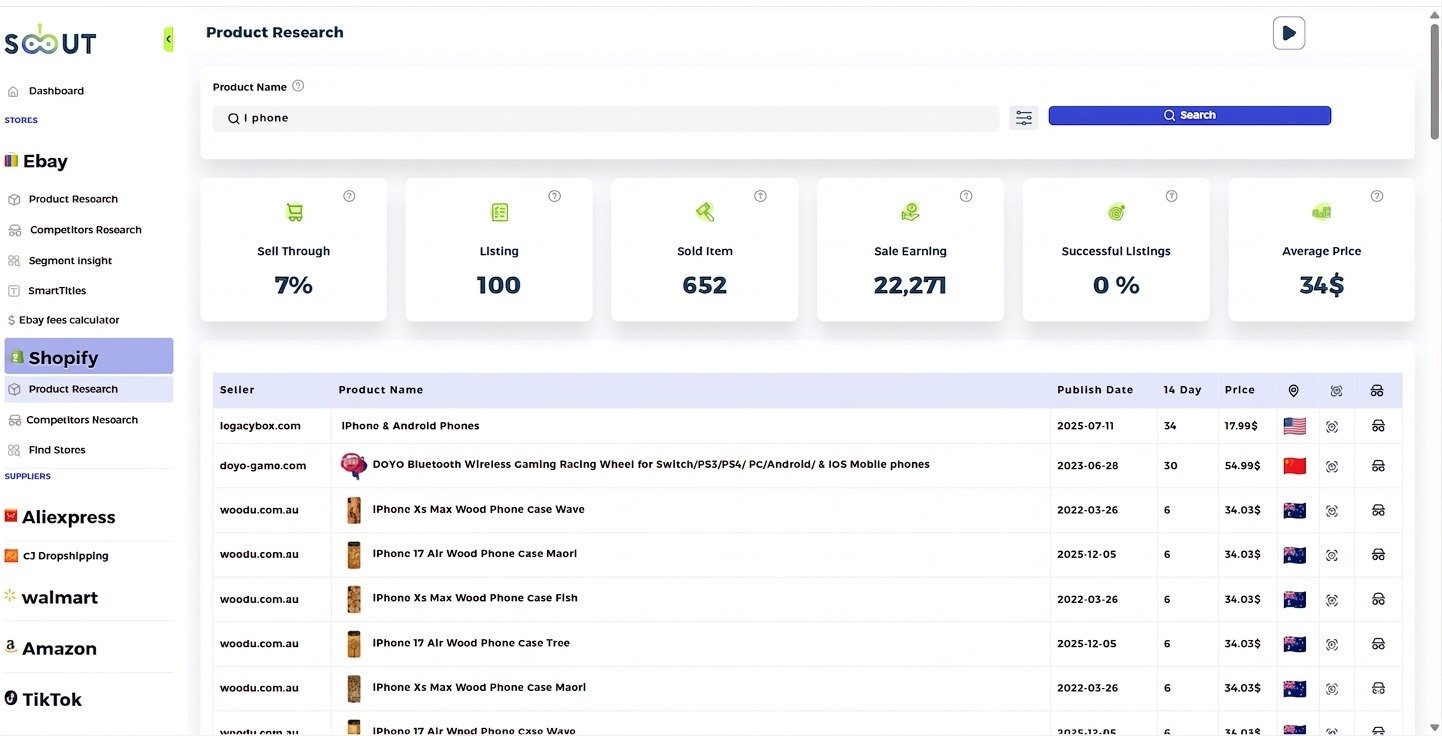
So Which Platform Wins for Non-Stockholding Sellers?
If you're a beginner or managing a smaller store, Shopify's setup simplicity and app availability are ideal. WooCommerce is better suited for advanced sellers who need full control and technical flexibility over how supplier integrations work.
What Are the Pros and Cons of WooCommerce vs Shopify?
Why Might WooCommerce Be the Right Choice?
WooCommerce is a WordPress plugin that gives you complete customisation over your online store, ideal for sellers who want full ownership and control over every element of their shop.
Pros:
-
Total customisation, shape your store exactly how you envision it.
-
Lower ongoing costs if you're comfortable managing hosting and updates.
-
Access to a vast library of plugins and integrations for advanced functionality.
-
Open-source platform with strong community support.
Cons:
-
Requires technical knowledge, especially for setup and maintenance.
-
You're responsible for hosting, security, backups, and updates.
-
Managing plugins can become complex as your store grows.
-
No dedicated support team, reliance on forums and documentation.
Best for: sellers who want full control, scalability, and customisation while being comfortable with technical management.
Why Might Shopify Be the Right Choice?
Shopify is designed for ease of use, making it a great option for beginners or sellers who need to launch quickly without technical hurdles.
Pros:
-
Intuitive and beginner-friendly, with fast setup.
-
Seamless supplier integration and automated order fulfilment.
-
Secure hosting and built-in payment gateways simplify operations.
-
Access to a large app ecosystem for added functionality.
Cons:
-
Higher ongoing costs, including monthly fees and app expenses.
-
Limited flexibility for deep customisations.
-
Less control over store design and features compared to WooCommerce, and some sellers get caught out by Shopify's Return Policy Gap if they haven't set one up before their first sale.
Best for: sellers who value speed, simplicity, and reliability without needing advanced customisations.
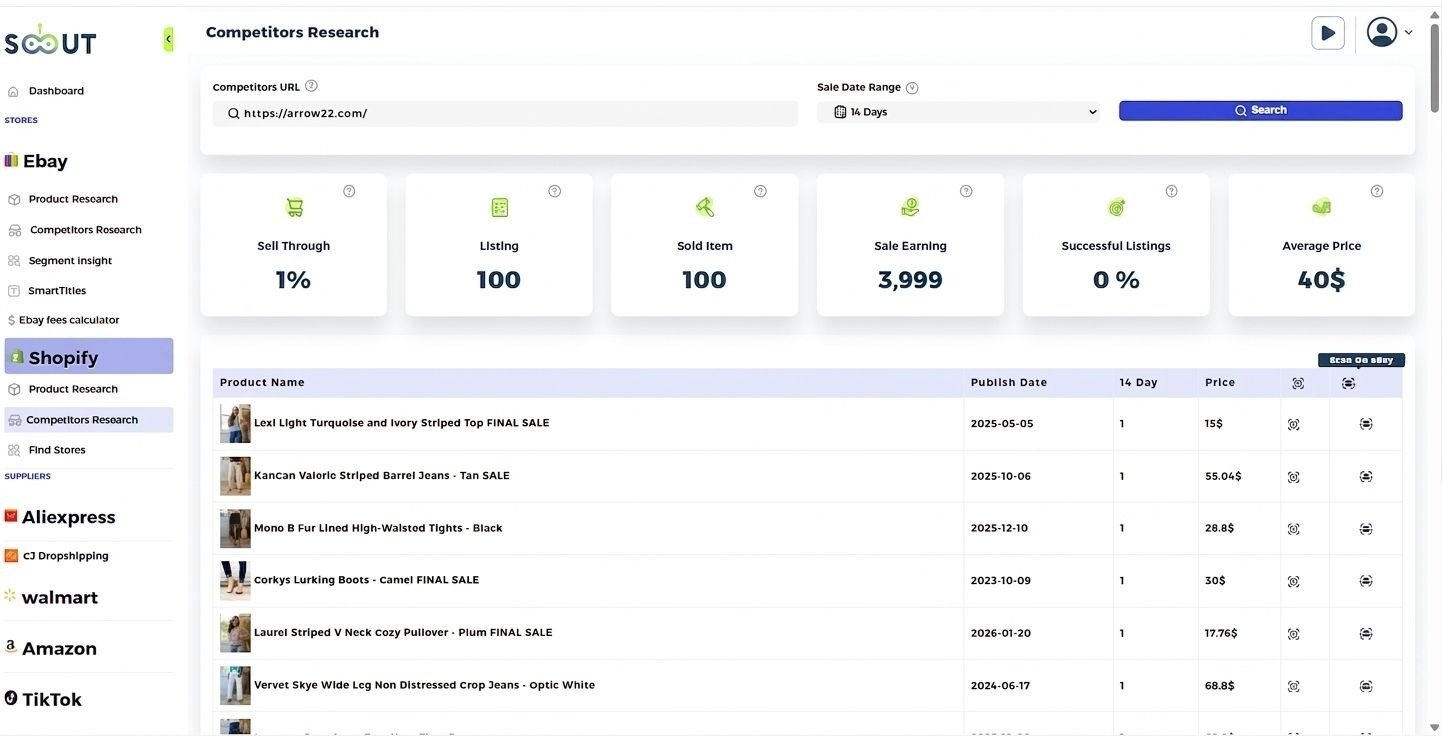
Before you settle on either platform, it's worth checking who else is already selling there. Ethical Shopify Competitor Research walks through how to study existing Shopify stores the right way, and Shopify Competitors Research tool gives you that same visibility directly, pulling real competitor listings and pricing without ever needing their login.
Which Platform Is Right for You?
If you prioritise flexibility, control, and long-term scalability, WooCommerce is a great option, especially if you're comfortable handling the technical side. If simplicity, ease of use, and fast setup are your main concerns, particularly while you're still validating products without holding stock, Shopify is the more forgiving choice. Both platforms have their strengths, so the decision ultimately comes down to your business goals and technical comfort.
Which One Will You Choose to Build Your Store On?
Whether you land on WooCommerce or Shopify, the platform is only half the equation, what you sell and how you research it matters just as much when you're not holding your own stock.
Try TS Scout's full toolkit for $1, with 14 days of full access, and start scouting real products, real suppliers, and real competitors before you commit your next listing.
FAQS
1. Is WooCommerce or Shopify cheaper overall?
WooCommerce has no mandatory subscription fee, but hosting, extensions, and maintenance add up over time. Shopify has a fixed monthly cost starting at $29/month (billed annually) that covers hosting and security by default, so the "cheaper" option depends on how much of the setup work you're willing to do yourself.
2. Can I switch from WooCommerce to Shopify later, or vice versa?
Yes, both platforms support store migration, though moving product data, orders, and customer history between them typically requires a migration app or a developer's help to avoid data loss.
3. Does Shopify or WooCommerce work better for a non-stockholding seller sourcing into the UK?
Both support it. Shopify does it through App Store integrations like DSers or CJ Dropshipping, while WooCommerce relies on plugins like AliDropship. The right fit usually comes down to whether you'd rather manage apps inside a hosted platform or plugins on a self-hosted one.
4. Do I need coding knowledge to use either platform?
No coding is required for either at a basic level. Shopify is built to be usable without any code. WooCommerce can also run without coding, but customising it beyond the basics is easier with some technical comfort.
like?


Table of Contents
- What Are WooCommerce and Shopify?
- How Do WooCommerce and Shopify Compare on Cost?
- Which Platform Has More Market Share?
- How Do WooCommerce and Shopify Compare on SEO?
- How Do WooCommerce and Shopify Compare on Transaction Fees?
- Which Platform Is Easier to Use for Beginners?
- How Do WooCommerce and Shopify Support Non-Stockholding Sellers?
- What Are the Pros and Cons of WooCommerce vs Shopify?
- Which Platform Is Right for You?
- FAQS