
Shopify eCommerce in the UK: The Complete Guide for Beginners
- 2025-05-13
-
 2
2
Starting an online business in the UK no longer means renting a warehouse or gambling on a container of stock. Shopify eCommerce in the UK has become one of the fastest ways for beginners to launch a real storefront without holding a single unit of inventory. Online sales now sit at roughly 27.6% of all UK retail spending, according to the Office for National Statistics, up from just 19.2% in 2019, and that structural shift is exactly what makes an inventory-free storefront a realistic first business rather than a side experiment. Pair that demand with Shopify's app ecosystem, and you have a low-overhead way to test a niche, build a brand, and reach UK shoppers without upfront stock risk.
This guide walks through how the model actually works in 2026, what it costs, which suppliers are worth trusting, and how to register the business properly with HMRC from day one. By the end, you'll know exactly what separates a Shopify store that survives its first year from one that stalls out after the first ad campaign.
How Does the No-Inventory Shopify Model Actually Work in the UK?
Shopify eCommerce in the UK runs on a simple mechanic: a customer orders from your store, the order routes to a supplier, and the supplier ships directly to the customer. You never touch the product. Your job is the storefront, the marketing, the pricing, and the customer experience, the supplier handles fulfilment. This is different from traditional retail, where you buy stock upfront and hope it sells; here, you only pay your supplier once a sale has already happened, which is why the model appeals so strongly to first-time UK entrepreneurs working with limited starting capital.
Why Are More UK Entrepreneurs Choosing Shopify Ecommerce in 2026?
A few factors keep pulling new sellers toward this model specifically in the UK market:
-
Low barrier to entry. No warehouse, no upfront stock purchase, no long-term lease.
-
A platform built for non-technical founders. Shopify's store builder doesn't require coding knowledge to launch a professional-looking site.
-
A market that's still growing. UK online retail sales averaged close to £2.8 billion a week in early 2026, according to businessexpert.co.uk's tracking of ONS data, a figure that has held steady in the 27–28% online-share range since mid-2024.
-
A mature app ecosystem built specifically around sourcing, supplier research, and fulfilment for UK-facing stores.
What Are the Real Benefits and Drawbacks of Shopify Ecommerce in the UK?
Before committing time and ad budget, it's worth being honest about both sides of this model.
|
Benefits |
Drawbacks |
|
No upfront inventory investment, suppliers are paid per sale |
Thinner margins than bulk-buying, since you're paying per-unit supplier pricing |
|
Location-independent, run the business from anywhere |
Crowded niches, since many stores source from the same suppliers |
|
Add or drop products without financial risk |
Limited control over packaging, delivery speed, and quality |
|
No warehousing, staffing, or logistics overhead |
Full dependency on supplier reliability for reputation and reviews |
The businesses that win long-term treat the drawbacks as solvable problems rather than reasons to avoid the model. The fix, in almost every case, comes down to which suppliers you choose and how disciplined your ethical Shopify competitor research is before you commit to a niche.
Is Shopify Ecommerce Still Profitable in the UK in 2026?
Profitability isn't automatic, but the ceiling is real. The UK remains the third-largest ecommerce market globally and the largest in Europe, and categories like health and wellness, pet supplies, and home improvement have kept growing well past their pandemic-era spike. A seller targeting eco-conscious UK shoppers with reusable water bottles, or capitalising on the resistance-band and home-fitness trend, is tapping into demand that's already proven, not guessing at it.
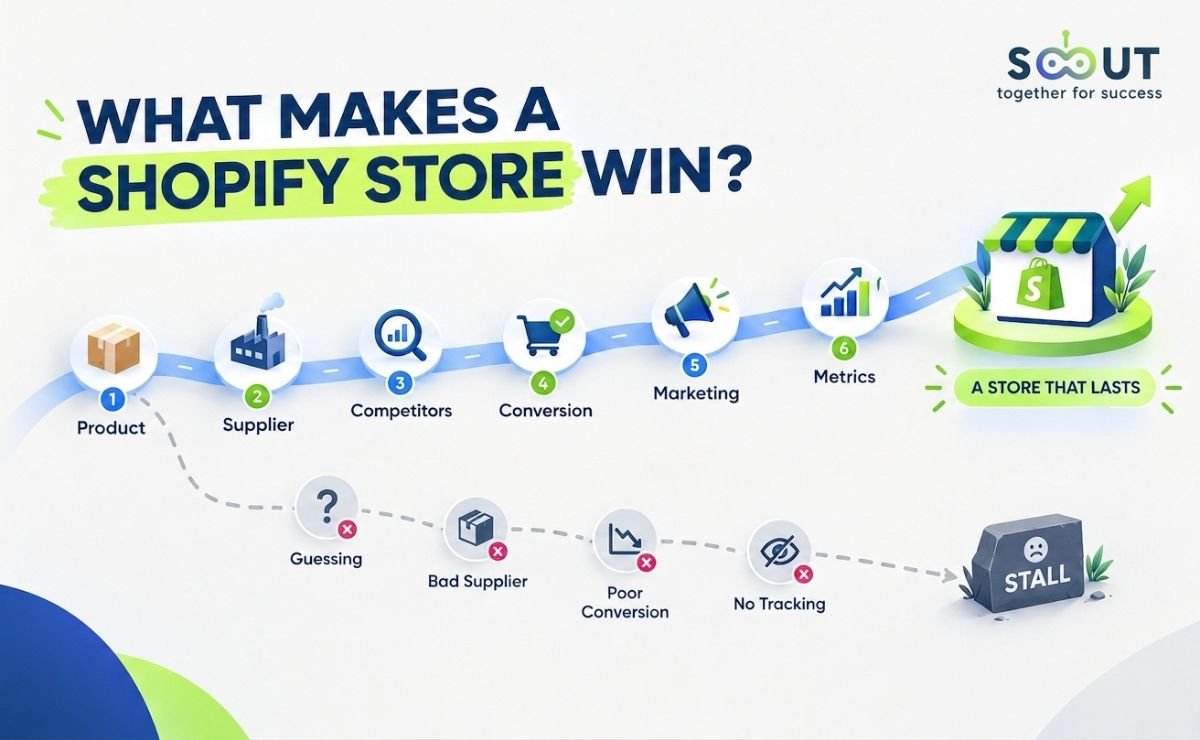
What actually separates profitable stores from stalled ones is precision: a well-defined niche, disciplined pricing against a real profit anatomy (not a guessed margin), and marketing that reaches ready-to-buy audiences rather than broad cold traffic. Sellers using Facebook Ads, Google Ads, or TikTok Ads to target a specific problem, a foldable travel mug for commuters, a skincare fix for a specific skin type, consistently outperform stores selling generic "trending products" with no angle. If you're still narrowing down a category, our breakdown of the Best eCommerce Niches for 2026 is a useful next step before you validate anything on Shopify itself.
How Do You Start a Shopify Ecommerce Business in the UK?
1. How Do You Choose a Profitable Niche for the UK Market?
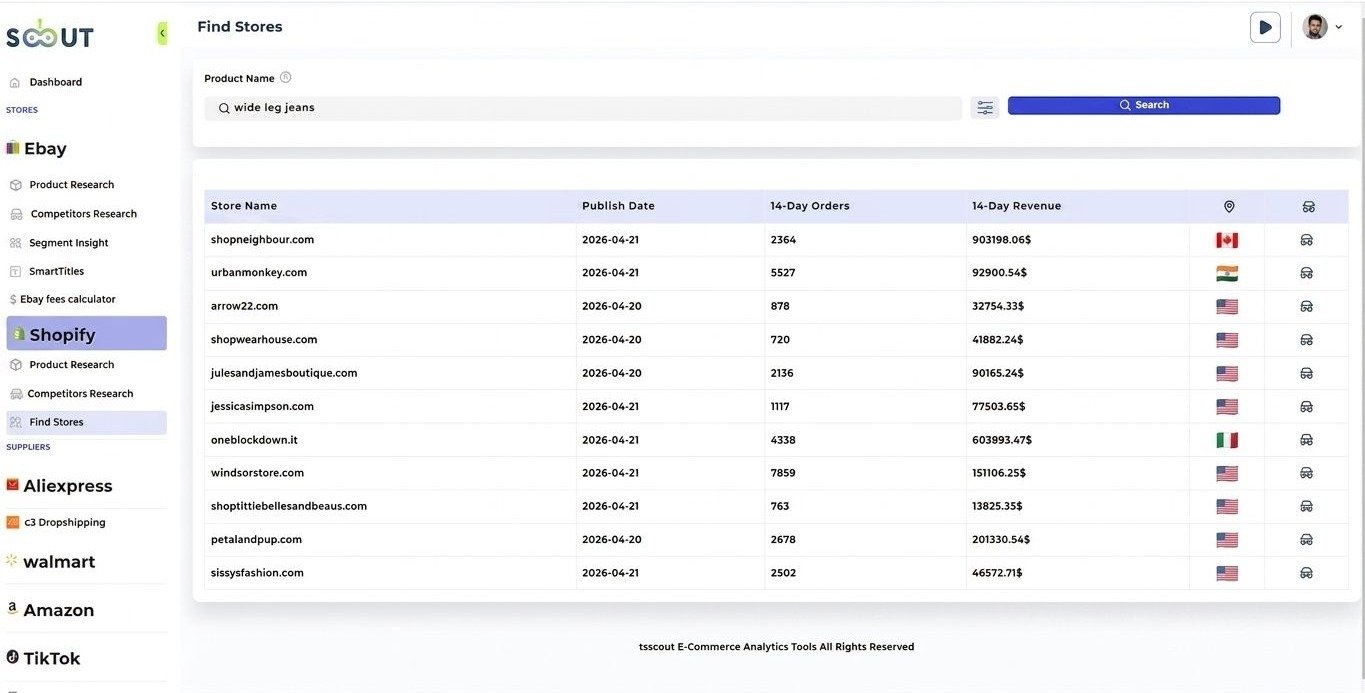
A workable niche needs four things: real demand, products that aren't sold everywhere, a profit margin healthy enough to survive ad costs (aim for 40%+), and an audience that actually cares about the category. Guessing at this stage is the single most expensive mistake a new seller makes, most failed stores didn't fail on execution, they failed on niche selection. This is where Shopify Store Finder earns its place in the process early: instead of guessing which niches are working, it lets you see which live Shopify stores are already generating consistent traffic and sales in a given category, so your niche choice is based on evidence rather than a hunch.
2. How Do You Register Your Shopify Business with HMRC?
This is the step most beginner guides skip, and it's the one that gets sellers into trouble later. If you're operating as an individual, you're a sole trader by default, but HMRC requires formal registration once your gross trading income passes £1,000 in a tax year (the trading allowance). According to gov.uk's official sole trader guidance, you must register for Self Assessment by 5 October following the end of the tax year in which you started trading, and you'll need your National Insurance number, a description of your business activity, and the date trading began. Registration is free and takes about ten minutes through your Government Gateway account.
There's a second threshold to watch as the business grows: once your taxable turnover exceeds £90,000 in any rolling 12-month period, VAT registration becomes mandatory, not optional. Per gov.uk's VAT registration guidance, you have 30 days from the end of the month you crossed the threshold to register, and late registration carries backdated VAT liability plus potential penalties. Sellers who plan for this threshold in advance, rather than getting the letter from HMRC after the fact, avoid a nasty surprise on their first big growth month.
3. How Do You Set Up Your Shopify Store Step by Step?
Once the legal groundwork is done, the technical setup is genuinely fast:
-
Create your Shopify account and buy a domain that reflects your brand rather than a generic keyword string.
-
Choose a mobile-first theme. With online shopping increasingly happening on phones, a slow or clunky mobile layout costs more conversions than almost any other single factor.
-
Customise your branding, logo, product photography, an "About Us" page that explains why the store exists, and a clean navigation menu.
Shopify's core plans in 2026 are Basic at $29/month, Grow at $79/month (the tier formerly named simply "Shopify"), and Advanced at $299/month when billed annually, according to Shopify's own pricing page, with a Starter plan at $5/month for social-only selling and Plus starting from $2,300/month for high-volume operations. Most beginners only need Basic to launch; upgrading becomes worthwhile once order volume and reporting needs grow.
4. Which Shopify Apps and Tools Actually Help UK Sellers in 2026?
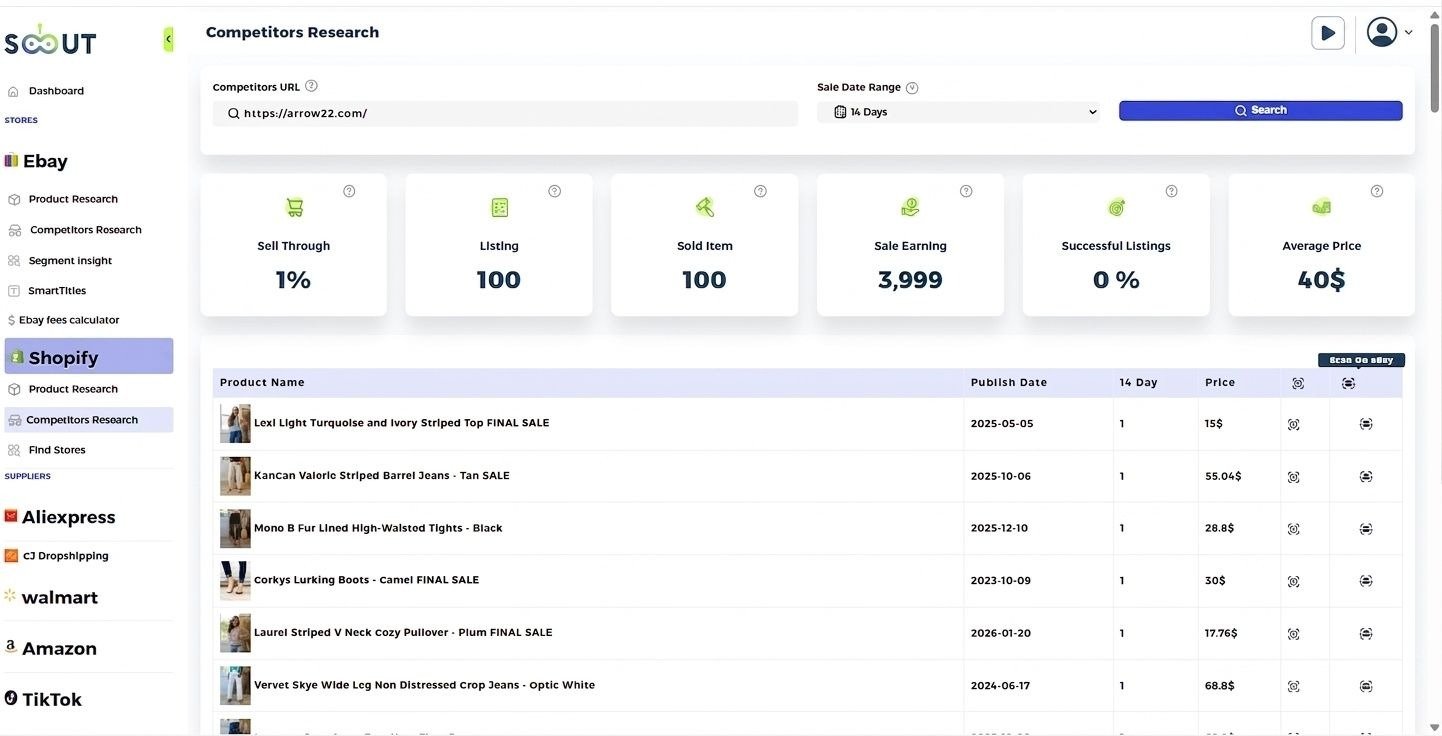
The app ecosystem exists to remove friction from sourcing, fulfilment, and order management. Spocket remains a solid option for UK and EU-based suppliers offering faster domestic shipping, Zendrop automates supplier communication and offers custom branding on packaging, and DSers is built for bulk order processing at higher volumes. What none of these apps do particularly well is tell you, before you commit, whether a supplier or a product is actually worth building a store around, that's a research gap, not a fulfilment gap, and it's where Shopify Spy tool comes in: it lets you see what's genuinely converting on competitor storefronts before you copy their approach blind.
5. How Do You Find Reliable Suppliers for a UK Shopify Store?
Supplier reliability is the single biggest lever on customer satisfaction in a model where you never physically touch the product. A slow or inconsistent supplier shows up in your reviews, not theirs. The checklist that matters:
-
Shipping speed to UK addresses specifically, not just "fast shipping" in general
-
Product quality consistency across repeat orders, not just the sample unit
-
Stock reliability, so customers aren't refunded after ordering
-
A verifiable track record, not just star ratings on a supplier directory
This is where sourcing from AliExpress paired with Shopify Spy Tool becomes the more defensible combination for UK sellers,the platform gives you supplier volume, and the tool gives you the visibility into which suppliers and products are actually converting for other stores before you commit your ad budget to the same bet.
6. How Do You Get Your First Sales and Drive Traffic?
Traffic strategy in 2026 splits into a handful of channels that actually move the needle for new stores:
-
Keyword-optimised product listings. Titles and descriptions built around what UK shoppers are actually searching for, not generic filler copy.
-
Paid social. Facebook, Instagram, and TikTok ads with real audience segmentation outperform broad targeting by a wide margin.
-
TikTok Shop specifically. UK TikTok Shop has grown to well over 200,000 active sellers, with new seller sign-ups reportedly up sharply year-on-year, it's no longer a niche channel, it's a primary discovery engine for UK ecommerce in 2026.
-
Email marketing for abandoned carts and repeat purchases.
-
Influencer and micro-influencer partnerships within your specific niche, not broad reach accounts.
-
Content marketing that builds topical authority, this is also where consistent internal linking, like pointing readers toward how to build eCommerce brand recognition that lasts, compounds your SEO over time instead of resetting with every new post.
Before scaling ad spend on any channel, run your numbers through a real margin check rather than a guess, our Profit Anatomy breakdown is the reference point for what a defensible margin actually looks like once ad costs, supplier pricing, and Shopify's transaction fees are all accounted for.
How Do You Provide Customer Support That Keeps UK Shoppers Loyal?
In a no-inventory model, support is often the only part of the experience you fully control. Fast responses, a clear returns policy, and multiple contact channels (live chat, email, and ideally phone for higher-ticket items) directly affect repeat purchase rates. A comprehensive FAQ page reduces support volume and builds trust before the sale even happens, UK shoppers researching a new, unfamiliar store lean heavily on exactly this kind of reassurance before entering card details.
How Do You Scale a Shopify Store Once It's Profitable?
Scaling isn't just "spend more on ads." The stores that grow sustainably do three things in parallel:
-
Expand the catalogue with validated products, not just anything trending, Shopify Insight is built for exactly this stage, surfacing which products and pricing patterns are holding up profitability across a niche rather than spiking and dying in a month.
-
Add loyalty mechanics. Bundles, repeat-purchase discounts, and simple point-based loyalty programmes lift customer lifetime value without new ad spend.
-
Retarget non-converting traffic. Abandoned cart emails and retargeting ads recover a meaningful share of visitors who almost bought and didn't.
If you're comparing Shopify against other paths to market as you scale, including selling on general marketplaces, our guide to the Best eCommerce Sites for Small Business is a useful side-by-side, and our broader look at eCommerce in the UK covers how Shopify fits against the wider retail landscape.
What's the One Thing Separating Beginners Who Stall from Sellers Who Scale?
It's rarely the platform, the ad budget, or even the product itself, it's how early a seller starts validating decisions with real data instead of guesswork. The sellers who check whether a niche is genuinely converting before building a store around it, and who vet a supplier's actual reliability before scaling ad spend, spend far less time recovering from expensive mistakes.
TS Scout's Shopify tool suite exists specifically to remove that guesswork from every stage covered in this guide, from Shopify Store Finder at the niche stage, to Shopify Spy Tool for supplier and competitor validation, to Shopify Insight for scaling decisions. You can put the full suite to work for $1 for your first 14 days, which is enough time to validate a real niche before you spend a pound on ads.
FAQS
1. What is the no-inventory business model, and how does it work on Shopify?
It's a retail model where you sell products through your Shopify store without stocking them yourself. Orders are routed to a supplier, who ships directly to the customer, so you never handle physical inventory.
2. Do I need to register a business to run a Shopify store in the UK?
You don't need to register a limited company, but once your gross trading income passes £1,000 in a tax year, HMRC requires you to register for Self Assessment as a sole trader.
3. When do I need to register for VAT?
Once your taxable turnover exceeds £90,000 in any rolling 12-month period, VAT registration becomes mandatory within 30 days, according to gov.uk.
4. Can I offer fast shipping to UK customers with a no-inventory model?
Yes, if you prioritise suppliers based in the UK or the EU with proven fast-shipping track records, rather than defaulting to whichever supplier has the lowest unit price.
5. How do I handle returns and refunds?
Your returns policy depends entirely on your supplier's agreements, so this should be clarified and documented before you list a single product, not after your first return request.
6. How do I market a Shopify store in the UK in 2026?
A combination of targeted paid social, TikTok Shop, email marketing, and SEO-optimised content consistently outperforms single-channel strategies for new UK stores.
7. What does it actually cost to start a Shopify store in the UK?
Expect Shopify's subscription fee (from $29/month on Basic), a domain, and marketing spend as your core costs, plus any sourcing or research tools you use to validate products before scaling.
8. How do I make my UK store stand out in a crowded market?
Focus on a specific, well-validated niche, invest in genuine branding rather than a generic template feel, and prioritise supplier reliability, the three levers that most directly separate stores that scale from ones that plateau.
like?


Table of Contents
- How Does the No-Inventory Shopify Model Actually Work in the UK?
- Why Are More UK Entrepreneurs Choosing Shopify Ecommerce in 2026?
- What Are the Real Benefits and Drawbacks of Shopify Ecommerce in the UK?
- Is Shopify Ecommerce Still Profitable in the UK in 2026?
- How Do You Start a Shopify Ecommerce Business in the UK?
- How Do You Provide Customer Support That Keeps UK Shoppers Loyal?
- How Do You Scale a Shopify Store Once It's Profitable?
- What's the One Thing Separating Beginners Who Stall from Sellers Who Scale?
- FAQS