
Top UK Suppliers for Shopify Stores in 2026: Who's Actually Worth It
- 2025-07-05
-
 0
0

A slow supplier can undo months of good marketing in a single bad review. That's the real stakes behind any search for Top UK Suppliers for Shopify, because the product photos and ad copy only get a shopper to the checkout; the supplier decides whether that customer ever orders again. UK-based fulfilment solves the two things that quietly kill new stores: shipping times that turn into refund requests, and customs surprises that turn into angry emails.
This guide breaks down which UK suppliers are genuinely worth testing in 2026, what's changed in the rules around sourcing from outside the UK, and how to vet any supplier, including the ones on this list before you build a store around them. Start with the fundamentals, then work down to the specific names.
What Actually Counts as a "UK-Based" Supplier?
"Ships to the UK" and "based in the UK" get used interchangeably in supplier marketing, and the gap between them is exactly where new sellers get burned. A genuinely UK-based supplier holds stock in a UK warehouse and fulfils domestically, no customs step, no cross-border delay. A supplier that just "ships to the UK" may still be sending parcels from overseas, with all the delay and import-cost risk that implies. Before trusting a badge or a claim, it's worth asking the supplier directly which city their warehouse is actually in, vague answers are the clearest red flag there is. This distinction matters more than almost anything else covered in Shopify eCommerce in the UK, since it's the difference between a 2-day delivery promise you can actually keep and one you can't.
Why Does the Right Supplier Matter More Than the Product You're Selling?
You can fix a mediocre product page. It's much harder to fix a customer's experience after their order arrives two weeks late in a bag that never should have crossed a border. The supplier you choose determines your shipping speed, your refund rate, and whether a first-time buyer becomes a repeat one, three things no amount of ad spend can compensate for. A fast, reliable UK supplier also reduces the operational load on you directly: fewer support tickets about "where's my order," fewer disputes, and a quality baseline your customers can trust store-wide, not just on the products you've personally inspected.
Which UK Suppliers Are Worth Testing in 2026?
Here's where the ten names worth knowing actually stand, at a glance:
|
Supplier |
Best For |
UK Fulfilment |
Shopify Integration |
|
Avasam |
Verified UK-only marketplace |
Fully domestic |
Native app |
|
CJdropshipping |
Free-tier automation + sourcing |
UK, EU & US warehouses |
Native app |
|
SaleHoo |
Vetted wholesale directory |
Mixed UK/EU/global |
Manual/CSV |
|
Spocket |
Premium, brand-focused products |
UK & EU |
Native app |
|
Syncee |
Multi-channel, high SKU count |
UK & EU |
Native app |
|
BigBuy UK |
Broad, generalist catalogue |
UK (EU HQ) |
Native app |
|
AppScenic |
High-ticket products |
Verified UK suppliers |
Native app |
|
Go Dropship |
Electronics & home gadgets |
UK, same-day dispatch |
Native app |
|
TeeMill |
Sustainable, made-to-order apparel |
UK |
Native app |
|
Printify |
Print-on-demand variety |
UK print facilities |
Native app |
Avasam connects sellers exclusively with vetted, domestic UK suppliers, no cross-border fulfilment at all, which removes customs risk entirely from the equation. CJdropshipping runs warehouses across the UK, EU, and US and bundles sourcing, warehousing, and fulfillment under one free-tier plan, making it a strong starting point for testing products before committing budget elsewhere. SaleHoo works differently it's a vetted directory of thousands of wholesalers rather than a fulfillment platform itself, which suits sellers who want to manage their own supplier relationships. Spocket and Syncee both lean toward higher product quality and multi-channel selling, useful once you're past the testing phase and building toward a specific brand identity. BigBuy UK trades a bit of niche focus for sheer catalogue breadth, a reasonable trade for generalist stores not ready to commit to one category. AppScenic stands out specifically for high-ticket items, where fewer but higher-margin sales change the math on which supplier features actually matter. Go Dropship, TeeMill, and Printify round out the list for sellers in electronics, sustainable apparel, and print-on-demand respectively, three niches where a generalist supplier usually underperforms a specialist one.
Should You Also Source From AliExpress Alongside UK Suppliers?
Plenty of successful UK Shopify stores don't rely on UK suppliers exclusively, they use them for bestsellers where delivery speed is non-negotiable, and lean on broader platforms like AliExpress to test new products before committing to a UK-stocked version. If you're weighing that route, AliExpress vs Temu is worth reading first, since the two platforms behave differently enough to change your sourcing decision entirely. The AliExpress Product Sourcing Guide covers the sourcing side in more depth, but two risks are worth flagging before you rely on it for a UK audience: AliExpress Price Increases at Checkout can quietly eat the margin you priced around, and an AliExpress Supplier Unresponsive? The situation becomes a much bigger problem when your UK customer is the one waiting on an answer you don't have.
What UK Tax and Customs Rules Should You Know Before Sourcing?
This is the part most supplier round-ups skip, and it's exactly where new sellers get caught out. Once your store's taxable turnover passes £90,000 in any rolling 12-month period, UK law requires VAT registration with HMRC, not at the end of a tax year, but within 30 days of crossing that threshold at any point. Separately, if you're sourcing products from outside the UK, including through AliExpress or any overseas supplier, current gov.uk guidance confirms that consignments valued at £135 or less have VAT collected at the point of sale, while anything above that threshold is handled as import VAT and can trigger Customs Duty as well. Neither of these is optional paperwork, get them wrong and the cost lands on your margin, not your supplier's.
How Do You Verify a Supplier Before You Commit to Them?
A supplier's own website is the least reliable place to judge them. Before committing to any name on this list, UK-based or otherwise, a few checks are worth the twenty minutes they take:
-
Order a test sample yourself before listing the product, since a mismatch between photos and reality is the fastest way to a wave of bad reviews
-
Check reviews somewhere other than the supplier's own site, Trustpilot and the Shopify App Store both surface complaints a sales page won't
-
Confirm the actual return and refund process in writing, not just a vague "hassle-free returns" claim, The Shopify Return Policy Gap covers exactly how many stores get caught out here
-
For any supplier sourcing from overseas listings, an AliExpress Reverse Image Search takes a few seconds and can catch a mismatched or stolen product photo before it ever reaches your store.
How Can You Research What's Already Working Before You Pick a Supplier?
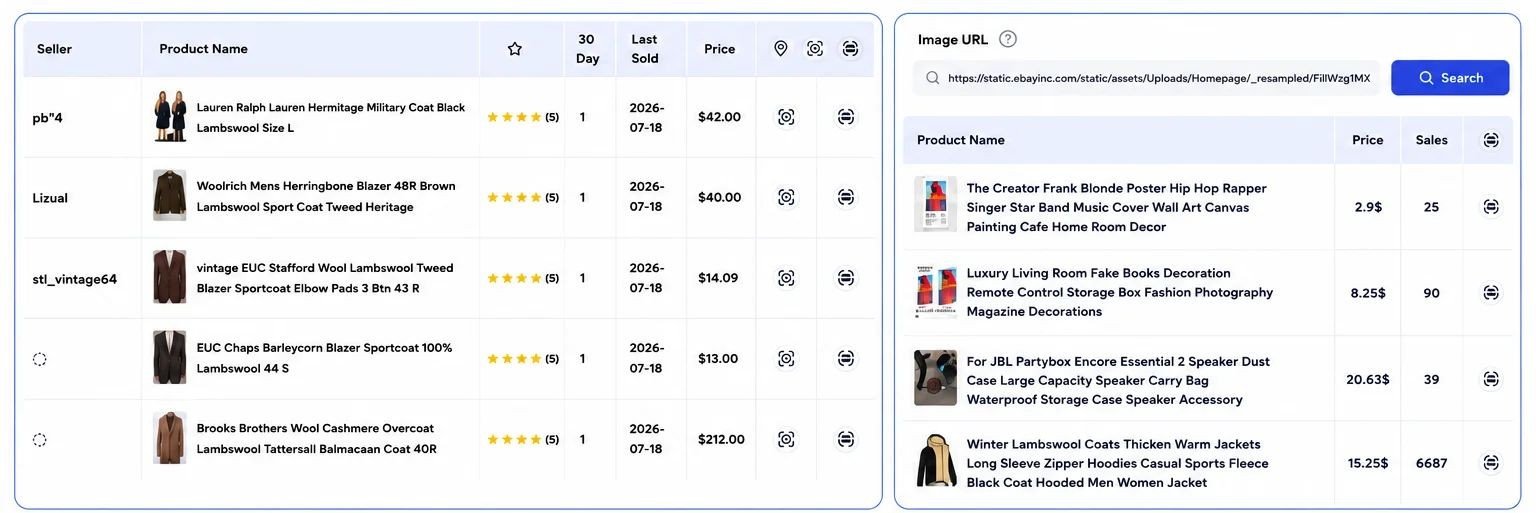
Guessing which supplier and which products will actually sell is the expensive way to learn, Finding High-Demand Products Without the Headache and Ethical Shopify Competitor Research both cover faster, evidence-based ways to shortcut that guesswork.
For sourcing that leans on AliExpress-style platforms, the Express Source Finder Tool surfaces supplier options for a product idea in seconds rather than hours of manual searching, and the Express Scanner tool lets you check a specific listing's viability, pricing, competition, supply reliability, before you commit to it. If you're deciding which supplier to trust based on who else is already succeeding with it, the Shopify Find Stores surfaces active UK Shopify stores in your niche, and the Shopify Competitors Research tool shows which suppliers and products are actually driving their best-performing pages turning supplier selection from a guess into a decision backed by what's already working.
Ready to Stop Guessing Which UK Supplier Actually Delivers?
None of the ten names above is automatically right for your store, the fit depends on your niche, your margin, and how much of the fulfillment risk you're willing to hand off versus manage yourself. What every one of them has in common is that they're worth testing against real data before you build a store's reputation on them.
Start there: try TS Scout for $1 and get full access to every research tool for 14 days.
FAQS
-
What makes a supplier genuinely UK-based rather than just UK-shipping?
A genuinely UK-based supplier holds stock in a UK warehouse and fulfills orders domestically, with no customs step involved, "ships to the UK" doesn't guarantee either of those things.
-
Do I need to register for VAT to sell through a UK supplier?
Only once your taxable turnover passes £90,000 in any rolling 12-month period, at which point UK law requires registration with HMRC within 30 days.
-
Is AliExpress still worth using alongside UK suppliers?
Yes, for many stores, it's commonly used to test new products cheaply before committing to a UK-stocked version of a proven bestseller.
-
What's the fastest way to check if a supplier is reliable before committing?
Order a test sample, check reviews outside the supplier's own site, and confirm their actual return process in writing rather than relying on marketing claims.
-
Do I have to pay import VAT on every order from an overseas supplier?
Consignments valued at £135 or less have VAT collected at the point of sale; anything above that threshold is handled as import VAT and may also trigger Customs Duty.
-
Can I use more than one UK supplier at once?
Yes, many successful stores run a primary supplier for fast-moving bestsellers and a secondary one for testing new or niche products.
like?


Table of Contents
- What Actually Counts as a "UK-Based" Supplier?
- Why Does the Right Supplier Matter More Than the Product You're Selling?
- Which UK Suppliers Are Worth Testing in 2026?
- Should You Also Source From AliExpress Alongside UK Suppliers?
- What UK Tax and Customs Rules Should You Know Before Sourcing?
- How Do You Verify a Supplier Before You Commit to Them?
- How Can You Research What's Already Working Before You Pick a Supplier?
- Ready to Stop Guessing Which UK Supplier Actually Delivers?
- FAQS