
AliExpress Hidden Fees: What That Cheap Supplier Price Is Really Costing You?
- 2026-10-08
-
 0
0

An $8 phone stand on AliExpress looks like a 54% margin once you list it at $24.99 and count the freight. By the time the parcel reaches your customer, that margin can sit closer to 27%. The gap comes from AliExpress hidden fees, which are not secret charges from the platform but cost layers that stack up between the listing and the doorstep. Shipping, import charges, returns and your sales channel's own fees each take a slice, and most never appear on the product page.
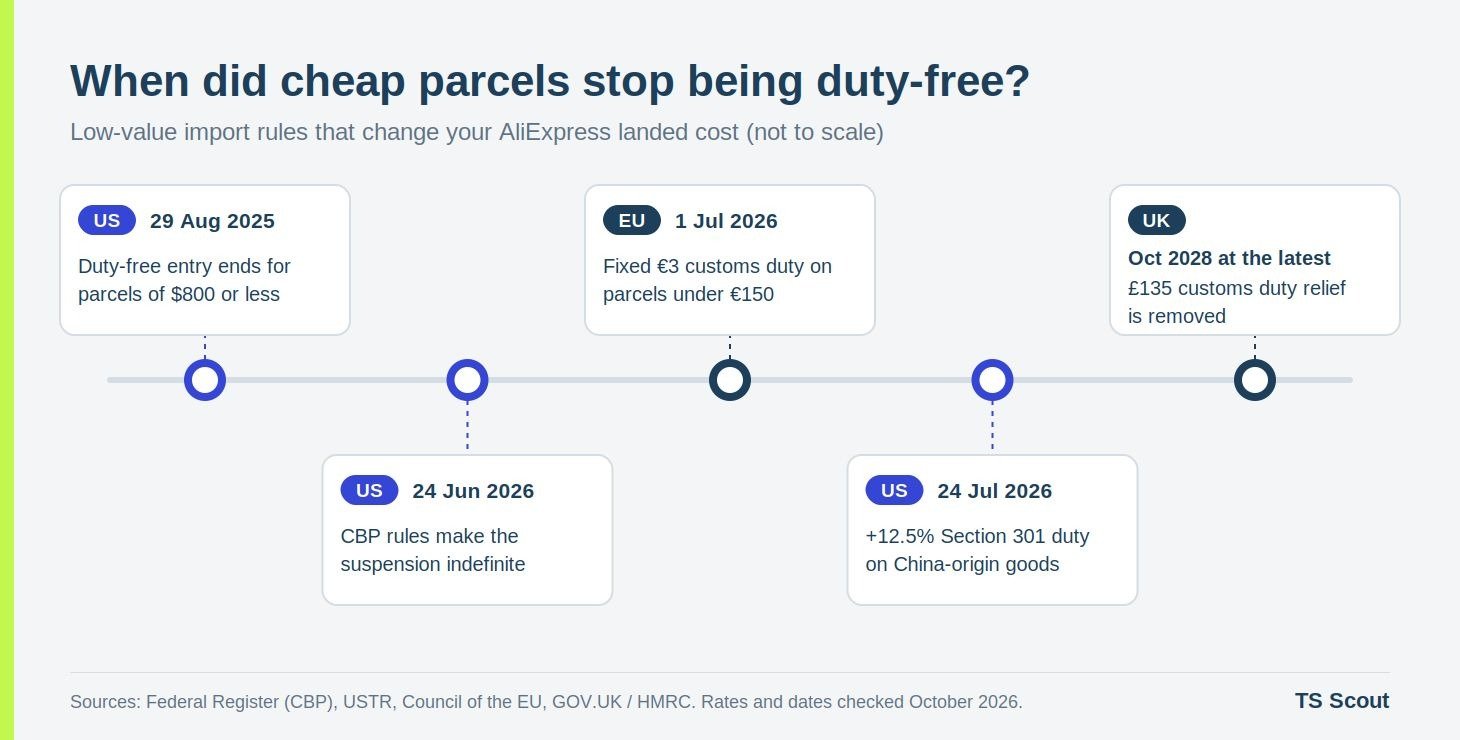
The rules also shifted this year: the Federal Register published CBP's interim final rules on June 24, 2026, indefinitely suspending the $800 de minimis exemption for non-postal shipments. The Council of the EU applies a fixed €3 customs duty to small parcels under €150 from July 1, 2026, and GOV.UK confirms the UK will remove its £135 customs duty relief by October 2028 at the latest. Add a sales channel such as TikTok Shop, and the supplier price becomes the smallest part of your cost story. This guide maps every layer of AliExpress hidden fees, shows the maths on a worked order you can copy into any dropshipping calculator, and ends with a routine that keeps your margin intact when the rules change. First, a question most sellers skip: what does AliExpress actually charge you?
What Are AliExpress Hidden Fees, and What Does AliExpress Actually Charge You?
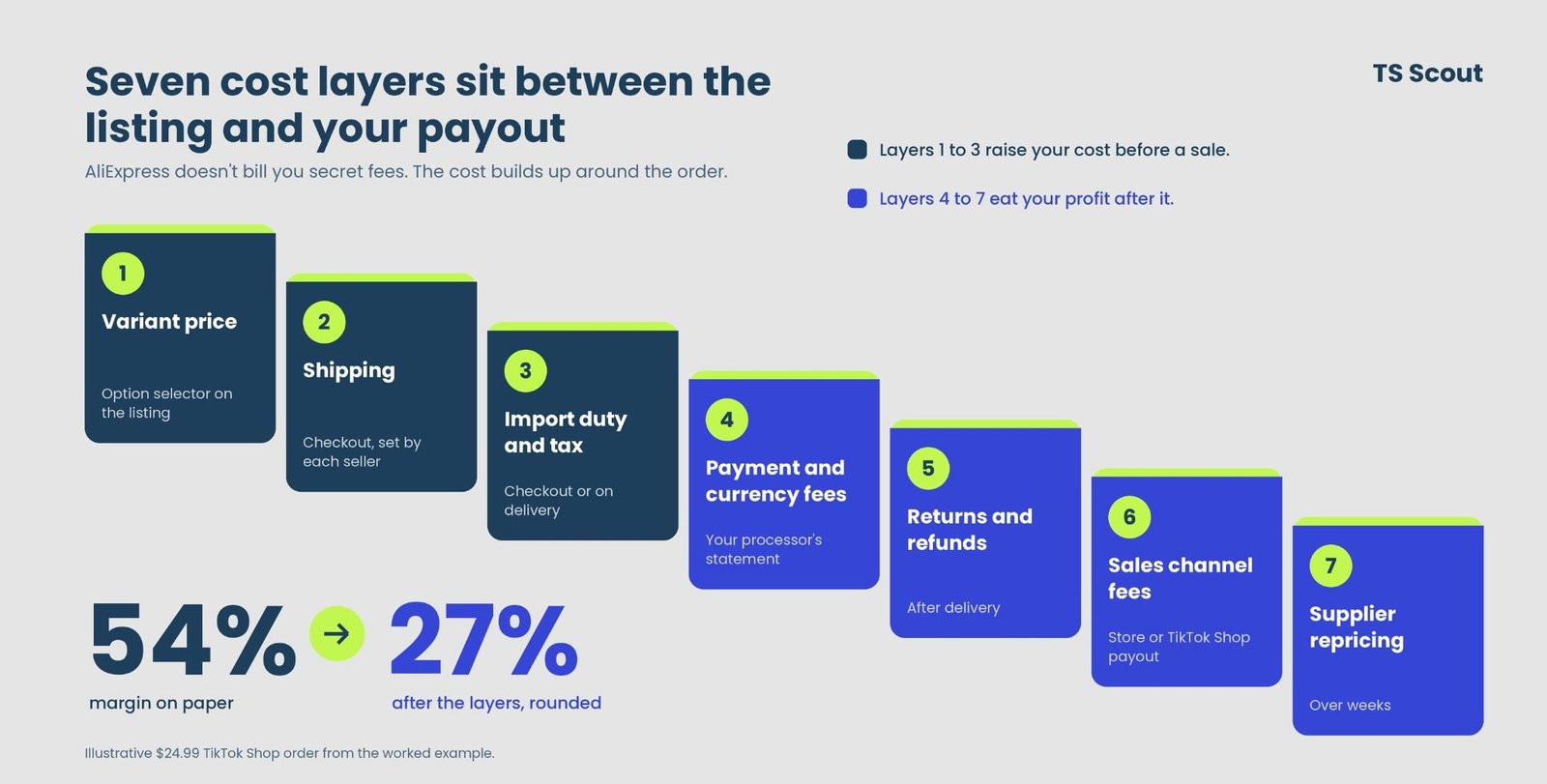
AliExpress does not add a secret surcharge to orders placed by sellers who source from it. You pay the listed price, the shipping fee and any tax shown at checkout. AliExpress hidden fees are everything that sits outside that total or changes after you have priced your store, and they fall into seven layers:
|
Layer |
Where it shows up |
Why it surprises sellers |
|
1. Variant price |
Option selector on the listing |
The cheapest option is rarely the one customers choose |
|
2. Shipping |
Checkout |
Set by each seller, so it differs by product and destination |
|
3. Import duty and tax |
Checkout or on delivery |
Depends on the listing, the carrier and the destination country |
|
4. Payment and currency conversion |
Your payment processor's statement |
Charged by your processor, never by AliExpress |
|
5. Returns and refunds |
After delivery |
You refund the customer before you recover anything from the supplier |
|
6. Sales channel fees |
Your store or TikTok Shop payout |
Referral, affiliate and refund fees come off every sale |
|
7. Supplier repricing |
Over weeks |
The price you imported is not the price you pay later |
Layers one to three raise your cost before a sale happens, and layers four to seven eat your profit after it. Most sellers audit only the first layer, which is why a healthy-looking margin so often disappears at payout.
Why Does an AliExpress Price Change Between the Listing and Checkout?
The price on a listing belongs to the default variant, before coupons and before your destination is applied. At checkout, AliExpress totals the item, shipping and any taxes for your address, so the figure you pay can differ from the figure you imported. Whether import charges already sit inside the item price or appear as a separate line depends on the listing, which is why the checkout summary, not the product page, is your source of truth. In an illustrative case, the same $8 product can total $8 or $9.60 depending on the seller and the destination.
Price drift is one of the AliExpress hidden fees that store apps rarely catch. Apps typically import the listing price, so if a charge only appears at the last step, the cost your store shows is lower than the cost you pay, and every order quietly shrinks your margin. That trap is explored in When Your AliExpress Price Increases at Checkout.
A clean cost baseline fixes most of it. Searching the product name in Express Product Research and sorting by price and sales volume shows how far the same product's price spreads across sellers, so you anchor your cost on the typical listing instead of the cheapest outlier. AliExpress's own checkout shows one listing at a time, which is why comparing before you reach it saves more than correcting afterwards.
Before you set a selling price:
-
Compare at least five listings of the same product and variant.
-
Place a small test order to your own address and record every line of the checkout total.
-
Note which sellers' totals match the listing and which do not.
How Much Does Shipping Really Add to Your Cost?
Shipping on AliExpress is set seller by seller, so the freight on one listing can be a fraction of the freight on an identical product two clicks away. Of all AliExpress hidden fees, shipping is the easiest to check before you pay a cent, because every listing displays its freight for your destination. The item price alone will never show you the difference:
|
Illustrative listing |
Item |
Shipping |
Landed price |
|
A: lowest item price |
$4.00 |
$9.00 |
$13.00 |
|
B: higher item price, free shipping |
$7.50 |
$0.00 |
$7.50 |
|
C: mid-range |
$6.00 |
$2.50 |
$8.50 |
Listing A looks cheapest and costs the most. Compare landed price (item plus shipping) for the exact variant and country, then look at who stands behind the number. Entering a seller's shop URL in Express Source Finder returns that store's listings, prices, ratings and total units sold. That shows whether low freight comes from a seller with a proven fulfilment record or from a newcomer with nothing to lose.
The wider freight picture, including carrier choice by route, is broken down in international shipping dropshipping cost. Gulf-bound orders add customs checks of their own, as AliExpress Shipping to Saudi Arabia and the UAE in 2026 explains.
Who Pays Import Duties and Taxes on AliExpress Orders in 2026?
Import duties and taxes are government charges, not AliExpress fees, yet they decide whether your landed cost matches your spreadsheet. Import charges are the AliExpress hidden fees that changed most in 2026. Whether they are collected at checkout or billed by the carrier on delivery depends on the listing and shipping method, and a bill at the door is a refund request waiting to happen. Every rate below is stated as of October 2026.
How did US rules change for AliExpress parcels?
CBP's interim final rules in the Federal Register indefinitely suspend the $800 de minimis exemption for non-postal shipments, so low-value entries now go through standard entry procedures and attract duties, taxes and fees. The CBP e-commerce FAQ explains how duty payment works for postal and non-postal shipments. Since July 24, 2026, USTR has also applied an additional 12.5% Section 301 duty to products from China, with listed exemptions, on top of the product's normal duty rate and the existing Section 301 duties on Chinese goods. Rates move, so confirm your product's tariff code before you price. Who ultimately owns the bill once the parcel is yours is a separate question, covered in The Dropshipping Tax.
What happens to the UK's £135 duty relief and VAT?
The GOV.UK policy paper published on July 13, 2026 removes the £135 low-value import relief. The change comes into force on a date the Treasury sets by regulations, by October 2028 at the latest. It also introduces fiscal representatives, UK businesses that carry joint liability for an overseas seller's customs debts. Until then the relief still applies, which gives UK-bound sellers a window to rebuild their pricing before duty becomes a standard line item.
VAT works separately. The GOV.UK guidance on overseas goods sold to UK customers says that for goods shipped from outside the UK in consignments worth £135 or less, VAT is due at the point of sale rather than at the border. If an online marketplace facilitates the sale, the marketplace accounts for it. If you sell directly from your own store, you must register for UK VAT and account to HMRC, and overseas businesses have no registration threshold. The £135 test applies to the whole consignment, not to each item, and the guidance covers Great Britain rather than Northern Ireland.
How do the EU's €3 duty and handling fee affect parcels under €150?
The Council of the EU has applied a fixed €3 customs duty to parcels valued under €150 since July 1, 2026. It is charged per category of goods, not per parcel: a parcel holding two toys, a coat and three bottles of shampoo carries €9, because it contains three categories. The duty is transitional and gives way to normal tariff rates once the EU customs data hub is operational.
A separate EU-wide handling fee on small e-commerce consignments is the next layer. The Council gave final approval to the customs reform in September 2026, member states must apply the fee by November 1, 2026, and the Commission sets its level. Trade reports from late September point to €2 per item, so treat that figure as provisional until the Commission confirms it.
|
Market |
What changed |
Effective |
Official source |
|
US |
De minimis suspended indefinitely for non-postal shipments; extra 12.5% Section 301 duty on China-origin goods |
24 Jun 2026 / 24 Jul 2026 |
Federal Register, USTR |
|
UK (customs) |
£135 customs duty relief to be removed |
By Oct 2028 at the latest |
GOV.UK |
|
UK (VAT) |
VAT collected at point of sale on consignments up to £135; direct sellers register with HMRC |
In force since 1 Jan 2021 |
GOV.UK |
|
EU |
Fixed €3 duty per category of goods on parcels under €150; EU handling fee to follow |
1 Jul 2026 / by 1 Nov 2026 |
Council of the EU |
Which AliExpress Hidden Fees Come From Payment Processing and Currency Conversion?
Payment costs never show up on an AliExpress listing because they are charged on your selling side, and they follow every order, even the ones you refund. The Shopify Help Center explains that Shopify Payments charges a credit card rate that varies by plan, while a third-party payment provider adds a Shopify transaction fee on top of the provider's own charges. Those are AliExpress hidden fees in practice: the supplier price looks fixed, yet the payment layer moves with your plan and processor.
Currency adds another line. When a customer pays in a currency different from your payout currency, the Shopify Help Center fees and costs page lists a currency conversion fee of 1.5% for stores based in the United States and 2% for other Shopify Payments regions. It also separates domestic card processing from cross-border card processing, so a card issued outside your store's country can cost more to process.
The detail that catches sellers out is the refund. The Shopify Help Center states that credit card fees and currency conversion fees are not returned when you issue a refund. On a $24.99 sale paid in a foreign currency to a store charged the 2% rate, about $0.50 is gone for good even if the customer gets every cent back.
Two checks protect you. Confirm your plan's card and conversion rates in your payment settings, and ask your card issuer whether it adds a foreign transaction fee when you pay AliExpress in another currency, since issuers set those terms individually. On TikTok Shop, the Seller Center fee table shows which payment costs are bundled into the referral fee.
What Do Returns, Refunds and Disputes Really Cost You?
AliExpress Buyer Protection refunds an order that never arrives, arrives damaged or differs from its description within the protection period, and it offers Free Return within 15 days of delivery. Special items such as underwear, socks, food, batteries and customized products fall outside the return policy, and in most EU countries the buyer bears the cost of returning products under the 14-day right to return.
Returns are the AliExpress hidden fees that arrive last and hurt most. Your customer expects a refund the day they ask, while recovering money from the supplier means opening a dispute and waiting for the outcome. Picture a $24.99 order: you refund the full $24.99 immediately, the processing and currency conversion fees stay spent, and even a successful supplier dispute tends to cover what you paid for the item, not the margin you lost.
Setting a return policy that protects you is covered in dropshipping product returns. Wrong items and silent suppliers have their own playbooks in Supplier Shipped the Wrong Item? and AliExpress Supplier Unresponsive?.
How Do You Calculate the True Cost of AliExpress Hidden Fees With a Dropshipping Calculator?
Use one formula for every product:
True profit per order = selling price − (item price + shipping + import charges + payment fees + refund allowance + channel fees + affiliate commission)
A dropshipping calculator that leaves out AliExpress hidden fees will overstate profit, and many free calculator pages ask only for price, cost and ad spend. Enter import charges and your refund allowance as custom costs, and check that every input below has a field:
|
Input |
Where to find it |
|
Item price |
Listing, for the exact variant |
|
Shipping |
Checkout, for your destination |
|
Import charges |
Checkout total and the product's tariff code |
|
Payment and currency fees |
Your payment settings and the Shopify Help Center fee pages |
|
Refund allowance |
Your own refund rate from the last 90 days |
|
Channel fees |
Seller Center fee table |
|
Affiliate commission |
The rate you set |
Here is an illustrative TikTok Shop order using placeholder assumptions: import charges at 20% of item cost, the official 6% referral fee, a refund allowance of 5% of price and a 10% affiliate commission.
|
Line |
Amount |
|
Selling price |
$24.99 |
|
AliExpress item |
−$8.00 |
|
Shipping |
−$3.50 |
|
Import charges (20% of item cost) |
−$1.60 |
|
Referral fee (6%) |
−$1.50 |
|
Refund allowance (5% of price) |
−$1.25 |
|
Affiliate commission (10%) |
−$2.50 |
|
Real profit |
$6.64 (26.6%) |
On paper, price minus item minus shipping leaves $13.49, a 54% margin. Every layer after that is what turns it into a margin of about 27%. A store-based checkout would add its own processing and currency lines on top.
[VISUAL 2: "Where a $24.99 sale actually goes" waterfall]
Once you have the margin, benchmark it against profit margin in dropshipping. The same exercise for marketplaces is in eBay + Amazon Hidden Fees, and hidden costs of shopify covers the store-side lines.
Which Red Flags Show AliExpress Hidden Fees Are Hiding Inside a Product's Margin?
Five signs that AliExpress hidden fees are about to hit your margin:
-
Thin headroom. Raise the import assumption in the example from 20% to 30% of item cost and profit falls from $6.64 to $5.84, about 23%. If the 8% referral rate that some guides report applied to your category, profit would drop to $6.14. If one rule change takes you below your floor, the product has no cushion.
-
Shipping that changes by variant. A price that looks fixed on the default option can rise on the colour or size that actually sells.
-
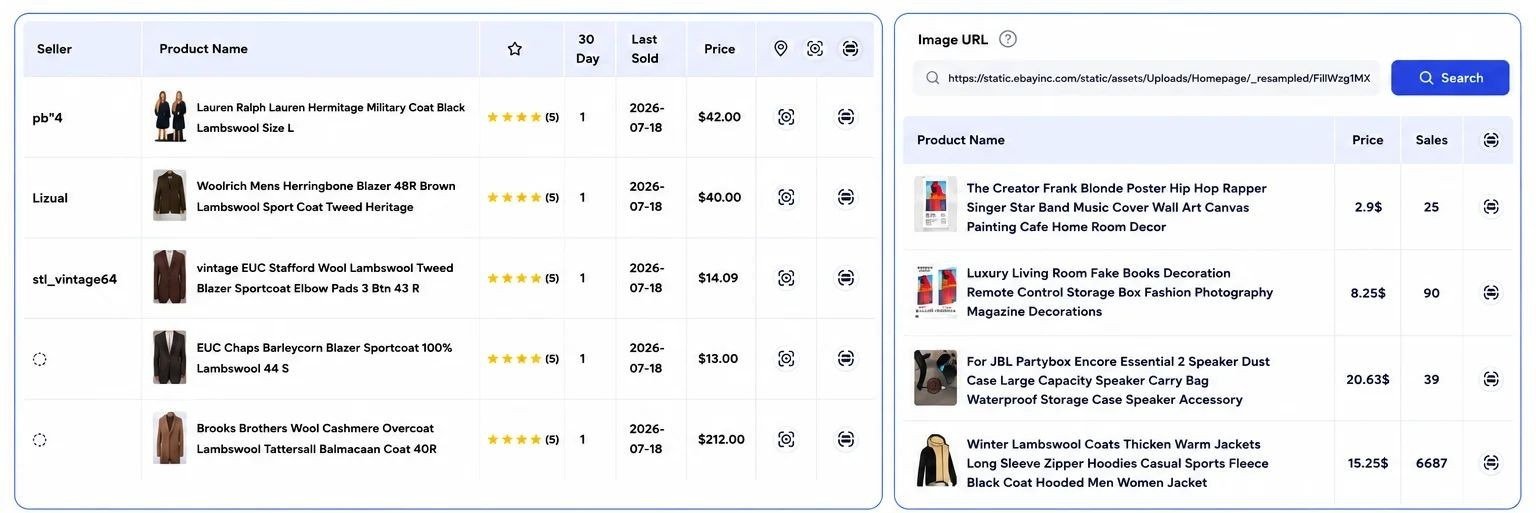
A supplier you never compared. Right-click the product image, copy the image address, and paste it into Image Match. The results show sold count, price and rating for that image across sites. If your supplier is not competitive on at least two of the three, you have found a better landed cost. AliExpress Reverse Image Search explains what such a search can and cannot tell you.
-
Return-excluded categories. Products outside the Buyer Protection return policy leave you holding the refund.
-
Weak demand. Thin sales force discounting, and discounts are what finish a thin margin. Finding High-Demand Products covers how to spot consistent sellers, and Express Scanner surfaces trending and top-performing AliExpress items with steady sales activity.
How Can You Protect Your Margin From AliExpress Hidden Fees Every Month?
Because AliExpress hidden fees shift with every rule change, treat protection as a routine, not a one-off audit:
-
Price from landed cost. Use item plus shipping plus import charges as your cost, never the item price alone, and enter all three in your dropshipping calculator.
-
Set a margin floor. Decide the lowest margin you accept, then delist anything the sensitivity test pushes below it.
-
Place a test order before scaling ads. Record the checkout summary so you can see exactly which charges appear and when.
-
Review the official rules quarterly. Check the US tariff rate, the EU duty and the UK relief date on the Federal Register, USTR, Council of the EU and GOV.UK pages, and your category's rate in the TikTok Shop Academy fee table.
-
Keep a backup supplier per product. Qualify a second seller with Express Source Finder, and use the AliExpress Product Sourcing Guide to structure the shortlist.
What Would Your Margin Look Like If Every AliExpress Order Showed Its True Cost?
Run your best-selling product through the seven layers above and you will know within minutes whether it earns what you think it does. Once AliExpress hidden fees stop being surprises, pricing becomes a decision instead of a hope.
Start your $1 trial: 14 days of full access to every TS Scout tool.
FAQs
-
What are AliExpress hidden fees?
They are the costs that sit outside the listed price: variant pricing, shipping, import charges, payment and currency fees, returns, sales channel fees and supplier repricing.
-
Does AliExpress charge hidden fees to sellers?
No secret platform surcharge exists. AliExpress hidden fees come from the layers around the order, not from a separate AliExpress bill.
-
Do I pay import duties on AliExpress orders in 2026?
In the US, the $800 de minimis exemption is indefinitely suspended for non-postal shipments and an extra 12.5% Section 301 duty applies to China-origin goods. The EU charges a fixed €3 duty per category of goods on parcels under €150, with an EU handling fee due by November 1, 2026. The UK's £135 duty relief remains until it is removed by October 2028 at the latest, while UK VAT on consignments up to £135 is collected at the point of sale. All figures are as of October 2026.
-
Are import charges included in the AliExpress price?
It depends on the listing and your destination, so rely on the checkout total rather than the product page.
-
Why is my AliExpress cost higher than the price in my store?
Usually because of variant pricing, charges added at checkout, or a supplier price change after you imported the product.
-
What should a dropshipping calculator include?
Item price, shipping, import charges, payment and currency fees, refund allowance, channel fees and affiliate commission. Leaving any out overstates profit.
-
What does TikTok Shop charge per sale?
The TikTok Shop Academy fee table lists a 6% referral fee for most US categories. Affiliate commission, refund fees and fulfillment costs come on top, so confirm your category in the Seller Center.
-
Can I sell AliExpress products on TikTok Shop?
It depends on whether you can meet the dispatch and delivery deadlines tracked in Seller Center. Long standard shipping times can hurt your shop's standing, so check the rules before you list.
like?


Table of Contents
- What Are AliExpress Hidden Fees, and What Does AliExpress Actually Charge You?
- Why Does an AliExpress Price Change Between the Listing and Checkout?
- How Much Does Shipping Really Add to Your Cost?
- Who Pays Import Duties and Taxes on AliExpress Orders in 2026?
- Which AliExpress Hidden Fees Come From Payment Processing and Currency Conversion?
- What Do Returns, Refunds and Disputes Really Cost You?
- How Do You Calculate the True Cost of AliExpress Hidden Fees With a Dropshipping Calculator?
- Which Red Flags Show AliExpress Hidden Fees Are Hiding Inside a Product's Margin?
- How Can You Protect Your Margin From AliExpress Hidden Fees Every Month?
- What Would Your Margin Look Like If Every AliExpress Order Showed Its True Cost?
- FAQs