

Dropshipping Pros and Cons in 2026: What the Data Really Shows
- 2026-06-12
-
 0
0

Most people asking about the dropshipping pros and cons in 2026 have already tried, quit, or hesitated once before. That hesitation makes sense: the model that let anyone open a store with zero inventory is now valued at $343 billion globally in 2026, according to Global Market Insights, yet a large share of new sellers still shut down within their first year. Both facts are true at the same time.
This article breaks down the real advantages and disadvantages of dropshipping using 2026 numbers instead of recycled 2020 claims, then walks through the actual costs, the platforms worth considering, and the decision points that separate a store that survives from one that quietly disappears. Weighing dropshipping pros and cons properly means looking past the model itself and into how it's executed, starting with what dropshipping actually looks like right now.
What Is Dropshipping in 2026, and How Has the Model Changed?
Dropshipping is still, at its core, a fulfillment method: a retailer lists a product, a customer buys it, and a third-party supplier ships it directly without the retailer ever holding stock. What's changed by 2026 isn't the mechanic, it's where the selling happens. Instead of standalone stores being the only route in, a growing share of sellers now launch through social commerce, particularly short-form video platforms, before ever building an independent site. It's also worth separating two terms that get used interchangeably: dropshipping is one fulfillment model within eCommerce, not a synonym for it, a distinction that matters once you start comparing costs and strategies across models, something covered in more depth in What Is Ecommerce in 2026?
Is Dropshipping Still Profitable in 2026? (Real Numbers)
Profitability depends entirely on which numbers you're looking at. The market itself is large and growing Global Market Insights puts the global dropshipping market at $343 billion in 2026, projected to reach $1.84 trillion by 2035 at a 20.6% CAGR. Roughly 27% of online retailers now use dropshipping as a primary fulfillment model, and dropshipped products account for close to a quarter of global ecommerce sales.
But market size isn't personal profit. Net margins for experienced sellers typically land between 15% and 20%; beginners often run below 10% while they're still learning supplier negotiation and ad efficiency. The 30%+ margin stores exist, but they're the exception, not the baseline, which is exactly why product selection matters more than the model's reputation.
|
Year |
Estimated Market Size |
Source |
|
2024 |
~$365 billion |
Grand View Research |
|
2025 |
$290.7 billion |
Global Market Insights |
|
2026 |
$343 billion |
Global Market Insights |
|
2030 (projected) |
$1.25 trillion |
Grand View Research |
Margins like these are rarely accidental, they usually trace back to how the product itself was chosen, a process covered further in The Science of Product Research.
What Are the Real Pros of Dropshipping in 2026?
These are the dropshipping pros that actually hold up under 2026 conditions, not the generic list repeated across most guides:
-
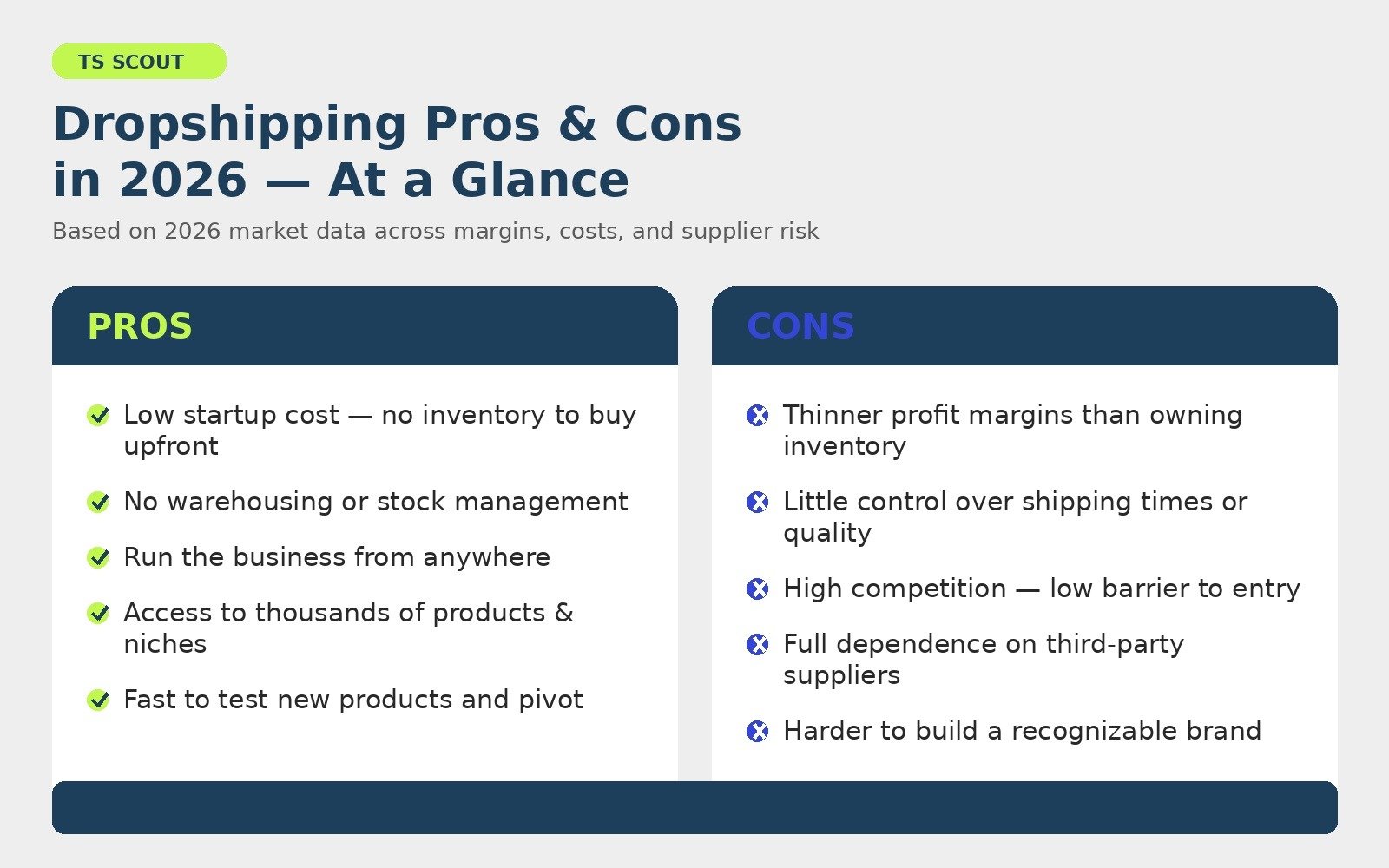
Low starting capital. No inventory purchase means you can launch with a few hundred dollars in store setup and initial ad spend, not thousands tied up in stock.
-
No warehousing burden. Suppliers hold and ship the product, which removes storage costs and the risk of unsold inventory.
-
Location and schedule flexibility. The business runs from a laptop, which matters for sellers testing this alongside a full-time job.
-
Broad product access. Thousands of suppliers across niches make it possible to test multiple categories, see Best eCommerce Niches for 2026 for where demand is actually concentrated right now.
-
Fast iteration. A failed product can be pulled from the store in minutes, with no leftover stock to write off.
What Are the Real Cons of Dropshipping, and How Do You Fix Each One?
Listing the downsides without a fix isn't useful; here's each con paired with what actually addresses it.
-
Thin profit margins. Fix: raise average order value through bundling instead of relying on a single low-margin item, and negotiate lower per-unit costs once volume justifies it.
-
Limited control over shipping and quality. Fix: vet suppliers before launch rather than after the first complaint, see How to Find Reliable eCommerce Suppliers in 2026.
-
High competition. Fix: differentiate through branding and presentation rather than price alone, detailed in Build eCommerce Brand Recognition.
-
Full dependence on a single supplier. Fix: line up a backup supplier before you need one, not during a stockout.
-
Slow, uncertain product testing. Fix: validate demand with real sales data before spending on ads, this is precisely where most stores lose their budget, and it's the difference explored in Why Do Some Stock-Free Sellers Build a Successful Dropshipping Business While Others Quit in Month Three?
How Much Does Dropshipping Really Cost in 2026? (Full Breakdown)
|
Cost Item |
Typical Range |
|
Store setup (platform + theme) |
$0 – $500 one-time |
|
Domain + hosting |
$10 – $20 / month |
|
Product research tools |
$30 – $100+ / month |
|
Initial ad testing budget |
$200 – $500 |
|
Supplier fees (some categories) |
Varies by supplier |
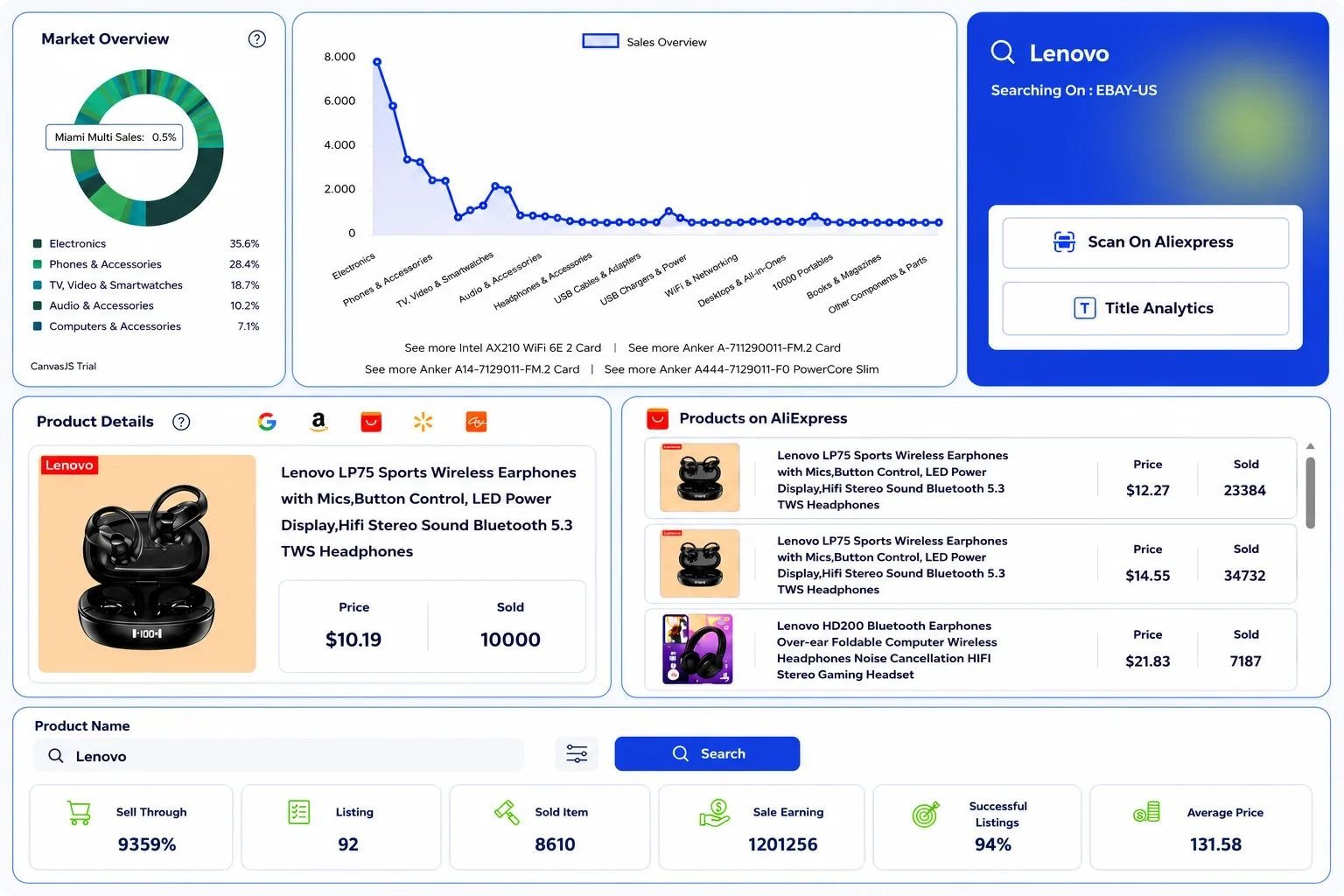
The line item most guides skip is product research. Guessing which product to test is what turns a $300 ad budget into a $0 return. This is the exact gap a tool like Express Product Research is built to close, instead of guessing based on a trend you saw once, it pulls product-level data straight from AliExpress by name, price, category, and sales performance, so the decision is based on a number rather than a hunch.
How Do You Research a Winning Product Before You Spend a Dollar?
Consider two sellers testing the same product category. One launches based on a video that looked viral, spends the full ad budget in ten days, and sees no conversions because the supply was already saturated. The other checks actual unit-sold data before listing the product at all, and adjusts pricing based on what similar listings are already achieving. The difference isn't luck, it's whether the decision was backed by data before the money went out.
That's the specific gap Express Product Research fills for AliExpress-sourced products: filtering by price, category, and sales performance before a single dollar is committed. Niches worth testing this way right now are outlined in 6 Profitable Niche Products in 2026, and for sellers deciding between sourcing platforms, AliExpress vs Temu breaks down where each one actually wins.
Which Platform Actually Fits Your Dropshipping Store in 2026?
Not every platform suits every seller, and this is where most dropshipping guides stay vague. Here's a direct match, paired with the research tool built for each:
|
Platform |
Best For |
Matching Tool |
|
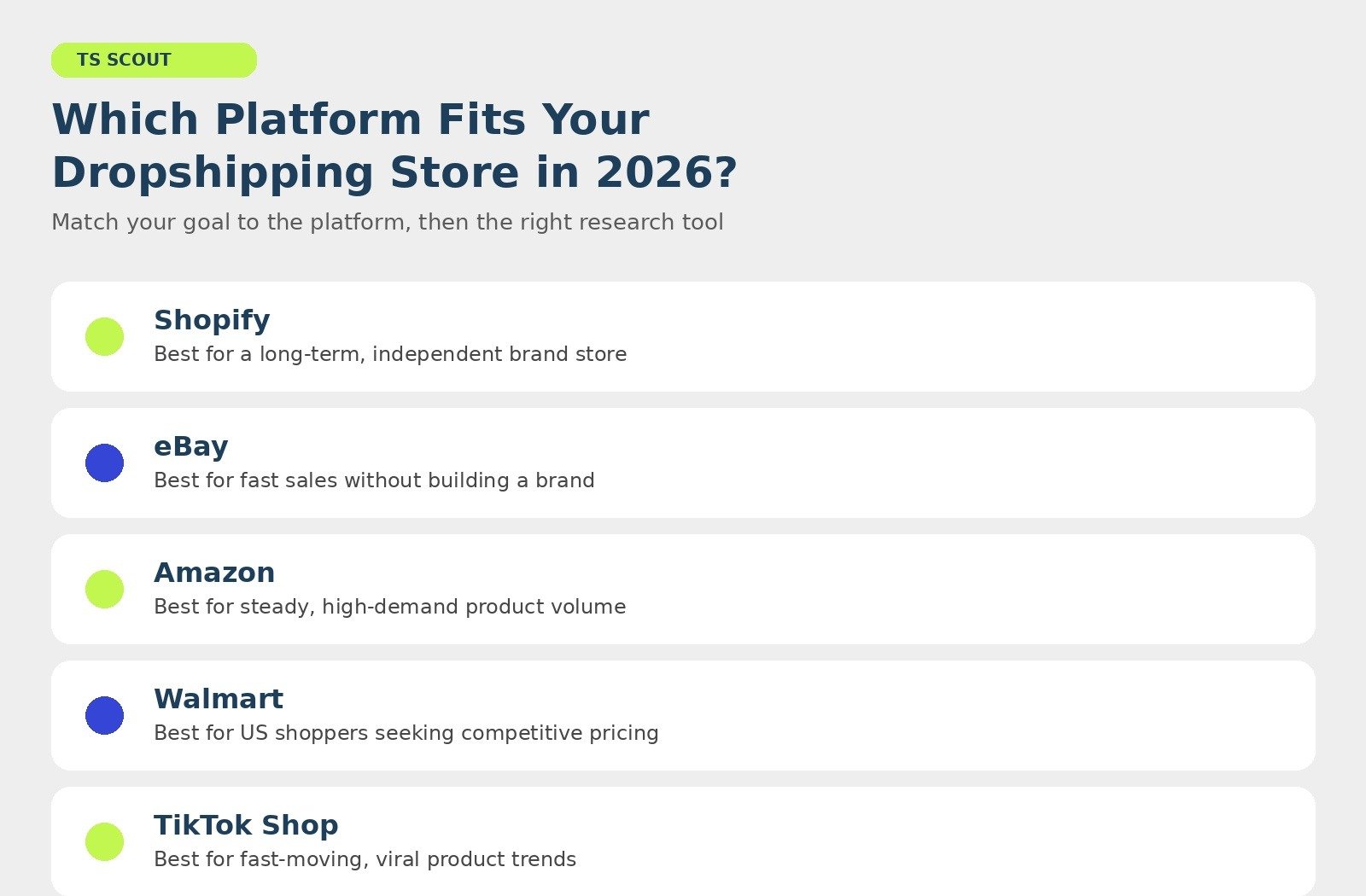
Shopify |
A long-term, independent brand store |
Shopify Insight for performance data; Shopify Competitor Research to study a specific store's pricing by URL |
|
eBay |
Fast sales without building a brand |
eBay Product Research for filtered listings; eBay Competitor Research for seller-level strategy |
|
Amazon |
Steady, high-demand product volume |
Amazon Scanner for trending, high-demand items |
|
Walmart |
US shoppers comparing price directly |
Walmart scanner for demand patterns |
|
TikTok Shop |
Fast-moving, viral product cycles |
TikTok Shop Scanner to catch trends before saturation |
For a deeper walkthrough of each route, Shopify eCommerce Store, eBay Dropshipping Guide 2026, and TikTok Shop Ecommerce Without Stock each go further into platform-specific setup.
How Do You Study a Competitor's Store Before You Compete With Them?
Picking a platform is only half the decision, the other half is knowing what a successful store on that platform is already doing. Shopify Competitor Research lets you enter any Shopify store's URL directly and pull its product mix, pricing strategy, and sales performance, rather than guessing why a competitor is outselling you. eBay Competitor Research does the same at the seller level, surfacing which listings and pricing patterns are actually converting. This kind of store-level visibility, not just product-level, is what turns "I think this competitor is doing well" into "here's exactly what they're pricing and selling."
How Can Automation and AI Cut Your Workload in 2026?
Order processing, inventory syncing across suppliers, and first-line customer service are increasingly automated rather than manually handled, the difference between running five products and running fifty without burning out is almost entirely automation. AI Tools for Ecommerce Sellers covers which parts of the workflow are realistic to hand off and which still need a human decision.
How Do You Turn a Dropshipping Store Into an Actual Brand?
Dropshipping's biggest reputational weakness, feeling generic, is fixable through packaging, faster shipping options, and a distinct visual identity, not through the product itself. Build eCommerce Brand Recognition covers this shift in detail, and once a store has traction, formalizing it properly is the next step, outlined in Start Your Own Online Business in 2026.
Is Dropshipping Worth It for You Specifically?
Run through this before committing further budget:
-
Capital: Can you cover 2–3 months of testing without needing a return in week one?
-
Time: Can you handle daily supplier communication and order tracking, or does that need automation from day one?
-
Risk tolerance: Are you comfortable with a model where the first few product tests may not turn a profit?
-
Market fit: Have you checked demand in your target market, for sellers eyeing a specific region, Ecommerce in the UK is a useful starting reference point.
If the answer to most of these is yes, the model itself isn't the obstacle, inconsistent product decisions usually are.
So, Are You Ready to Build a Dropshipping Store That Actually Lasts?
The dropshipping pros and cons in 2026 come down to one pattern: the advantages are real, but so are the failure points, and almost every failure point traces back to a decision made without data, the wrong product, the wrong platform, or a supplier picked without vetting. The sellers who last aren't the ones who avoided risk entirely; they're the ones who removed guesswork from the parts of the business that don't need to be guessed.
Try TS Scout for $1 for 14 days and get full access to product and competitor research across AliExpress, Shopify, eBay, Amazon, Walmart, and TikTok Shop, before you spend another dollar testing blind.
FAQS
-
Is dropshipping still profitable in 2026?
Yes, but margins depend heavily on product selection and supplier terms, experienced sellers typically see 15–20% net margins, while beginners often run below 10%.
-
How much money do I need to start dropshipping?
Most sellers can launch with $500–$1,000 covering store setup, a research tool, and an initial ad testing budget.
-
What is the average profit margin in dropshipping?
Industry data points to 15–20% for established sellers, with 30%+ margins being achievable but uncommon.
-
Is dropshipping legal and do I need a business license?
Yes, it's legal, and requirements vary by country, most jurisdictions require business registration once you're generating consistent revenue.
-
What's the biggest mistake new dropshippers make?
Testing products based on trends they noticed rather than verified sales data, which drains ad budget before any real signal appears.
-
Can I do dropshipping without Shopify?
Yes, eBay, Amazon, Walmart, and TikTok Shop are all viable starting points depending on your goal and audience.
-
Is the dropshipping market too saturated to enter in 2026?
The market is large and still growing, so saturation isn't the real barrier, poor execution and unverified product choices are what cause most stores to fail.
-
What's the difference between product research and competitor research tools?
Product research tools surface which items are selling well across a platform; competitor research tools analyze a specific store or seller's pricing and strategy directly.
like?


Table of Contents
- What Is Dropshipping in 2026, and How Has the Model Changed?
- Is Dropshipping Still Profitable in 2026? (Real Numbers)
- What Are the Real Pros of Dropshipping in 2026?
- What Are the Real Cons of Dropshipping, and How Do You Fix Each One?
- How Much Does Dropshipping Really Cost in 2026? (Full Breakdown)
- How Do You Research a Winning Product Before You Spend a Dollar?
- Which Platform Actually Fits Your Dropshipping Store in 2026?
- How Do You Study a Competitor's Store Before You Compete With Them?
- How Can Automation and AI Cut Your Workload in 2026?
- How Do You Turn a Dropshipping Store Into an Actual Brand?
- Is Dropshipping Worth It for You Specifically?
- So, Are You Ready to Build a Dropshipping Store That Actually Lasts?
- FAQS


